Categories
Forgotten Everyday England

What happened to ….the Great British Day at the Beach?

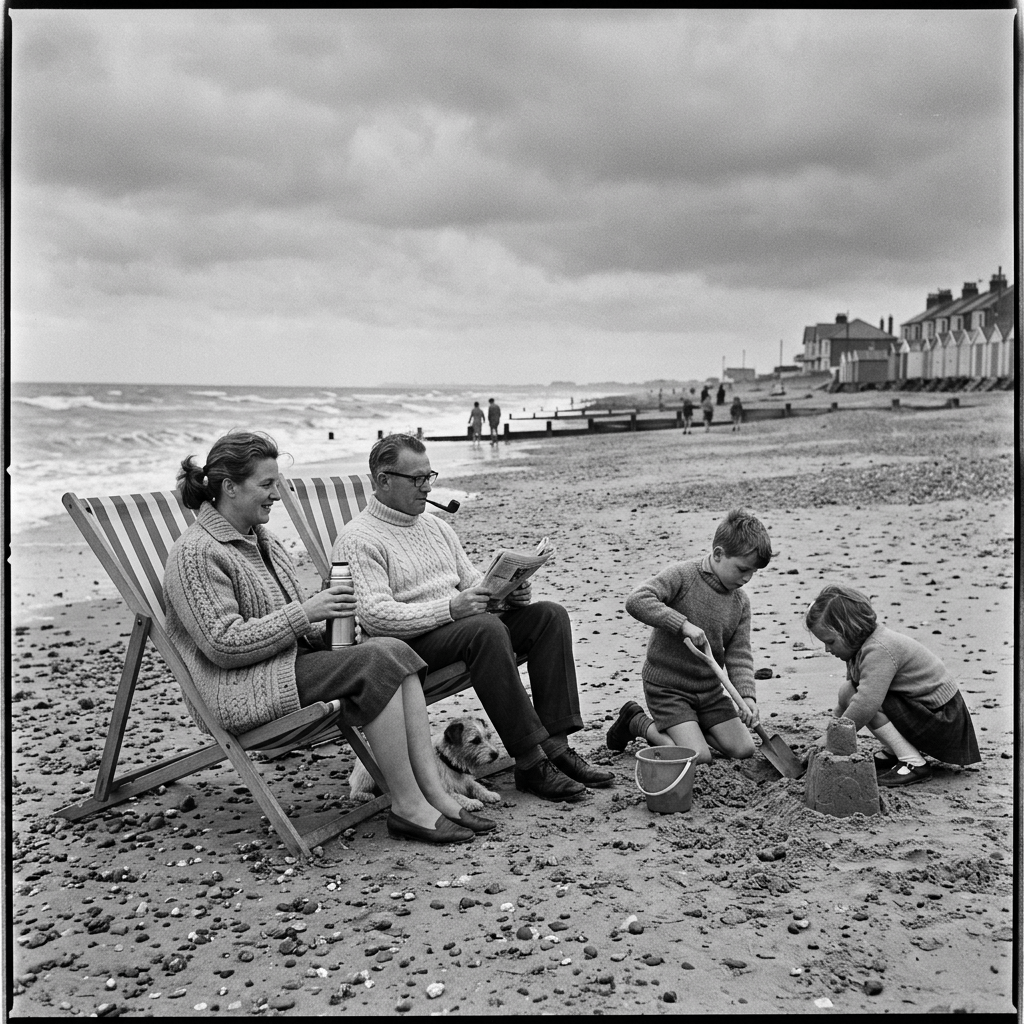
Family relaxing and children building sandcastles on a pebble beach
Illustration of a family enjoying a relaxed day on a pebble beach beneath dramatic seaside skies.

A day out at the beach

In short, sand in your sandwiches and shivering in the sea. None of that mattered – it was a huge adventure for generations of working-class kids.

First, your mum and dad would choose the location: somewhere not too far and accessible by car. Then your dad would pack up the boot with deckchairs, beach towels and other paraphernalia. Your mum handled the catering which generally consisted of an assortment of sandwiches, crisps and a thermos flask of tea. By the time you were eating them on the beach there was usually the extra surprise of a sprinkling of sand, generally blown into your food by the sea breeze.
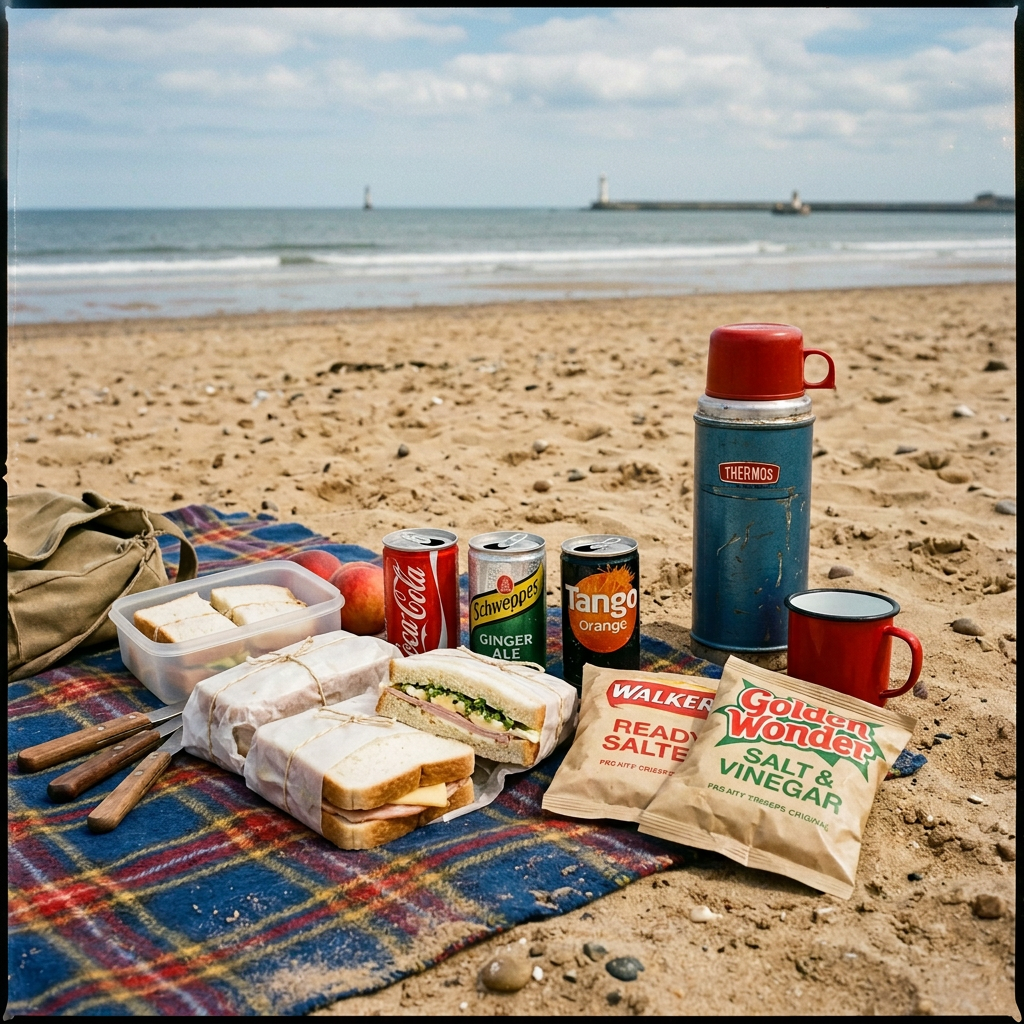
Seaside picnic with sandwiches, snacks, drinks and beachgoers
A nostalgic seaside picnic features sandwiches, snacks and drinks on a colourful blanket overlooking the beach.

Everyone piled into the family car – ours was a Morris Minor until we upgraded to a Ford Anglia – neither of which was particularly spacious. The journey to paradise was enlivened by games of I spy with my little eye and other such pastimes – there might even have been some conversation. Mobile phones were far away in the future.

Once we arrived at the destination, we didn’t care about the cloudy skies. The kids would run around the beach with excitement, while Dad wrestled with the deckchairs for a bit and Mum unpacked the towels – which were destined to never stay put. If there was even a glimmer of sunshine we were there to stay, despite the chilly breeze.

If you were brave enough to go into the sea, it was pure torture. The icy water would swill around your ankles attempting to give you frostbite.

So why did generations of British families put themselves through this every summer – and why do we remember it so fondly?

The Great British Day Out

With the advent of railways in the Victorian era, more people were able to travel to the coast and explore Britain. The introduction of paid holidays in the twentieth century made seaside breaks even more attainable. By the post-war years, the British seaside was firmly established as a place to enjoy yourself.

The simple pleasures

So what did the seaside offer apart from running around the beach?

Building sandcastles – armed with your plastic bucket and spade you could make sandcastles to your heart’s content, often accompanied by a moat which didn’t quite work. There was inevitable disappointment when the tide came in and washed everything away.

Inflatable beachballs, frisbees and plastic windmills – accessories for playing on the sand. Beachballs had a habit of blowing away at the slightest opportunity, usually requiring a frantic chase along the sand. Meanwhile, children would run along the beach with their colourful windmills spinning madly in the breeze.

Hunting for shells and rock pools – Activities included turning over stones to see what was hiding underneath, looking for tiny crabs and collecting shells to take home. Starfish were also considered an exciting find.
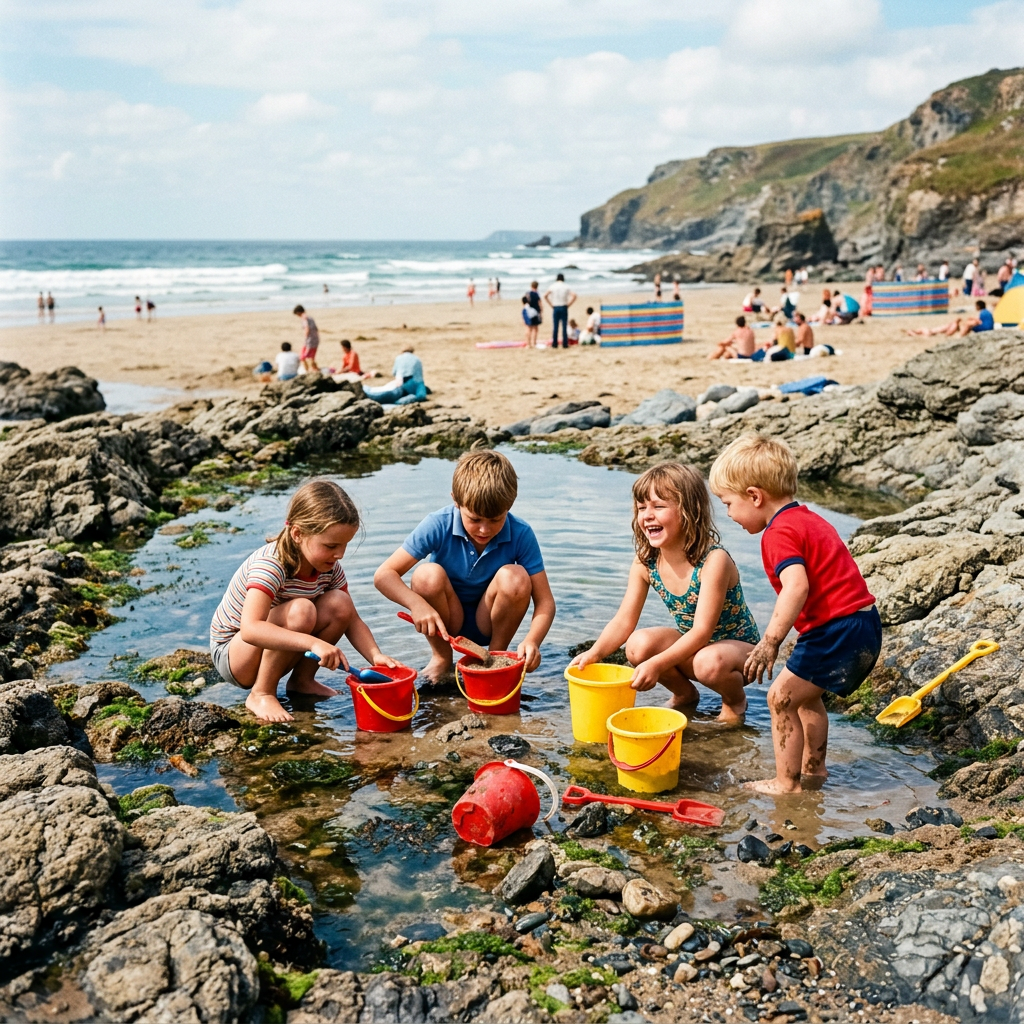
Four children playing with buckets in a rocky tidal pool by the beach
Four children play with colourful buckets in a rocky tidal pool beside a busy beach.

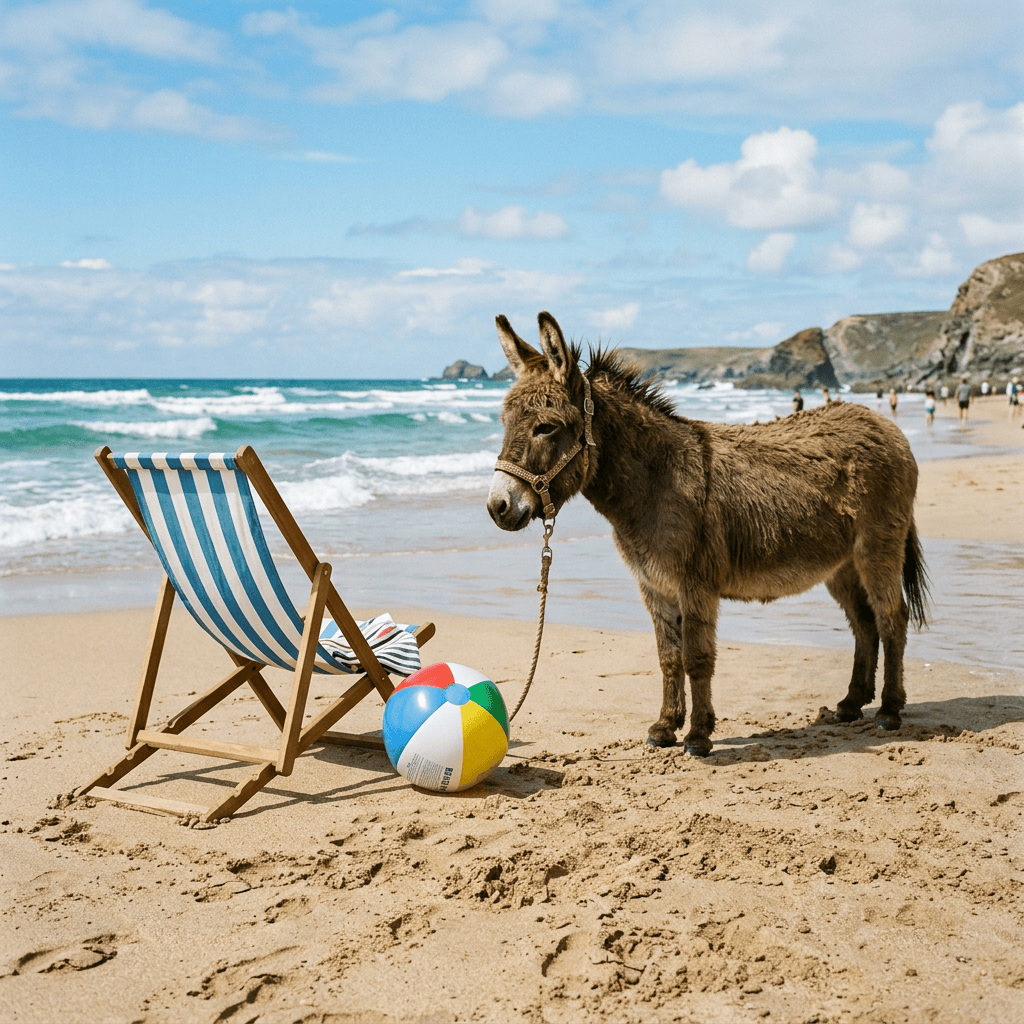
Donkey rides – a great British beach classic in the past. A plodding ride along the beach was an exciting treat. But as affordable holidays abroad became more popular, traditional seaside resorts began to lose some of their visitors. At the same time, concerns about animal welfare grew, and the costs of keeping and caring for the donkeys made the business increasingly difficult to sustain. Although donkey rides still survive in a few places, they are no longer the familiar sight they once were.

Punch and Judy shows – definitely not for the faint-hearted
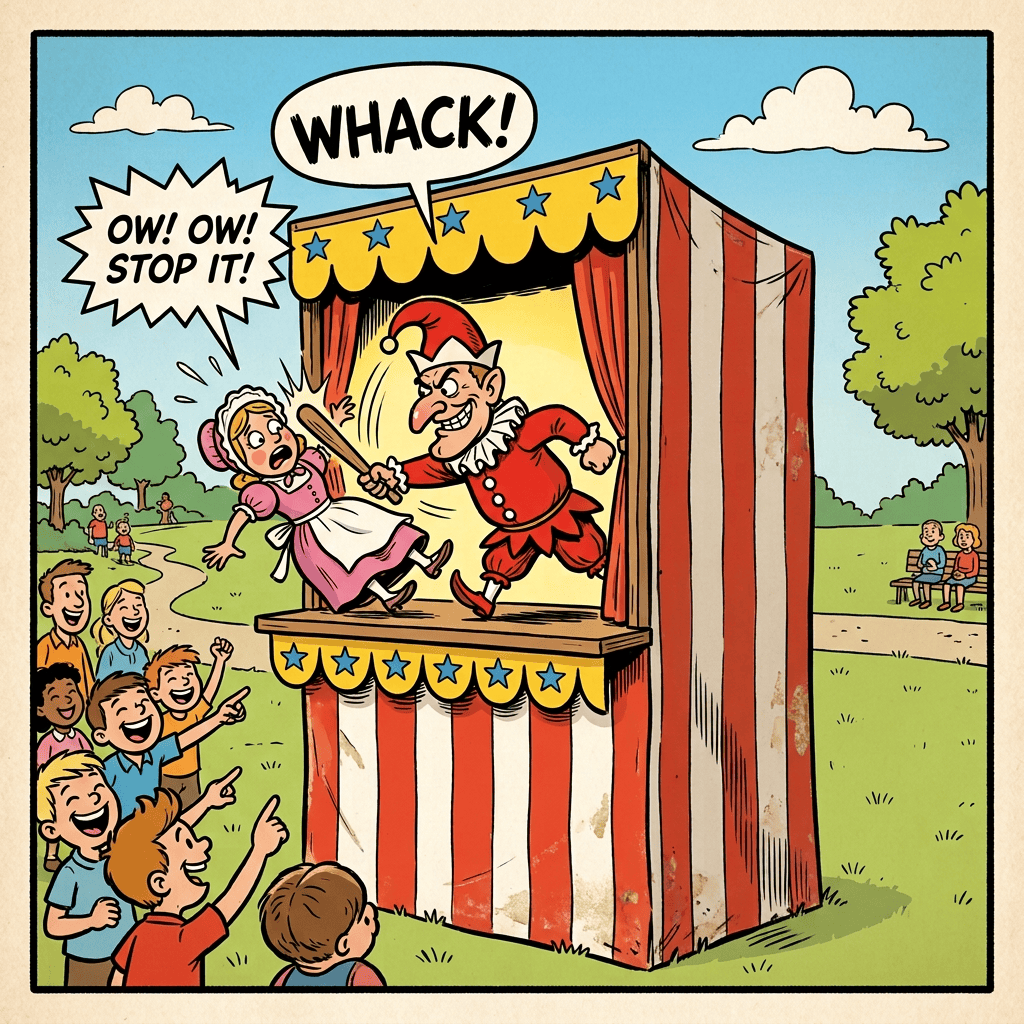
Puppet show with a policeman, startled audience, and speech bubbles reading “WHACK!” and “OW! OW! STOP IT!”
A most politically incorrect form of entertainment aimed at children.

The first recorded performance of an early version of Mr Punch in England dates back to 1662. This type of entertainment had its heyday in Victorian times. The storylines were hardly what we’d expect from children’s entertainment today. The alarming Mr Punch quarrelled with his wife Judy, caused mayhem with their baby and battled policemen and crocodiles, usually with plenty of shouting and slapstick violence. Yet audiences found it hilarious, and the familiar cry of “That’s the way to do it!” became part of the show’s enduring appeal.

The Victorians certainly had a rather different idea of what constituted suitable entertainment for children.

Feeling peckish?

When at the beach, ice cream was a must – but a stick of rock was also obligatory. With the name of the resort name appearing throughout the whole stick, it made a cool present to take home for your friends. It was both a sweet and a souvenir.

The origins of lettered rock date back to the nineteenth century, although exactly who first came up with the idea remains uncertain. The clever part is that the lettering isn’t printed on the outside: the letters are made from coloured sugar and assembled before the whole sweet is stretched into a long stick. Break off a piece and the name is still there, running right through the middle. It’s a small confectionery miracle – even if it could take you the rest of the summer to finish eating it!
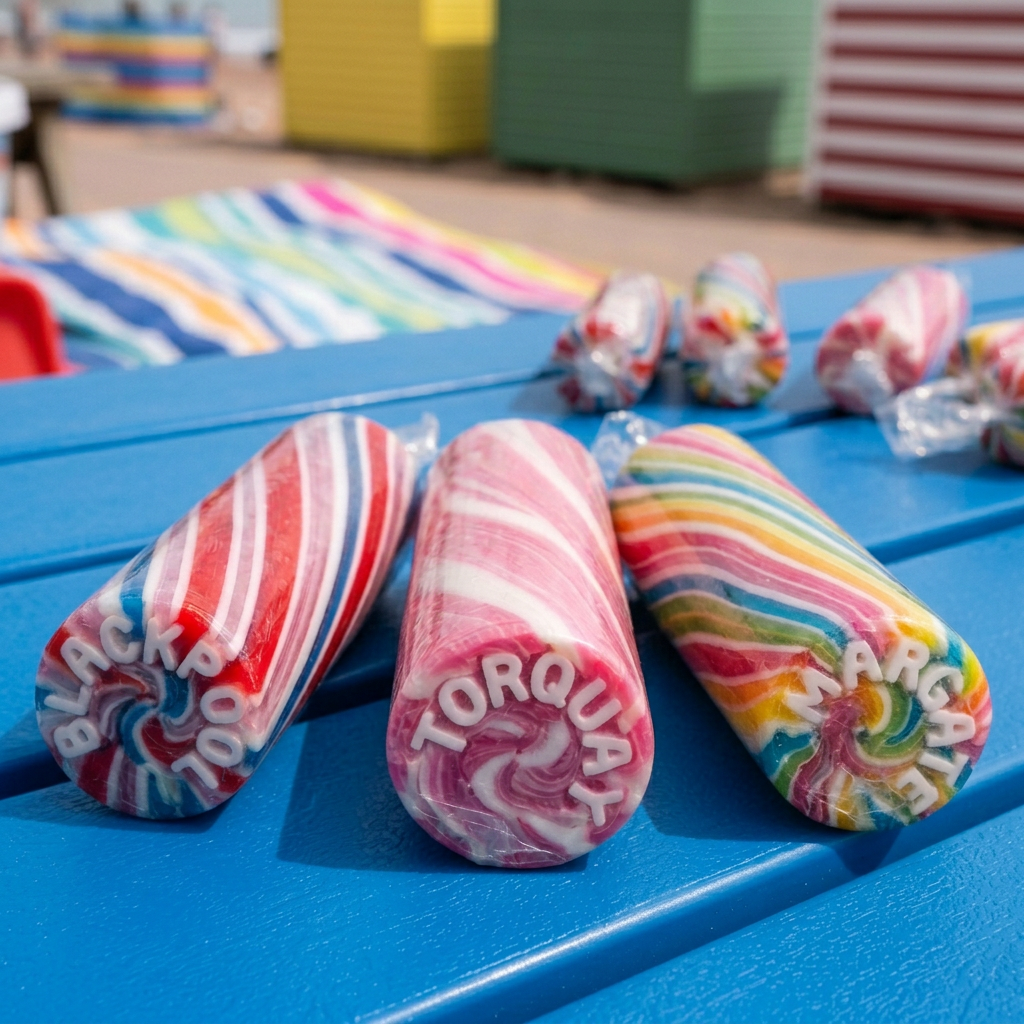
Three colourful seaside rock sticks labelled Blackpool, Torquay and Margate
Colourful sticks of seaside rock spell out classic holiday resorts against a lively beach backdrop.

A trip to the beach today

Compare that with today. Swimwear has become a fashion statement, beach accessories are carefully coordinated and mobile phones are never far away. Before we’ve even settled on our sunlounger, we are taking selfies, checking our appearance or arranging the perfect photograph. The pursuit of the perfect tan seems to have become almost as important as enjoying the sunshine itself.

There’s nothing wrong with any of that – everyone likes a pretty beach photo. The old-fashioned British beach day wasn’t particularly comfortable. The sandwiches were sandy, the deckchairs were awkward, the windbreak never stayed upright and the sea was generally freezing. But we didn’t seem to mind.

We went to the beach to play, explore, eat ice cream and enjoy a day out with the family. There were no photographs to upload, no messages to check and no pressure to look perfect.

Perhaps we weren’t having an Instagram-worthy beach day, but we were having a lot of fun.

And sometimes, I wonder if that’s what we’ve lost along the way.

I’m sure there are plenty of other seaside traditions and childhood memories I’ve missed. Did you have donkey rides, spend your pocket money in the penny arcades or come home with a stick of rock? Perhaps you remember something completely different.

I’d love to hear your memories. What made a traditional British day at the seaside special for you?
Categories
Forgotten Everyday England

What happened to … Wednesday Afternoon Closing?

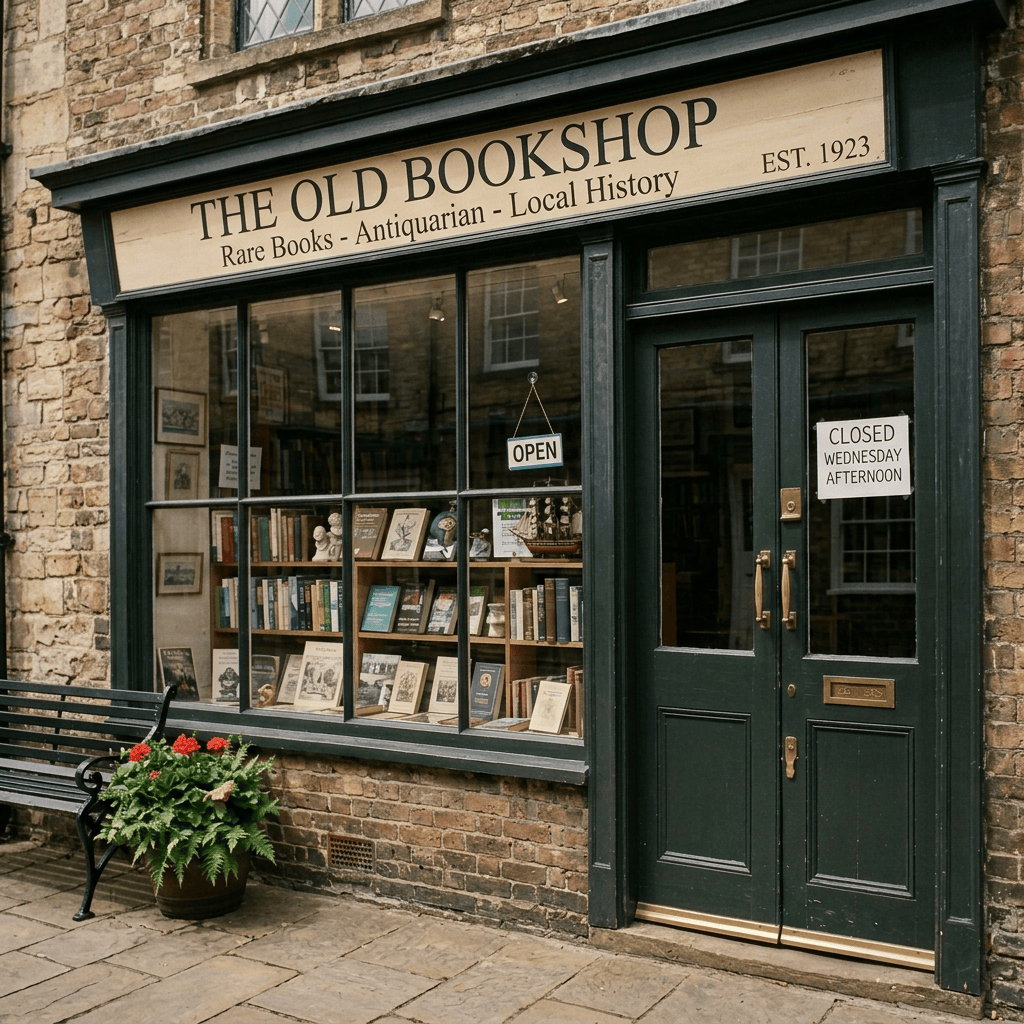
The Old Bookshop storefront displaying rare books on a historic street
The Old Bookshop welcomes readers…but it is closed on Wednesday afternoon.

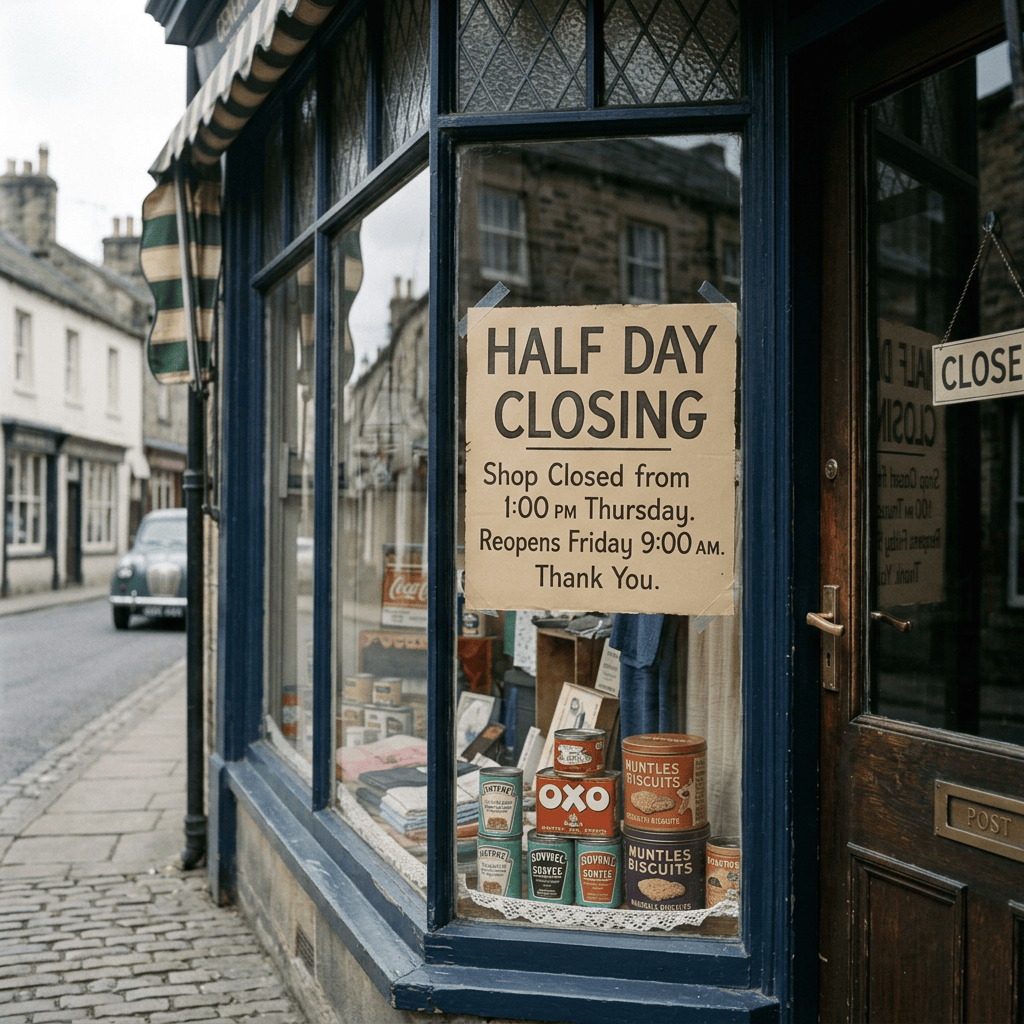
There was a time when going shopping on a Wednesday afternoon could be a rather disappointing experience.

As a child, I remember that many of the local independent shops in my area closed for one afternoon every week. If you needed something from the local shopkeeper, you had to get there before the shop closed early or wait until the following day. Fancy some chocolate at 12.45 on a Wednesday? You had to run to the sweet shop before the door was firmly closed at one o’clock. Your favourite comic came out on Wednesdays? Make sure to buy it in the morning or you had to wait until Thursday.

The city centre, as far as I remember, was a different story. Shops there carried on trading, while the smaller neighbourhood shops took their weekly half-day break.

It was simply part of life. Nobody seemed particularly surprised by it, and shopping had to fit around the opening hours of the shops rather than the other way round.

But why Wednesday? And whatever happened to this once-familiar British custom?

Half-day closing

Half-day closing was not just a tradition; it was backed by legislation. The Shops Act 1912 required shops, subject to certain exemptions, to close to customers by one o’clock on one weekday each week.

Its primary purpose was to improve shop workers’ conditions by giving them a regular half-holiday during the working week. Some shopkeepers used this break for stocktaking or dealing with wholesalers.

Local councils stipulated the day so none of the shops had an unfair advantage. In many areas the shops closed on Wednesday afternoon, but there were some places where they opted for Thursday, and sometimes even Tuesdays. Market towns tended not to choose the day that the market was held – closing the shutters on a day when the town was already flooded with farmers, traders and rural shoppers would have been financial suicide.

This created an incredibly localised calendar. For example, Beverley in Yorkshire, held its livestock market on Wednesdays in 1966, with shops closing on Thursday afternoons. Such local differences meant that shoppers sometimes had to remember not just when shops closed, but where they were shopping.

Each to his own timetable

Because these decisions were made by local borough councils, the boundaries between towns created some truly bizarre retail twilight zones. If you lived on the border of two different districts, a simple walk across the street could transport you into a completely different time zone of commerce, with shop doors wide open on one side, and shops in darkness on the other.

Not bound by early-closing

Early closing was not compulsory for every business. In 1950 a newer Shops Act decreed that some types of businesses were not obliged to close. The Shops Act 1950 listed exemptions for certain types of businesses. Here is a small selection, with a link to the full list.

  • The sale by retail of intoxicating liquors.
  • The sale of refreshments, including the business carried on at a railway refreshment room.
  • The sale of motor, cycle, and air-craft supplies and accessories to travellers.
  • The sale of newspapers and periodicals.
  • The sale of meat, fish, milk, cream, bread, confectionery, fruit, vegetables, flowers, and other articles of a perishable nature.
  • The sale of tobacco and smokers’ requisites.
  • The business carried on at a railway bookstall on or adjoining a railway platform.
  • The sale of medicines and medical and surgical appliances.
  • Retail trade carried on at an exhibition or show, if the local authority certify that such retail trade is subsidiary or ancillary only to the main purpose of the exhibition or show. https://www.legislation.gov.uk/ukpga/Geo6/14/28/schedule/FIRST/enacted

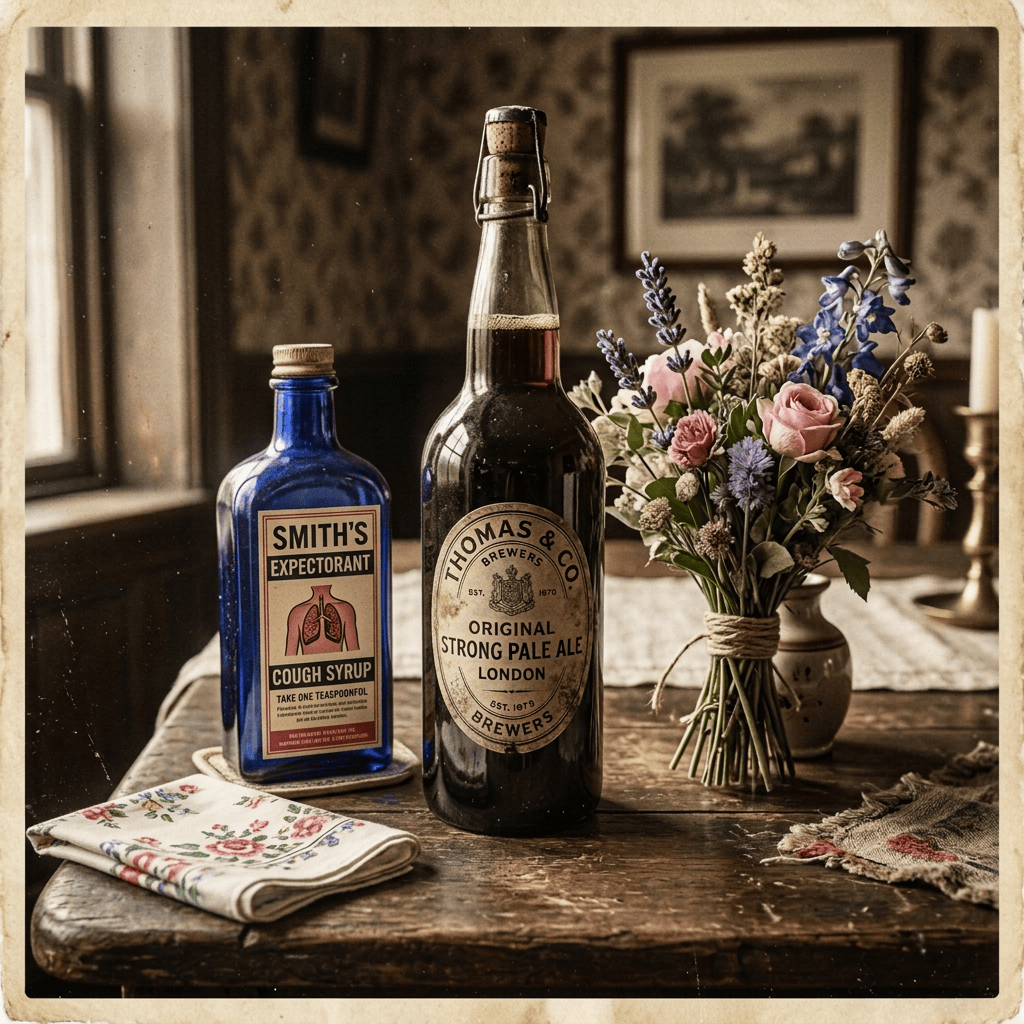
So you could still buy, amongst other things, a beer, a bunch of flowers and your medicine.

Smith's Expectorant cough syrup and Thomas & Co. Original Strong Pale Ale London bottles beside flowers
A nostalgic tabletop arrangement pairs labelled bottles with a colourful hand-tied bouquet.

Why were the city centres different?

City centre shops

Retailers in bigger cities often had sizeable workforces. Larger retailers had more staff and could organise working hours differently, allowing some shops to remain open while employees took their weekly half-holiday, by creating staggered staff rotas. Individual workers were often allocated their mandatory afternoon off on different days of the week while the business kept its doors open six days a week.

Local shops

Independent shops and family-run businesses did not usually have a large team of workers, maybe even just the owner and an assistant. A common way for small shops to apply the legislation was to close the shop for an afternoon.

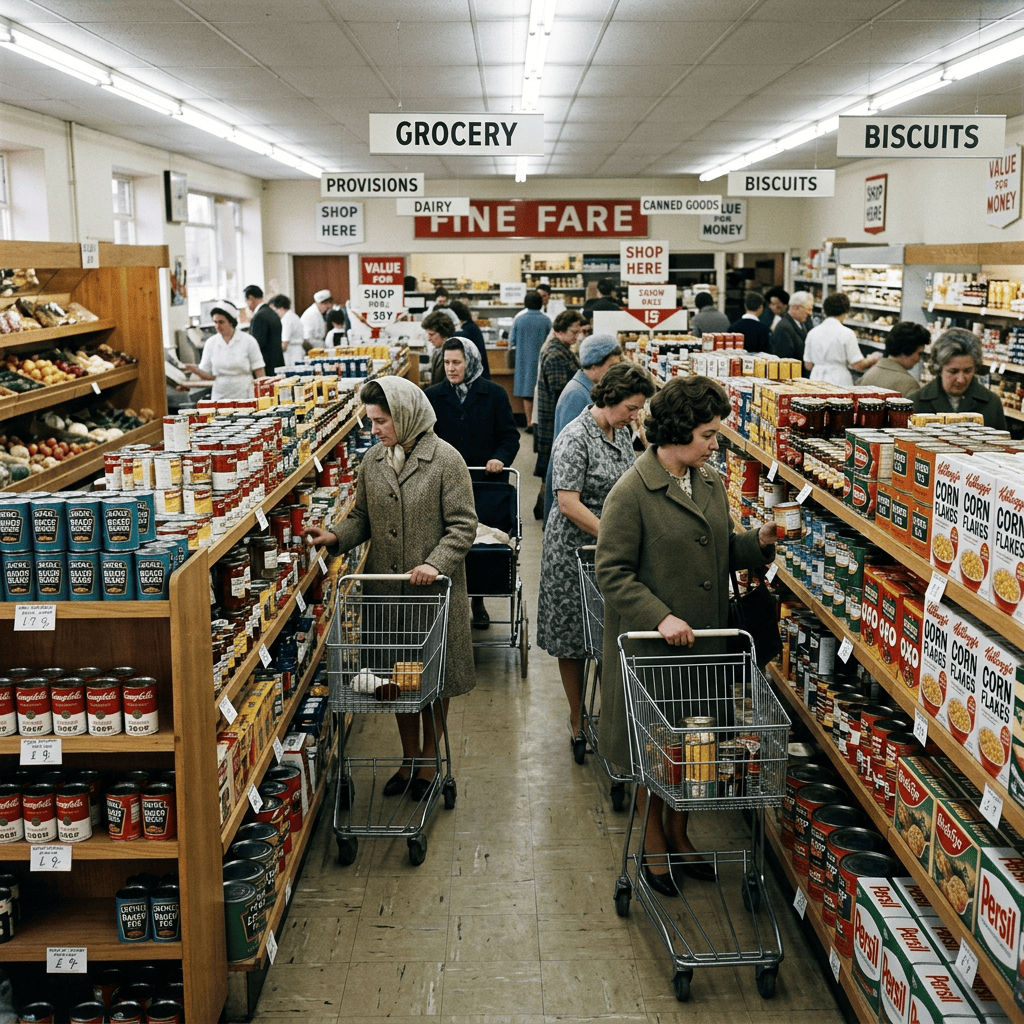
Shoppers browse canned goods in a vintage grocery store
Shoppers push trolleys through the busy aisles of a 1960s supermarket.

Why did half-day closing disappear?

In the 1960s supermarkets became increasingly common, offering groceries altogether under one roof. They had plenty of personnel to enable a staggered staff rota and remain open while individuals took time off.

Other changes were transforming everyday life, too. Improvements in refrigeration meant that households could keep fresh food for longer, while rising car ownership made it easier for people to travel further to shop and bring home larger quantities of groceries.

The law changed as well. The Shops (Early Closing Days) Act 1965 allowed individual shopkeepers to choose their own early-closing day rather than having it determined by the local authority. However, it did not abolish the requirement to close early. That requirement remained until the relevant legislation was repealed in 1994.

Today, the idea of finding your local high street closed on a Wednesday afternoon seems almost unthinkable. We’re used to shopping whenever we like, whether that’s seven o’clock in the evening or seven o’clock in the morning, without even leaving the house.

But perhaps those Wednesday afternoons tell us something about a time when life moved at a slower pace. Shops closed, shopkeepers had a well-earned break and customers simply planned around it. It was a system shaped by strong local traditions. Occasionally inconvenient, it gave the working week a rhythm of its own.

We’ve certainly gained convenience, but have we lost something along the way?

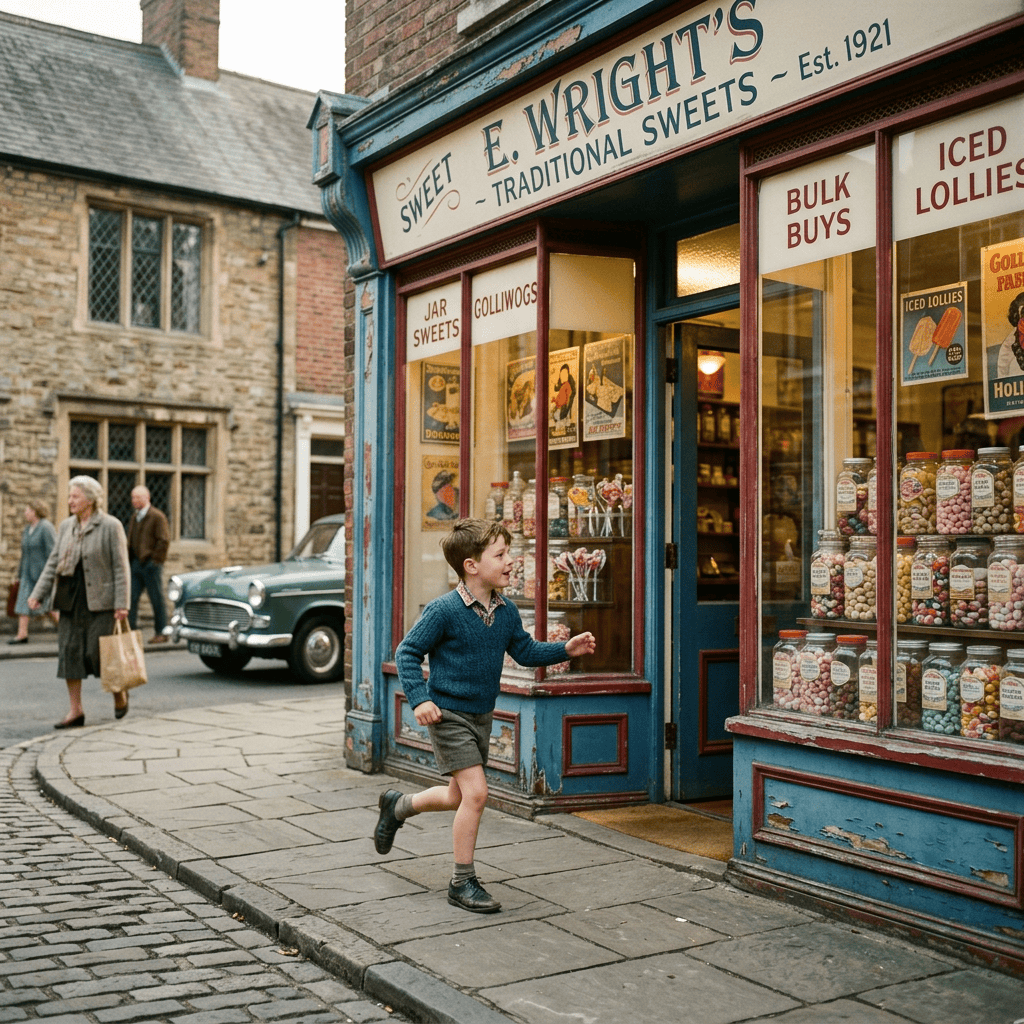
Child running past E. Wright’s traditional sweets shop with candy jars
A child races to E. Wright’s traditional sweet shop before half-day closing.

And I wonder if anyone else remembers racing to the sweet shop before one o’clock on a Wednesday afternoon!

Categories
Forgotten Everyday England

What happened to the…Milkman?

Some things disappear with a bang. Others simply stop being there one day.

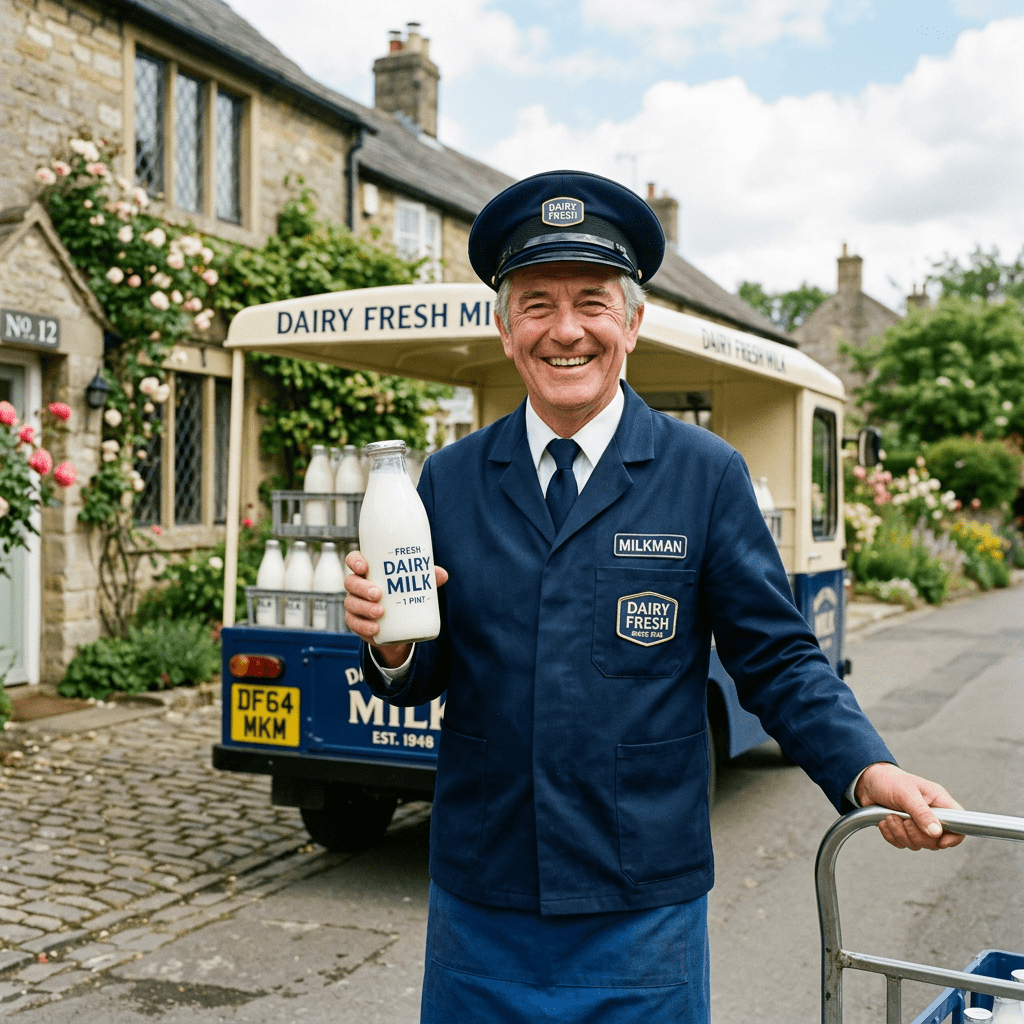
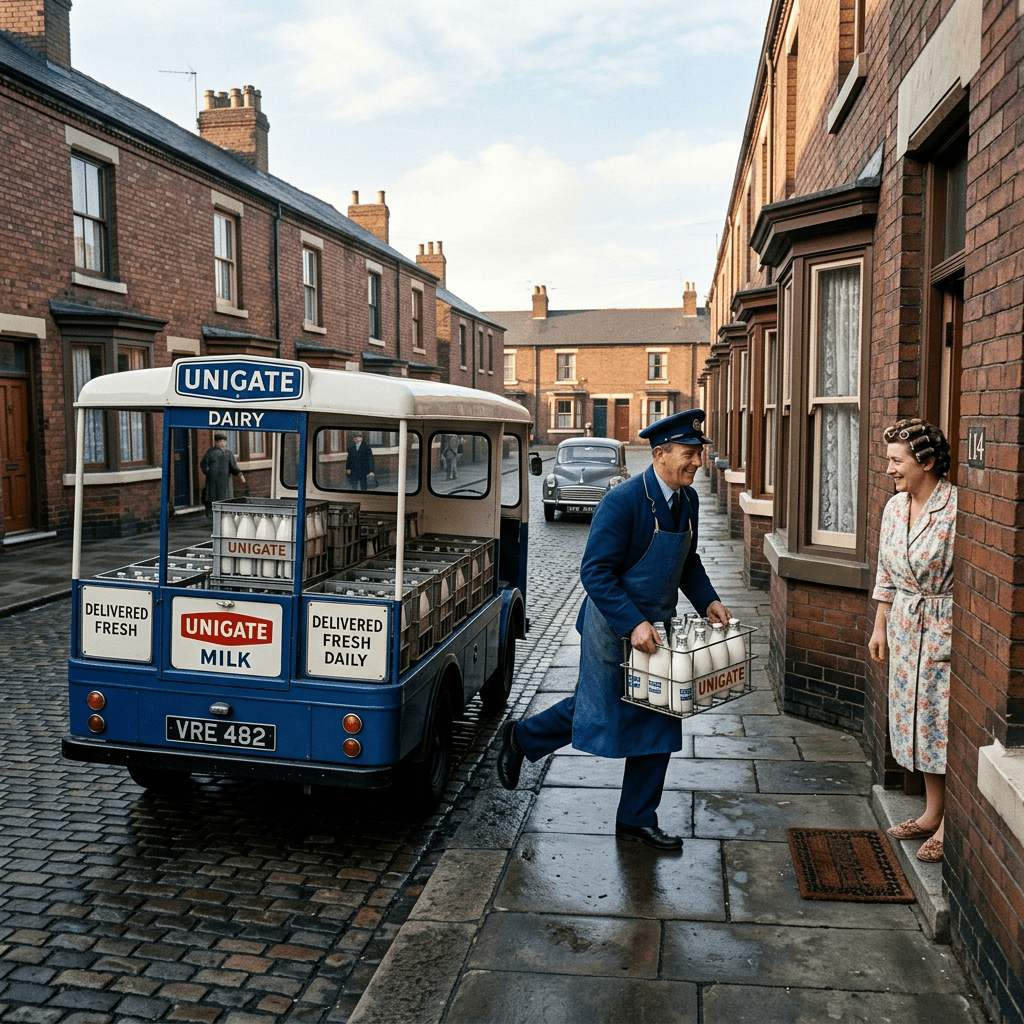
Milkman delivering Unigate milk beside a dairy truck to a woman
A milkman delivers fresh Unigate dairy to a customer on a traditional British street,

Who was the milkman?

Milk has obviously been around for centuries, but door-to-door milk delivery by milkmen (and yes, practically nearly always a milkman – not a woman) began in the 19th century,

Why did we need him?

By the Victorian period, as growing towns and cities made it increasingly difficult to obtain fresh milk directly from farms, milk was commonly delivered to the door, initially by local dairymen carrying or transporting milk in large churns. Customers would have milk measured out for them, rather than receiving the sealed bottles we’re familiar with… and fridges were far off in the future at this point.

Photo by tom analogicus on Pexels.com

The big change came in the late 19th and early 20th centuries, when concerns about adulteration and contamination led to increasing regulation and better hygiene. Glass bottles gradually became standard, allowing milk to be delivered in a sealed, recognisable quantity.

And in the 1930’s came the great British institution: the milk float, a battery-operated vehicle driven by the milkman. By 1967 Britain had an enormous fleet of milk floats.

Why was he part of our lives?

By the mid-20th century, the milkman was an extraordinarily familiar figure. He would arrive in the early morning – traditionally with an electric milk float – and leave bottles on the doorstep, often before the household was properly awake.

Milkmen usually delivered every day, so they were part of the daily routine. They delivered to the same houses time after time and inevitably built up relationships with their customers. As they would generally deal with the woman of the house for payment while her husband would be away at work, this sometimes led to dubious, smutty jokes about the nature of the relationship. This cliché arose because the milkman was one of the very few working-age men who routinely came directly to the door during the day.

The figure of the milkman is definitely ingrained in British culture. More than just a service worker, he became a cherished national icon for various reasons.

The Sound of the British Morning

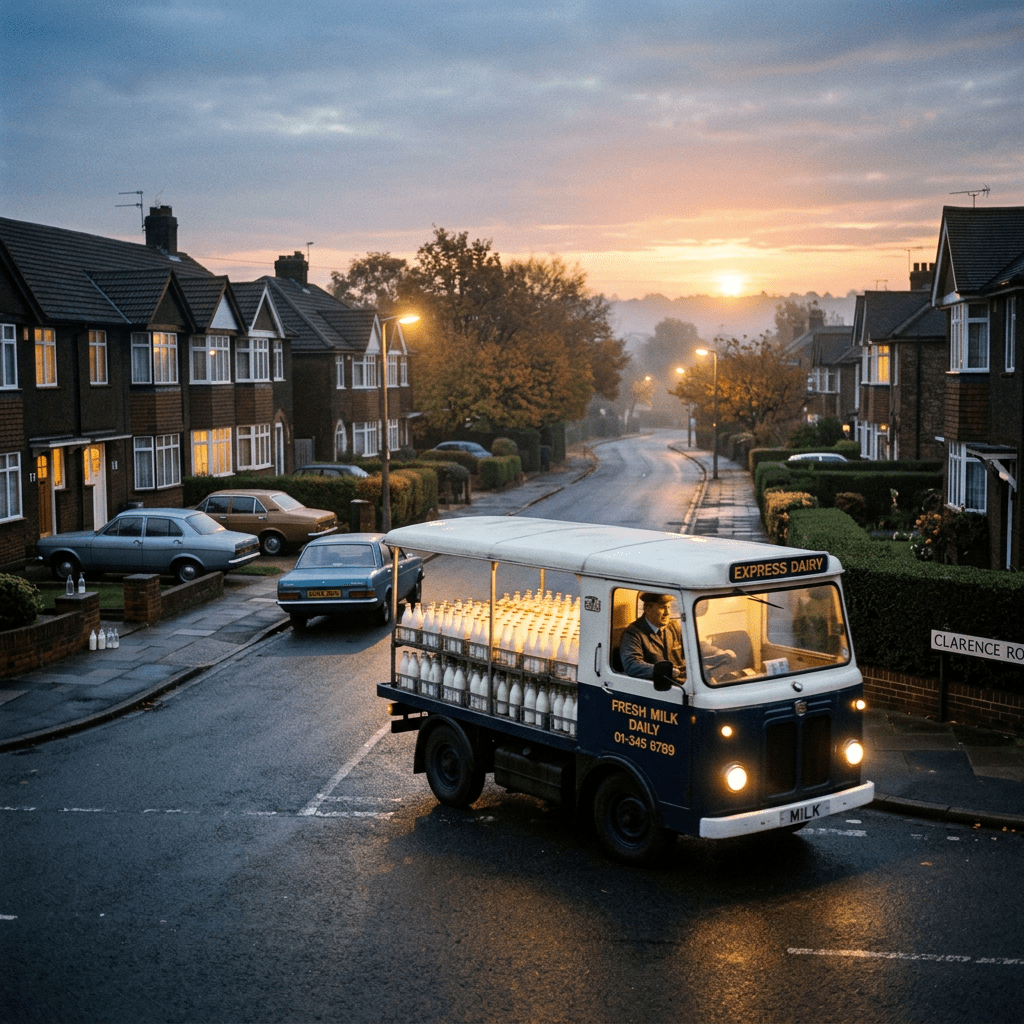
Vintage Express Dairy milk van delivering bottles on a residential street
A vintage Express Dairy milk van rolls through a quiet residential street at sunrise.

These open-sided, low-emission vehicles made a distinct, low-pitched electric whine. Because they were virtually silent, they didn’t wake residents during early morning deliveries. The only thing people heard was the iconic clink of glass bottles in wire crates.

World War II and the Blitz

During the Second World War, British milkmen became symbols of national resilience and dependability.

  • Keeping Calm and Carrying On: As bombs fell on British cities during the Blitz, milkmen carried on with deliveries to ensure daily pints were left on doorsteps.
  • A Thread of Normality: To a heavily rationed and traumatised public, the sound of the milkman arriving at dawn was proof that the daily routine was not completely broken.

Iconic British Pop Culture References

The milkman is embedded in English comedy, music and television.

  • Ernie (The Fastest Milkman in the West): In 1971, English comedian Benny Hill topped the UK music charts with this wildly popular novelty song about a tragic, romantic feud between a milkman and a baker.
  • Norman Wisdom’s The Early Bird (1965): This classic British comedy movie pits a traditional, old-fashioned independent milkman against a giant, ruthless corporate dairy conglomerate.
  • Father Ted: Irish/British television famously satirised the milkman trope in the legendary Father Ted episode “Speed 3,” where a milk float is rigged with a bomb that will detonate if the float drops below 4 miles per hour .

Why did milkmen disappear?

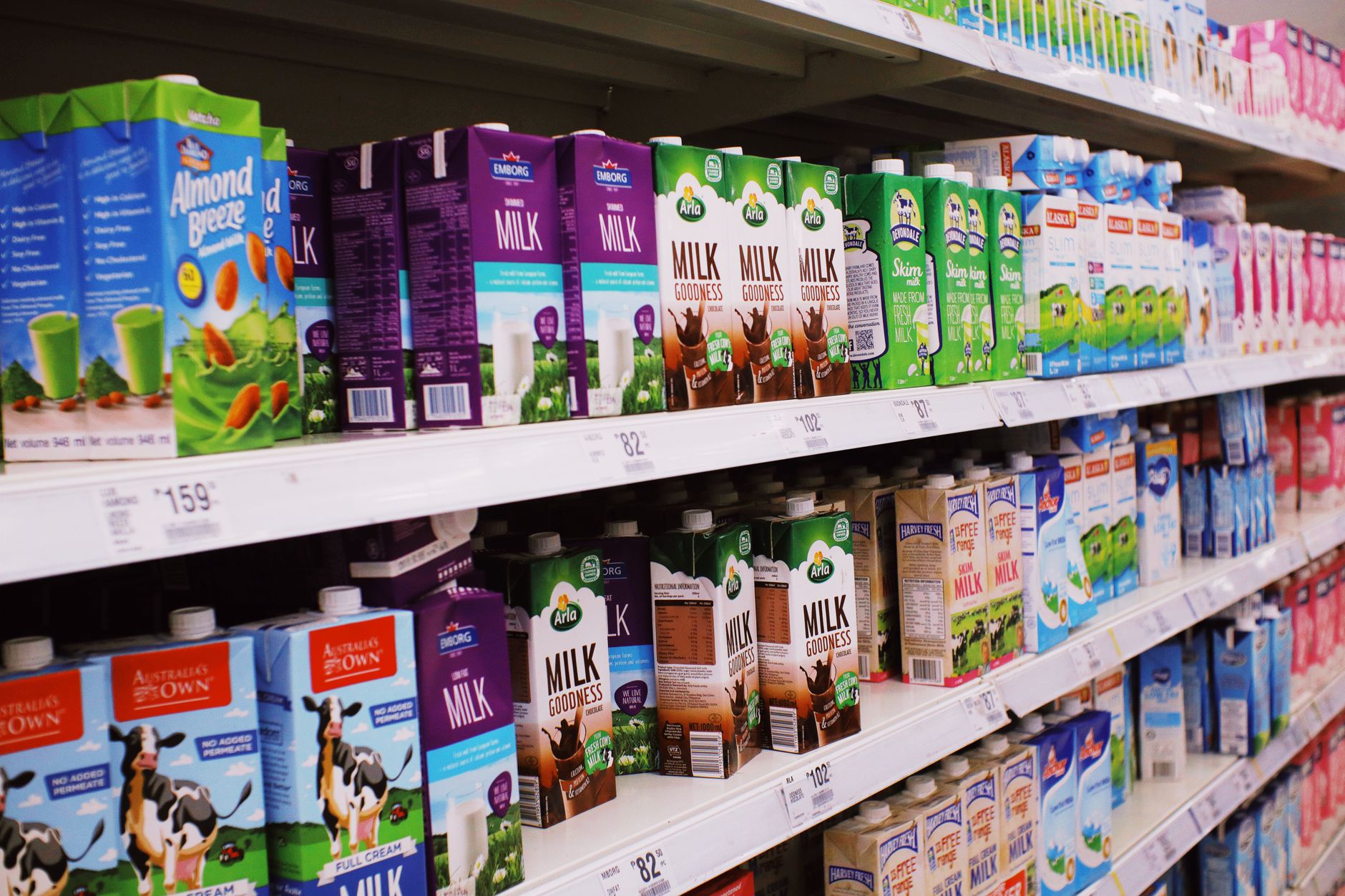
Photo by Nothing Ahead on Pexels.com

Milk delivery to doorsteps was common not just in Britain, but in many countries, until the second half of the twentieth century. With the advent of supermarkets and fridges, it became much easier to buy milk on demand and store it safely at home, unlike in the past.

Some things disappear with a bang. Others simply stop being there one day.

Did you know …?

Although many people these days have never experienced the milk float delivery, the UK milkman is currently experiencing a niche cultural comeback. Driven by modern British environmentalism and a desire to reduce single-use plastics, some households are returning to the traditional doorstep delivery.

But will milkman delivery return to us all? What do you think?

Do you have any memories or stories about milk delivery where you live?

Let me know in the comments!