A day out at the beach
In short, sand in your sandwiches and shivering in the sea. None of that mattered – it was a huge adventure for generations of working-class kids.
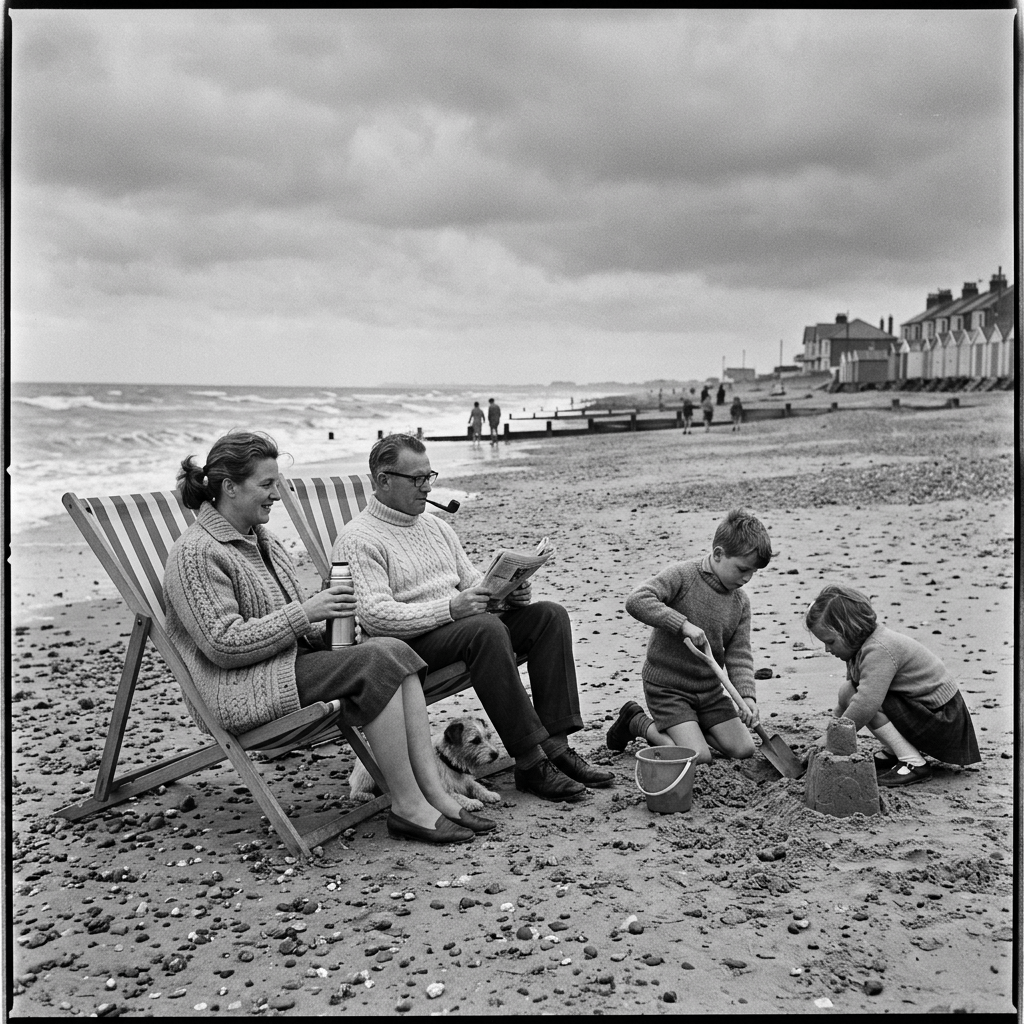
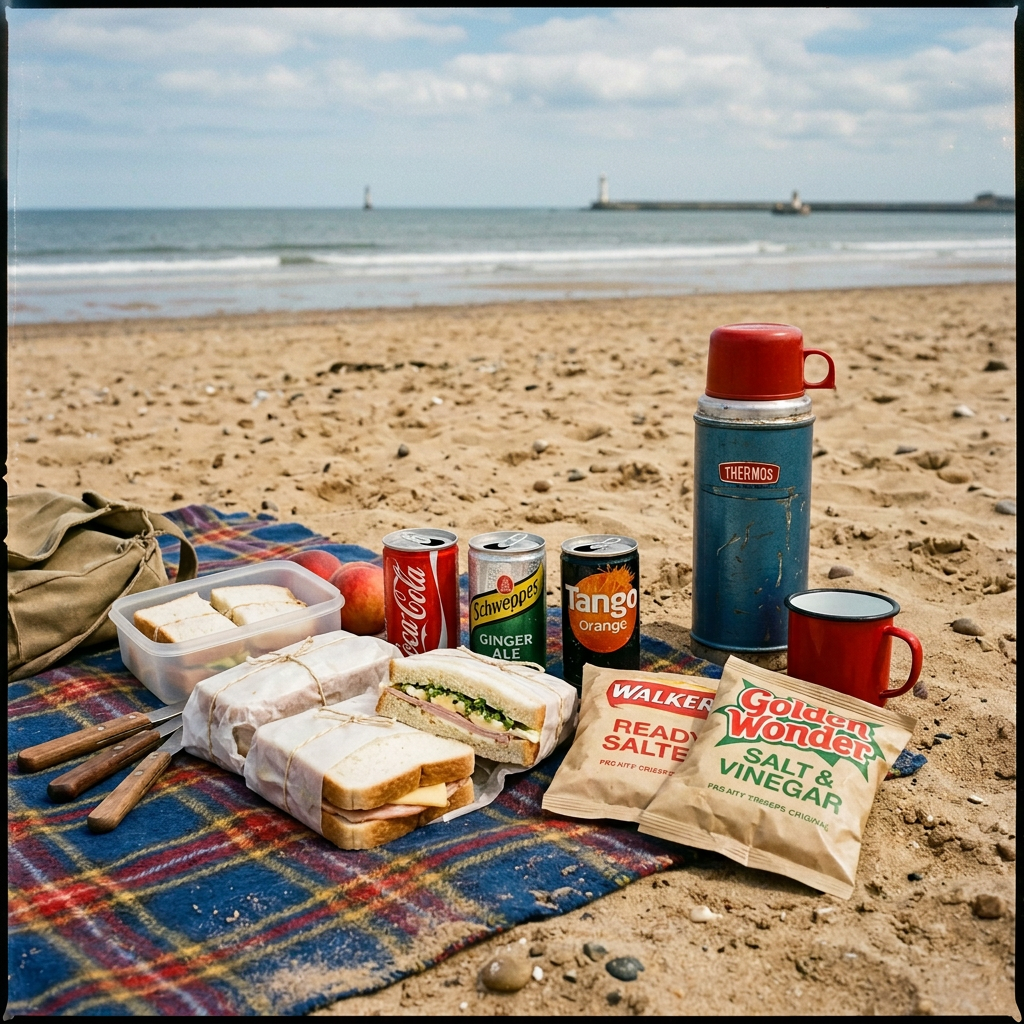
First, your mum and dad would choose the location: somewhere not too far and accessible by car. Then your dad would pack up the boot with deckchairs, beach towels and other paraphernalia. Your mum handled the catering which generally consisted of an assortment of sandwiches, crisps and a thermos flask of tea. By the time you were eating them on the beach there was usually the extra surprise of a sprinkling of sand, generally blown into your food by the sea breeze.
Everyone piled into the family car – ours was a Morris Minor until we upgraded to a Ford Anglia – neither of which was particularly spacious. The journey to paradise was enlivened by games of I spy with my little eye and other such pastimes – there might even have been some conversation. Mobile phones were far away in the future.
Once we arrived at the destination, we didn’t care about the cloudy skies. The kids would run around the beach with excitement, while Dad wrestled with the deckchairs for a bit and Mum unpacked the towels – which were destined to never stay put. If there was even a glimmer of sunshine we were there to stay, despite the chilly breeze.
If you were brave enough to go into the sea, it was pure torture. The icy water would swill around your ankles attempting to give you frostbite.
So why did generations of British families put themselves through this every summer – and why do we remember it so fondly?
The Great British Day Out
With the advent of railways in the Victorian era, more people were able to travel to the coast and explore Britain. The introduction of paid holidays in the twentieth century made seaside breaks even more attainable. By the post-war years, the British seaside was firmly established as a place to enjoy yourself.
The simple pleasures
So what did the seaside offer apart from running around the beach?
Building sandcastles – armed with your plastic bucket and spade you could make sandcastles to your heart’s content, often accompanied by a moat which didn’t quite work. There was inevitable disappointment when the tide came in and washed everything away.
Inflatable beachballs, frisbees and plastic windmills – accessories for playing on the sand. Beachballs had a habit of blowing away at the slightest opportunity, usually requiring a frantic chase along the sand. Meanwhile, children would run along the beach with their colourful windmills spinning madly in the breeze.
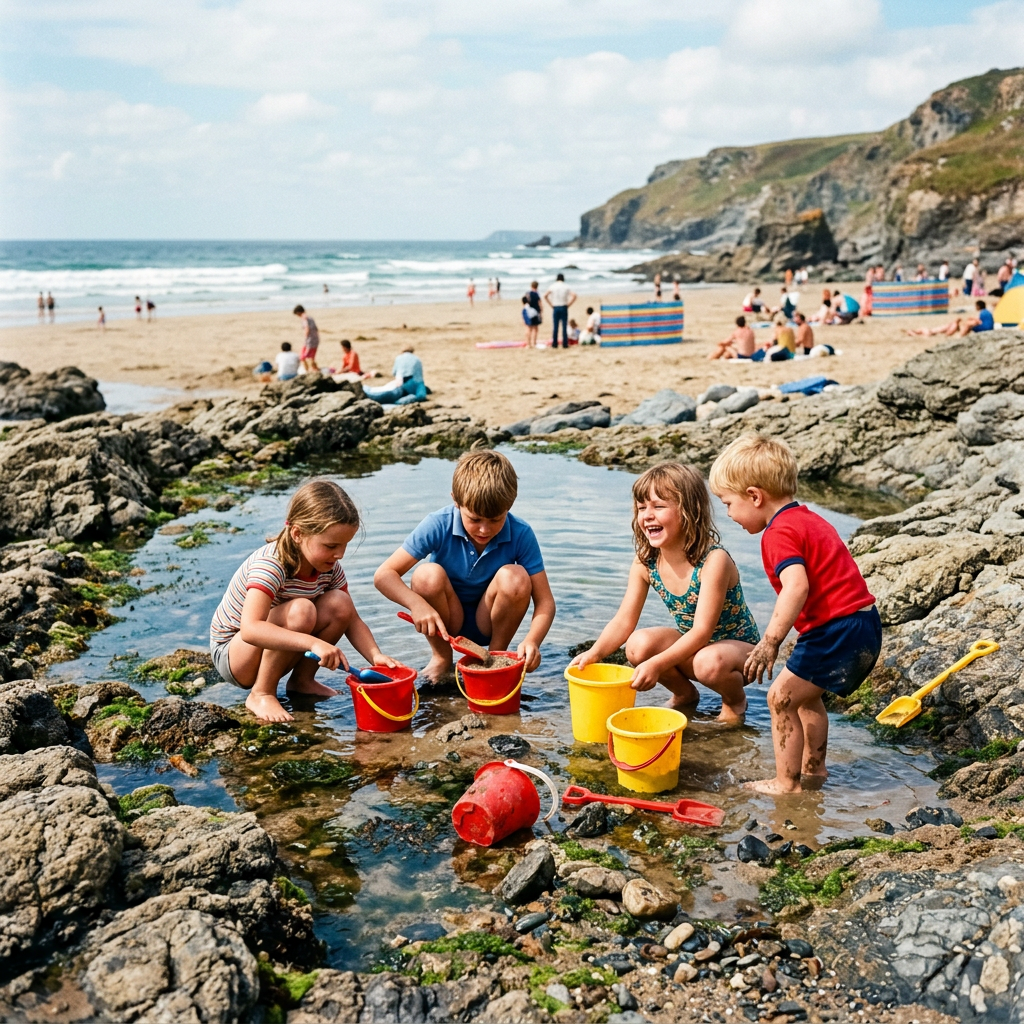
Hunting for shells and rock pools – Activities included turning over stones to see what was hiding underneath, looking for tiny crabs and collecting shells to take home. Starfish were also considered an exciting find.
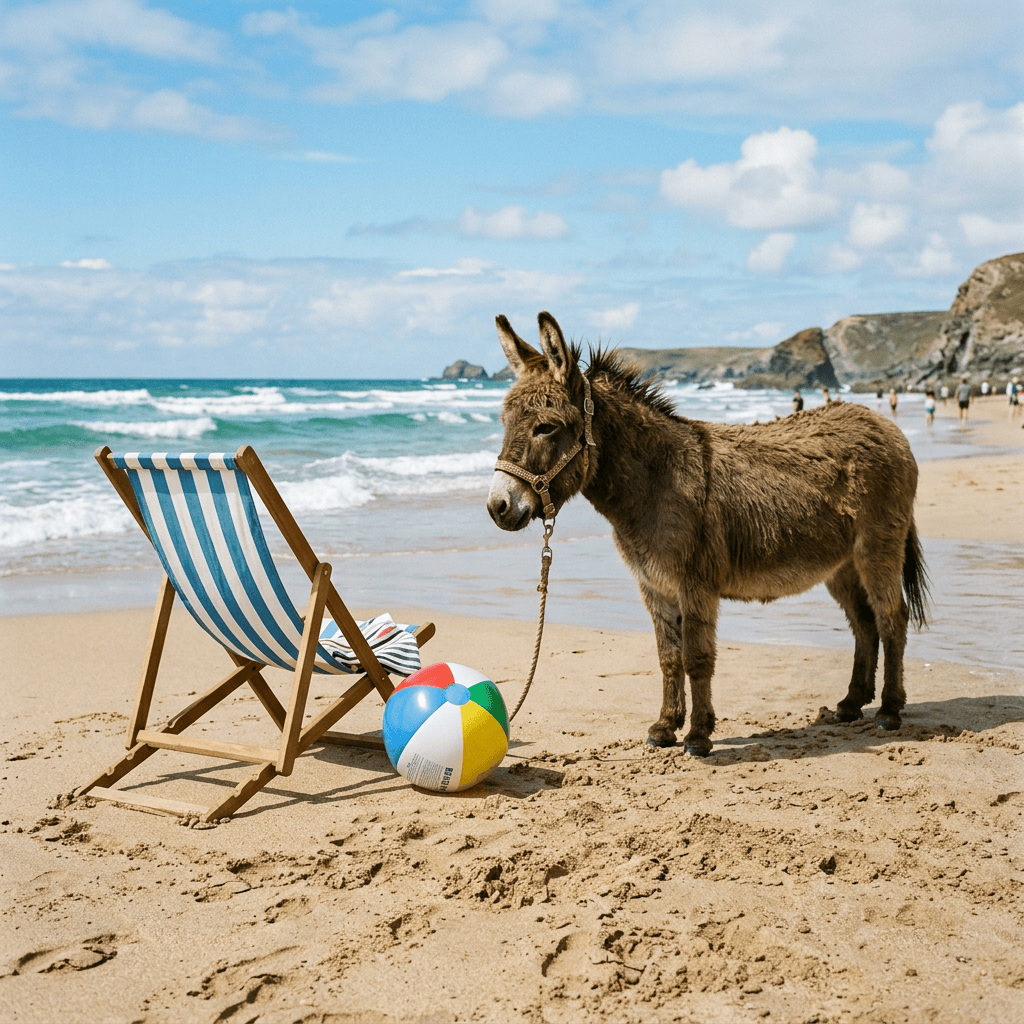
Donkey rides – a great British beach classic in the past. A plodding ride along the beach was an exciting treat. But as affordable holidays abroad became more popular, traditional seaside resorts began to lose some of their visitors. At the same time, concerns about animal welfare grew, and the costs of keeping and caring for the donkeys made the business increasingly difficult to sustain. Although donkey rides still survive in a few places, they are no longer the familiar sight they once were.
Punch and Judy shows – definitely not for the faint-hearted

The first recorded performance of an early version of Mr Punch in England dates back to 1662. This type of entertainment had its heyday in Victorian times. The storylines were hardly what we’d expect from children’s entertainment today. The alarming Mr Punch quarrelled with his wife Judy, caused mayhem with their baby and battled policemen and crocodiles, usually with plenty of shouting and slapstick violence. Yet audiences found it hilarious, and the familiar cry of “That’s the way to do it!” became part of the show’s enduring appeal.
The Victorians certainly had a rather different idea of what constituted suitable entertainment for children.
Feeling peckish?
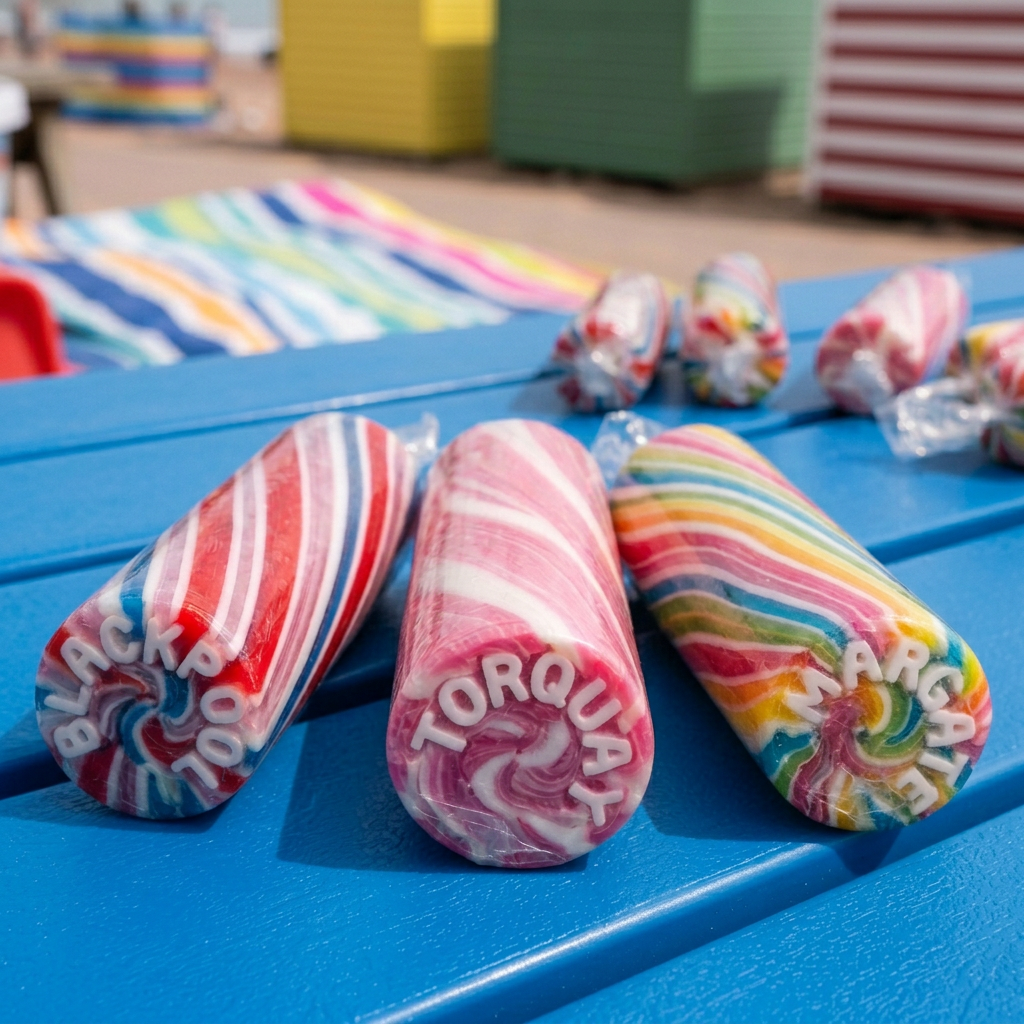
When at the beach, ice cream was a must – but a stick of rock was also obligatory. With the name of the resort name appearing throughout the whole stick, it made a cool present to take home for your friends. It was both a sweet and a souvenir.
The origins of lettered rock date back to the nineteenth century, although exactly who first came up with the idea remains uncertain. The clever part is that the lettering isn’t printed on the outside: the letters are made from coloured sugar and assembled before the whole sweet is stretched into a long stick. Break off a piece and the name is still there, running right through the middle. It’s a small confectionery miracle – even if it could take you the rest of the summer to finish eating it!
A trip to the beach today
Compare that with today. Swimwear has become a fashion statement, beach accessories are carefully coordinated and mobile phones are never far away. Before we’ve even settled on our sunlounger, we are taking selfies, checking our appearance or arranging the perfect photograph. The pursuit of the perfect tan seems to have become almost as important as enjoying the sunshine itself.
There’s nothing wrong with any of that – everyone likes a pretty beach photo. The old-fashioned British beach day wasn’t particularly comfortable. The sandwiches were sandy, the deckchairs were awkward, the windbreak never stayed upright and the sea was generally freezing. But we didn’t seem to mind.
We went to the beach to play, explore, eat ice cream and enjoy a day out with the family. There were no photographs to upload, no messages to check and no pressure to look perfect.
Perhaps we weren’t having an Instagram-worthy beach day, but we were having a lot of fun.
And sometimes, I wonder if that’s what we’ve lost along the way.
I’m sure there are plenty of other seaside traditions and childhood memories I’ve missed. Did you have donkey rides, spend your pocket money in the penny arcades or come home with a stick of rock? Perhaps you remember something completely different.
I’d love to hear your memories. What made a traditional British day at the seaside special for you?


You must be logged in to post a comment.