Categories
English life

Changing Christmas Celebrations: What Lies Ahead?

Christmas Card Depicting Botanical Ornamentation by newyorkpubliclibrary is licensed under CC-CC0 1.0

English-stuff has various posts on Christmas traditions, mainly relating back to the Victorians (see https://english-stuff.com/2024/12/07/the-history-of-christmas-pudding-a-timeless-tradition/https://english-stuff.com/2021/12/22/a-victorian-christmas-dinner/https://english-stuff.com/2020/12/19/a-victorian-christmas/ )

But what about Christmas today?

Which elements of a 21st century Christmas celebration in the UK could change in the future?

The early start

I promise you that I have actually seen Christmas paraphernalia on sale in August … and I wouldn’t be surprised in the least if anyone has spotted Christmas merchandise even earlier than that. It was not always this way. The commercialisation of Christmas makes it come round more quickly every year.

Once we get to the end of October and Halloween is over, on 1st November the gloves are off. It’s an absolute free-for-all with Christmas publicity, offers, gifts, decorations, and foodstuffs in your shops. These things are on your TV and in your face till the day itself arrives.

A tongue-in -cheek question ….will the day arrive when we end one Christmas and immediately start preparing for the next?

Christmas cards

Christmas cards are greeting cards that people give or send to each other to send a message which can convey love, or a religious or humourous message. In the UK it is a way of celebrating the Yuletide season.
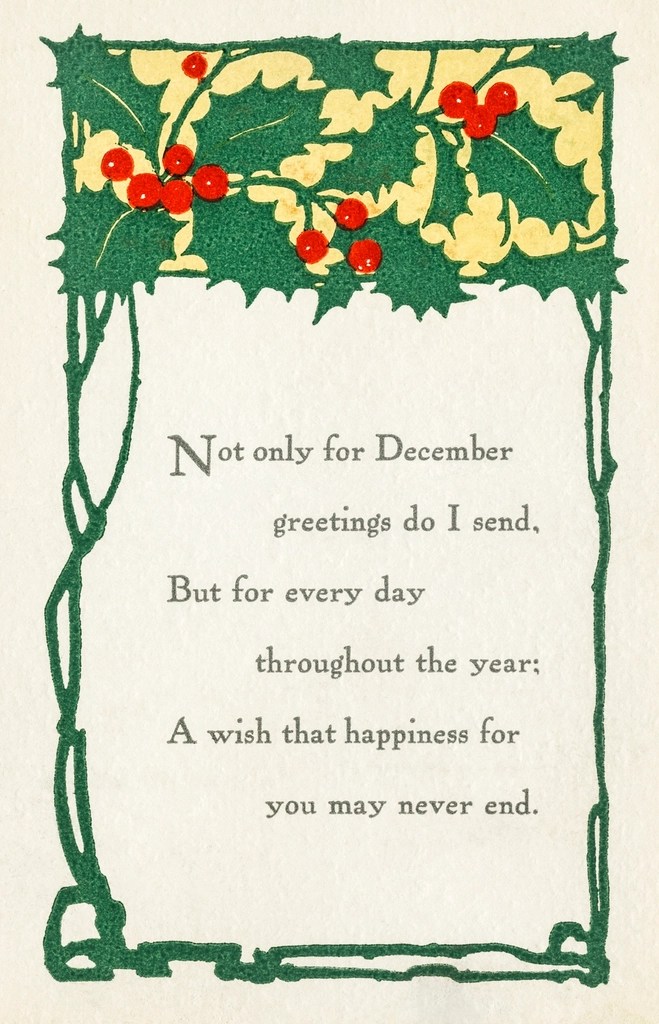
Christmas Greeting Card (ca. 1922) by newyorkpubliclibrary is licensed under CC-CC0 1.0

Christmas cards became popular during the reign of Queen Victoria, like several of our other festive customs. (see https://english-stuff.com/2020/12/19/a-victorian-christmas/ ) The Christmas card industry is now worth approximately a whopping £1.4 billion.

But with the advent of digital messages, WhatsApp, AI and who knows what else, will this tradition be affected? There is still a huge quantity of Christmas cards in the 2025 post but there has been a slight decline in volume in recent years due to different consumer habits such as online messaging, plus the rise in postage costs. The Guardian published this article today: https://www.theguardian.com/business/2025/dec/12/card-factory-issues-shock-profit-warning-during-peak-christmas-period

But it’s not all down to AI taking over. We are also probably more aware of the environmental costs — the carbon footprint and the paper involved.

Do you think Christmas cards will become extinct as time goes by?

Christmas stamps

https://png.pngtree.com/png-vector/20220926/ourmid/pngtree-sets-of-winter-christmas-stamp-postage-collection-snowman-christmas-vector-png-image_4105806.jpg

The first set of Christmas stamps were produced in 1966. But should we stop sending Christmas cards, will we lose our Christmas stamps too? Answers on a postcard with a Christmas stamp please.

Christmas crackers

Christmas cracker image from Openverse

If you are reading this from outside the UK, you may have no idea what this is – although the Commonwealth countries also have this tradition. Basically it’s a paper wrapper that generally contains a trinket, a joke and a paper crown. You pull the cracker with another person at each end at the Christmas dinner table. It makes an explosive sound. The contents then tumble out, hence the name cracker.

Invented in the mid-nineteenth century, crackers slowly became popular items on the Christmas table. Millions of Christmas crackers will be pulled apart this year. Yet revenue from sales has dipped slightly in recent years. This is mainly due to the tough economic climate and the fact that crackers are considered an option rather than an essential.

But it’s not all bad news, there’s evidence of innovation in the Christmas cracker business – for example, luxury crackers or joke-focused editions.

Christmas dinner
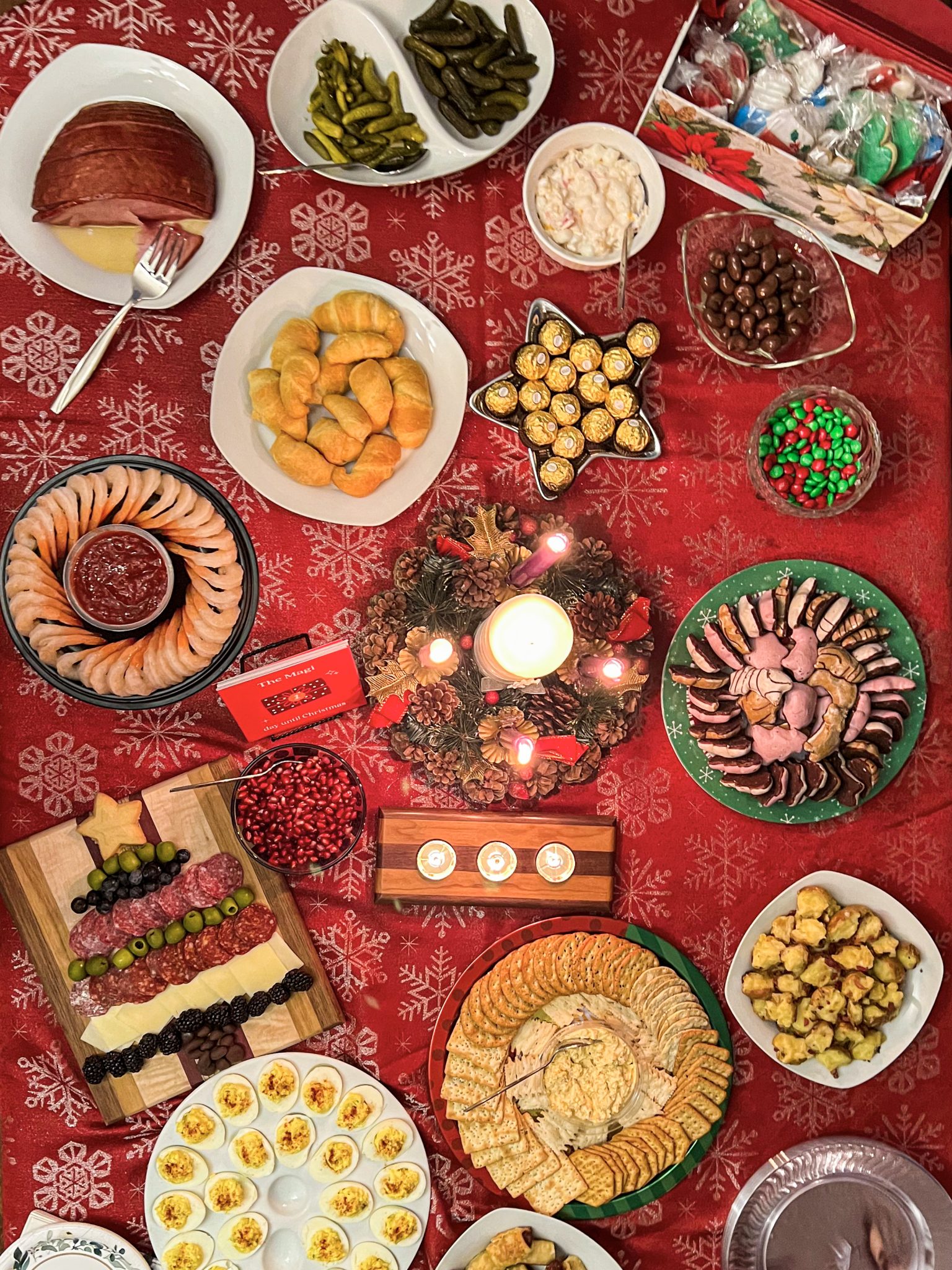
Christmas dinner spread by mdburnette is licensed under CC-CC0 1.0

What to say about Christmas dinner? A traditional Christmas dinner includes roast turkey or a roasted joint of meat. It comes with crispy roast potatoes, seasonal vegetables (which must include Brussels sprouts even if you don’t like them), stuffing, and gravy. People also like to add their favourite accompaniments – for example, Yorkshire puddings, pigs in blankets, cauliflower cheese. And why not?

Industry data shows a decline in turkey consumption at Christmas over recent years. Fewer households are choosing turkey. Instead, they are opting for lamb, gammon or chicken.

Many members of the younger generation go one step further and ignore the traditional fare altogether – they might choose curry or pizza or Mexican food or whatever preference they have. And let’s not forget vegans and vegetarians.

Roast turkey remains part of British Christmas tradition, but its role is evolving. Fewer households are sticking exclusively with turkey, and a growing number of people are choosing alternatives or multiple mains for their festive meal. This reflects broader shifts in eating habits, costs and cultural preferences in the UK.

What do you think about these changes? Are they positive or negative?

Have you seen any other changes that could happen in the future?

Categories
English history English life

A brief history of British Pub Names

The story behind the names

Take a walk through almost any British town or village and you’ll notice that pubs rarely have ordinary names, like the surname of the owner, for example. Instead, you’ll find The Red Lion, The Crown, The Swan (& maybe Something), But why?

The Vine Inn sign by Oast House Archive is licensed under CC-BY-SA 2.0

The tradition goes back hundreds of years. In medieval England, many people couldn’t read, so pubs were identified by pictures on their signs rather than words.

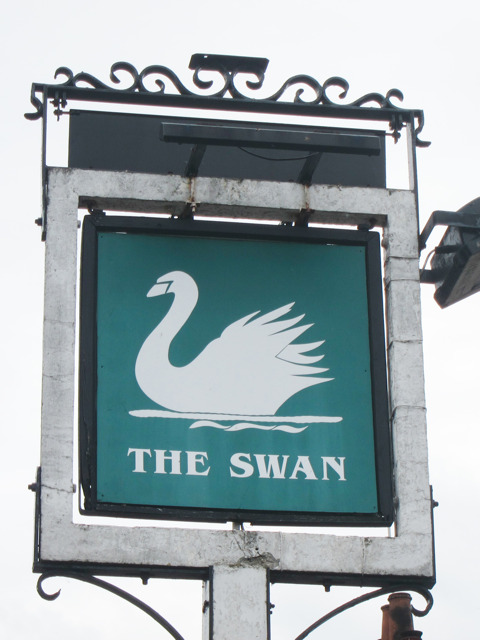
At first these images were of leaves or bushes to show that these establishments sold wine. Over the years, signs began to include other recognisable elements or hot topics in daily life. A painted lion, a crown or a swan was much easier to recognize than letters on a board. Over time, those images became the official “names” of the pubs.

Certain themes were especially popular, with the Red Lion at the top of the list. Why? It is believed that James I encouraged this name to strengthen support for the new Stuart dynasty after the demise of Elisabeth Tudor.

The Sign of the Red Lion by David Wright is licensed under CC-BY-SA 2.0

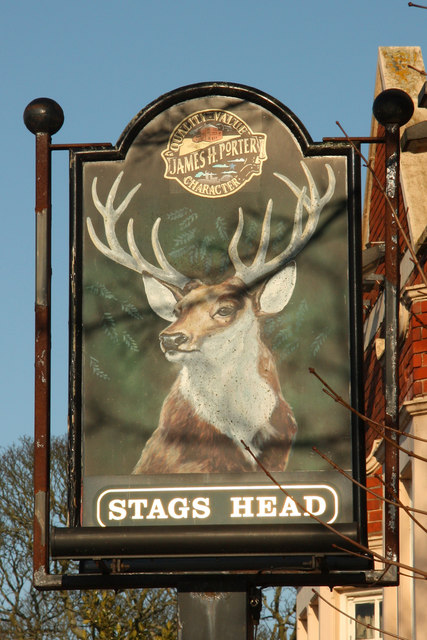
But other animals such as stags, swans, horses, cats, dogs and foxes also figure heavily on pub signage – see below for a sample.

Royal Symbols

  • The Crown – One of the most popular pub names, it’s a clear indication of loyalty to the monarchy. During times when public houses also served as community gathering spots, aligning with the royal family was both patriotic and practical.
  • The King’s Head – A name often tied to specific monarchs. After the English Civil War, many “King’s Head” pubs displayed signs with portraits of Charles II, showing royalist sympathies. (Others, more daring, kept King Charles I’s head – literally nodding to his execution….)
  • The Royal Oak – Refers to a famous incident in 1651 when the young Charles II hid in an oak tree to escape capture by Parliamentarian forces after the Battle of Worcester. Naming a pub “The Royal Oak” became a subtle political statement supporting the Stuart monarchy.
  • The King’s/Queen’s Arms – not literally referring to body parts, but their heraldic coats of arms. Again, the establisment woud be generally easy to recognise even if you could not read, and associated with the royalty or aristocrat of the owner’s choice.
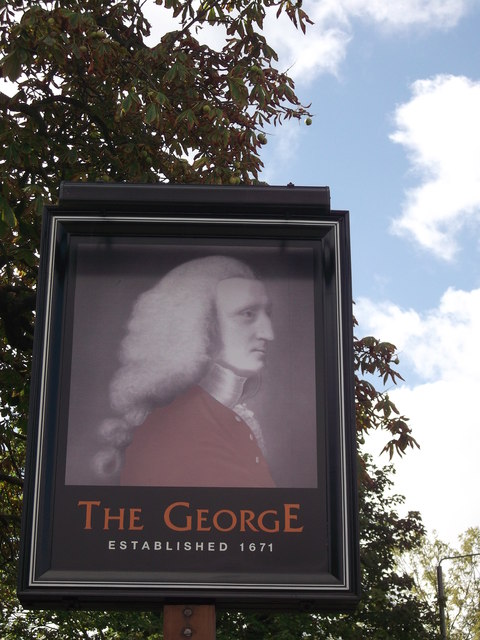
  • Or simply call your pub after the name of your favourite monarch – The Queen Victoria, The Prince Albert, The George. This is when the pub’s name will often give you a clue to its age. See below for two examples.
A King and a Queen – photos from Openverse

Trades and Tools

Not all pubs were about kings and crowns as many reflected the everyday lives of their patrons:

  • The Plough – A popular name in rural areas, symbolising the farming life central to England for centuries.
  • The Blacksmith’s Arms – Celebrating one of the most vital trades in a community, where metalwork kept villages running.
  • The Carpenter’s Arms / The Mason’s Arms – Similar trade-linked names honoured the craftspeople whose work built towns and churches.
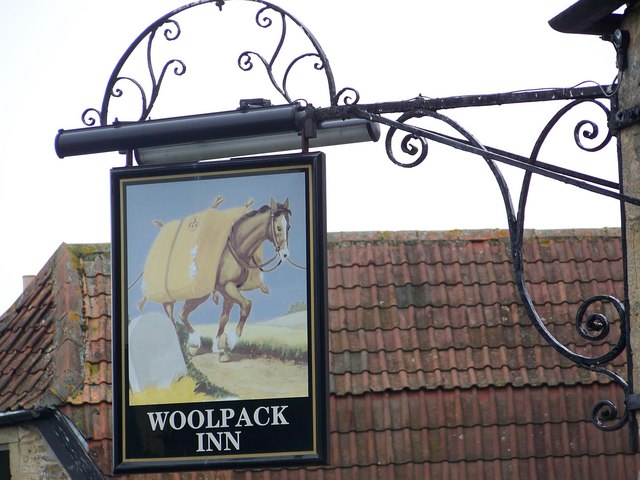
  • The Woolpack – A nod to England’s historic wool trade, which was a backbone of the medieval economy.
  • These names served as landmarks, meeting points, and symbols of local identity. They were also practical, often chosen for imagery that could be painted on a sign and easily recognised in a largely illiterate society.
Sign for the Woolpack, Beckington by Maigheach-gheal is licensed under CC-BY-SA 2.0

So next time you raise a glass in The Crown or The Plough, you’re not just drinking in a pub but drinking in centuries of history.

👉 What’s the most unusual or historic-sounding pub name you’ve come across?

Categories
English history English life

Timeless English Names: A Journey Through Centuries

Enduring First Names in England

Trends come and go. Flared trousers, permed hair, avocado-coloured bathrooms… But when it comes to names in England, some have stood the test of time so well that they’ve been on the guest list for christenings, weddings and school registers for centuries. Let’s take a look at the stalwarts of English first names.

A Quick Stroll Through History

Names in England have always been shaped by big cultural forces. Medieval times leaned heavily on saints and the Bible – for instance, John and Mary. However, interestingly. the name Jesus was seen as a holy name that was too sacred to be used – although it is widely used in Spanish/ Hispanic culture where its use is seen as an act of devotion.

But back to England. The Tudors and Stuarts sprinkled in a dash of royal glamour – enter William, Elizabeth and James. Victorians loved names that sounded a little grand, romantic and dignified. Many were influenced by the Bible, classical literature, royalty and a taste for flourish- look at Augustus, Leopold, Theodore or Clementine, Lavinia and Florence. Fast forward to today, and while some baby names might mirror the latest teen heartthrob or YouTuber, the classics are still quietly holding their ground.

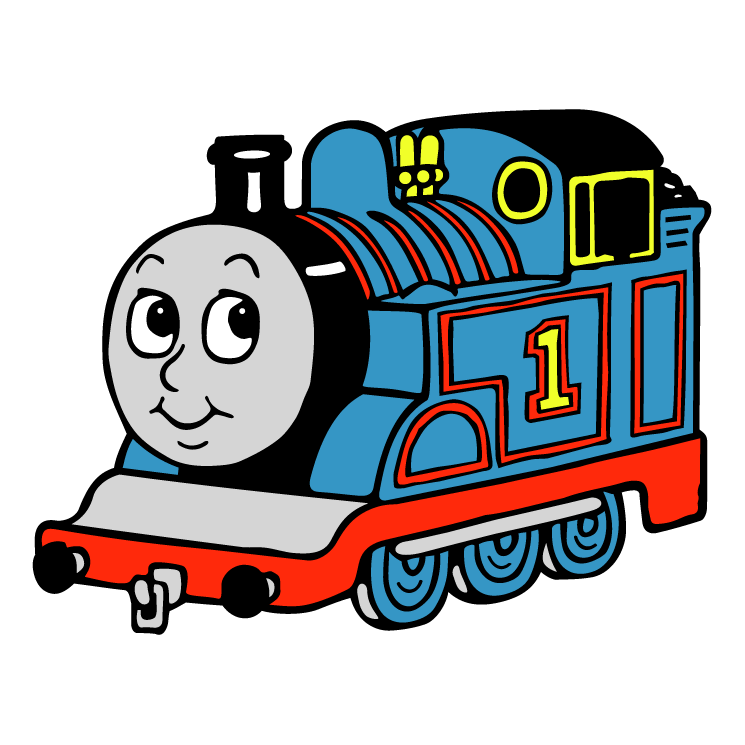
https://4vector.com/i/free-vector-thomas-the-tank-engine_029902_thomas-the-tank-engine.png

The Boys Who Never Left

  • Thomas – A steady favourite since the Middle Ages. From doubting apostles to Tank Engines, Thomas has kept its friendly, approachable charm.
  • John – Once the name in England. For centuries, if you called “John!” in a medieval marketplace, half the crowd would turn around. Even if it’s not topping charts anymore, it’s still there in respectable numbers.
  • William – The Normans brought it over in 1066, and the English never let it go. Royals, poets, explorers… William’s got pedigree. Also in disguise as Will, Billy, Liam – take your pick.
  • James – Biblical, royal, and endlessly adaptable. Jim, Jimmy, Jamie – all still around.

The Girls Still in Style

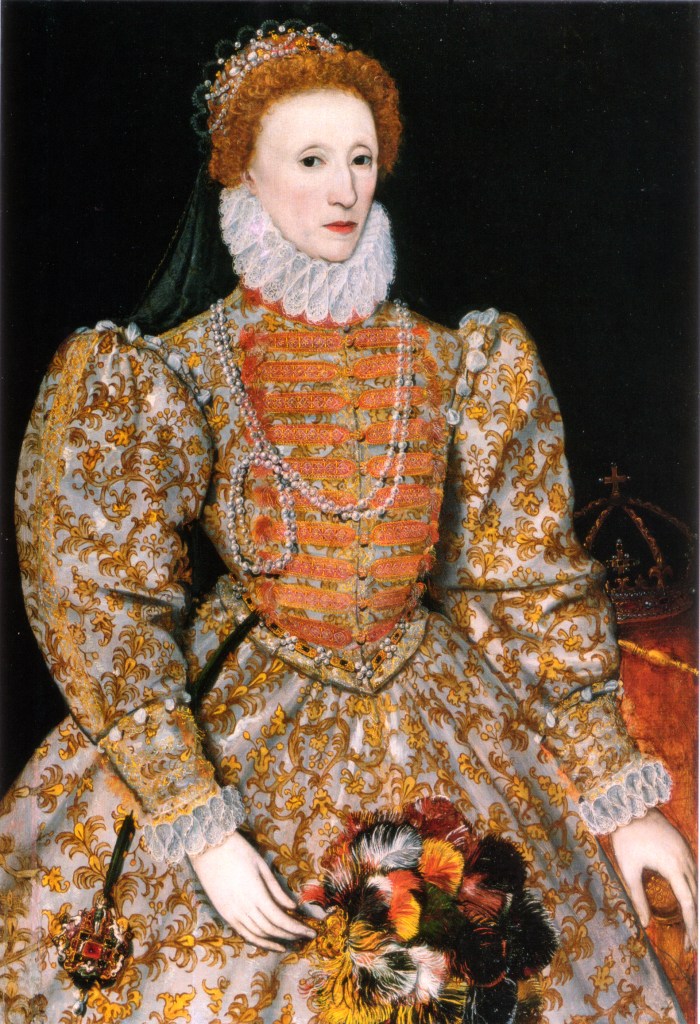
The Darnley portrait of Elizabeth 1 – Wikipedia Commons, in public domain
  • Elizabeth – Thanks to a certain Virgin Queen, this name has royal sparkle. Add in the endless nicknames (Liz, Lizzie, Beth, Ellie, Eliza…) and you’ve got staying power.
  • Mary – Queen of the popularity charts for centuries. Once so common that it’s said half of 16th-century England answered to it. Today, less so, but still timeless. (And has also morphed into Marie, Maria, Mariah…)
  • Margaret – Worn by saints, queens, and the odd prime minister. While fewer babies are being christened Margaret these days, its modern cousins (Maggie, Megan, Maisie) keep it alive.
  • Catherine/Katherine – Another regal choice with saintly roots. Kate and Katie keep it fresh in modern-day England.

How Names Stand the Test of Time

What’s the secret? Adaptability. John morphed into Jack. Elizabeth reinvented herself a dozen ways. Even Margaret found new life in Megan. The names that survive aren’t rigid – they’re shapeshifters.

Meanwhile, some names that once ruled the roost – think Mildred, Ethel, Gertrude (or the 20th-century Gary )haven’t yet managed a comeback. But you never know. Stranger things have happened.


The Modern Charts

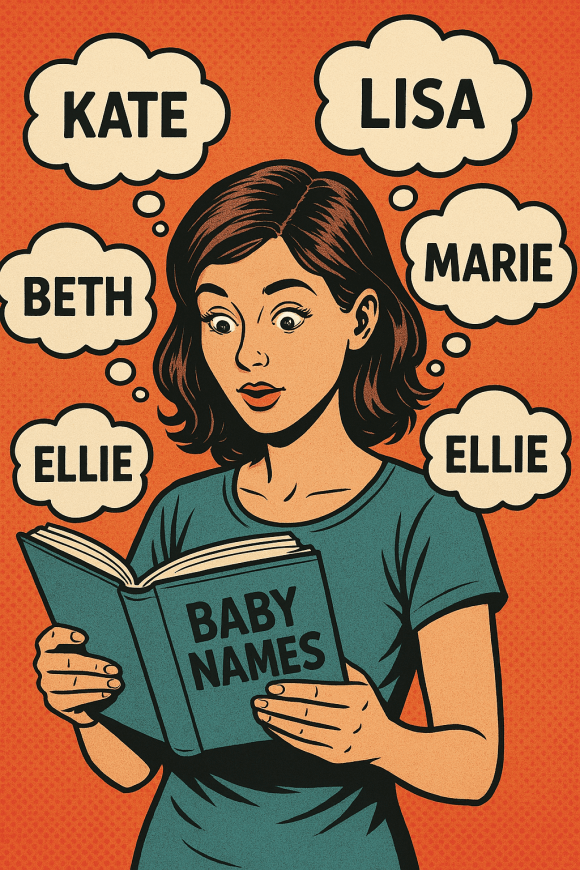
Computer Generated Image – yes, I know that Ellie is there twice. This proved quite a challenging image for Chat GPT to create.

According to the Office for National Statistics, names like William, James, and Elizabeth are still hanging in there. John and Mary might be backstage at the moment, but you’ll still meet plenty of Jacks, Wills, and Ellies running around the playground. The classics never really leave us; they just slip into new disguises.

So, whether you’re a William, Elizabeth, Thomas or Mary, you’re part of a long, noble tradition of names that have survived medieval plagues, Tudor court dramas and celebrity culture. Trends may change, but these names are as English as a cup of tea and a queue.

Let me know in the comments if your name made the timeless list, or are you waiting for a revival in the popularity of your name ? Do you like or dislike your name?

Categories
English life Wordpower

Why do we say cheesy?

Cheesy

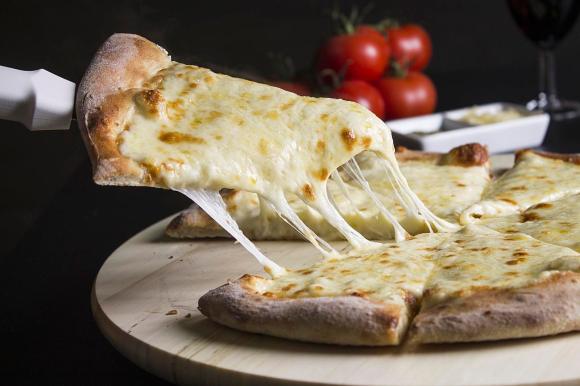
We say that something is cheesy in English to mean that it is inferior, cheap or possibly embarrassing due to its lack of quality. (Obviously, this does not apply to its other definition, i.e. a large amount of cheese on our food, as above!)

Examples:

He bought some cheesy (tacky) souvenirs from the local shop.

We didn’t like the show, the actors were really cheesy. (phoney)

But this was not always the case. In the 1850s, when the word was first used, if something was cheesy it was considered to be of top quality. Cheesy as the idea of something pleasant and important crossed the Atlantic where the concept of cheese meant celebrity or big money and gave us the expression ” the big cheese” to signify a person of importance. Over time, the word cheesy began to be used ironically, and this is the meaning that we have been left with today.

Small Potatoes/Chickenfeed

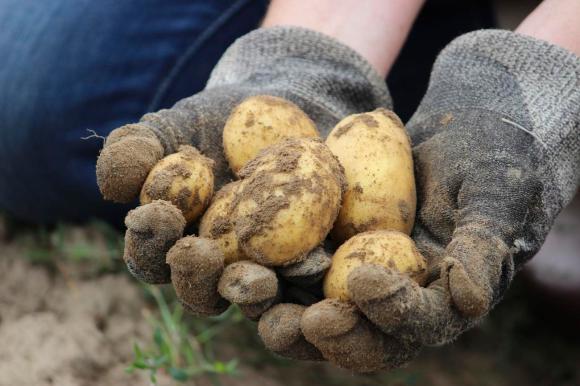
Small potatoes are the opposite of important, something, not very imposing and insignificant. First recorded in the 19th century, it came from the idea of small potatoes not being worth the bother if they were being picked or sold.

Chickenfeed, another U.S. expression, is along the same lines. Chickens were readily available in the 18th and 19th centuries whereas cattle and horses were more expensive and needed a bigger supply of food.

Chickens, being lower down the pecking order (see what I did just there?) were fed on leftovers and grain, hence chickenfeed coming to mean something trivial, often a small amount of money.

Examples:

I’m not interested in their money – it’s small potatoes/chickenfeed.

Sour grapes

If you suffer from sour grapes, it means you speak badly of something you cannot have. This is an expression from one of Aesop’s Fables.

Aesop was a slave who lived in Greece around 600 B.C.E. He was a storyteller who told fables – short stories with a moral at the end. These fables were not recorded until 300 years after his death, so Aesop’s Fables, the collection of his stories, may or may not be all his own work, as the stories have been recorded, translated and rewritten over hundreds of years.

However, one of the best-known tales is “The Fox and The Grapes”, in which a fox is unable to reach a juicy bunch of grapes. Disappointed by failure, she salvages her pride by saying that they must have been sour.

I’m sure you can all think of someone who disparages something they once wanted. This is a case of sour grapes.

Salad Days

This saying refers to a carefree time with no worries, generally when we are young, and it was first recorded in William Shakespeare’s play Anthony and Cleopatra.

Cleopatra calls her salad days the time when she was “green in judgement“, in other words, she was naive with not much knowledge of the world.

For a time this was also what people meant when they referred to salad days but the meaning has now shifted to mean the prime of youth, a time of happiness and optimism.

Example:

He did lots of crazy things in his salad days, but now he’s turned into a typical family man.

Thanks for reading the post! Can you think of any more foodstuffs used in English expressions? Write them in the comments below!

Categories
English life

Our daily bread

Bread HD wallpaper – courtesy of HD Wallpapers

A quick history of bread

Bread is one of the oldest human-made foods in our world and remains one of our most highly consumed foodstuffs today. There is evidence that bread has been around for a staggering 30,000 years.

The ancient Greeks, Romans and Egyptians ate leavened bread, which is generally what we tend to eat in England today. Leavened bread means that yeast has been added to the dough mixture, making the bread airy with a lighter texture.

Bread. is, of course, a basic food product in the U.K. Nowadays we consume bread as toast, in sandwiches, or to accompany a meal, but in the Middle Ages, the bread itself was the plate for the meal, and known as a “trencher”.

The word “trencher” is derived from Old French “tranchier”, meaning to cut. The heavy coarse bread was cut into slices and became edible tableware. As time passed, the trencher was no longer made of bread but evolved into a circular wooden plate, similar to, say, a cheeseboard.

Cheeseboard courtesy of Freepix.com

After the meal was over, the usually stale and hard bread was generally used as livestock feed although it was sometimes eaten as well, or sadly, donated to the poor. No waste, unlike today. And obviously we are not talking sliced white bread with fluffy air pockets here. This no doubt, would have significantly decreased the enjoyment of your food as well as the state of your attire…..

Sliced bread was still far away in the future at this point. Everyday bread for the peasants was rough, grainy, hard and not always easily digested. It was, however, considered to be a step above the wholegrain “trencher” bread used as plates, which was commonly given to animals after the meal was finished.

The financially better off consumed bread which was made from milled wheat, or oats, or both. The ingredients were either processed at home or a local miller would grind them in return for a small portion of the goods. Breadmakers and millers prospered as few people had ovens and it was difficult to conserve flour. By the 16th century, the terminology of bread reflected not only the ingredients, but was linked to social class. The whiter the bread, the finer it was considered, reflecting on your place in the social hierarchy.

Brown bread was handed out to the Irish during the Great Famine of the 18th century. Fibrous, rough brown bread was strictly for the lower classes and the poor.

When England became more industrialised in the 18th century, more factories started to manufacture white bread and the working classes, after being denied this item for so long, were more than willing customers. It made sense – people could afford it, it was easier to chew and digest than its wholegrain counterpart, particularly important at a time where teeth were often sadly neglected.

White bread was filling and therefore value for money. It was often suspected that brown bread had been adulterated but it was thought that as white bread was …well, white … additives would be easily detected. Not actually so, as bread manufacturers in the 1930’s actually used chlorine and peroxide to make their bread even whiter. Don’t worry, these additives are banned today in the U.K………at least for the moment….

The Aerated Bread Company (also known as A.B.C.) was established in London in 1862 by John Dauglish, who used his medical studies to replace yeast with carbon dioxide, removing the requirement to knead the bread. This, together with mechanical processes, made the procedure more hygenic and quicker as there was no longer a yeast fermentation period.

The kneading process was no longer necessary at the A.B.C.
Bread Company
Photo by Ron Lach on Pexels.com

In 1967 the Chorleywood bread process, developed in, yes, you guessed it, Chorleywood in Buckinghamshire, reduced breadmaking time even further, and according to Wikipedia, “As of 2009, 80% of bread made in the United Kingdom, Australia, New Zealand, and India, used the process.”

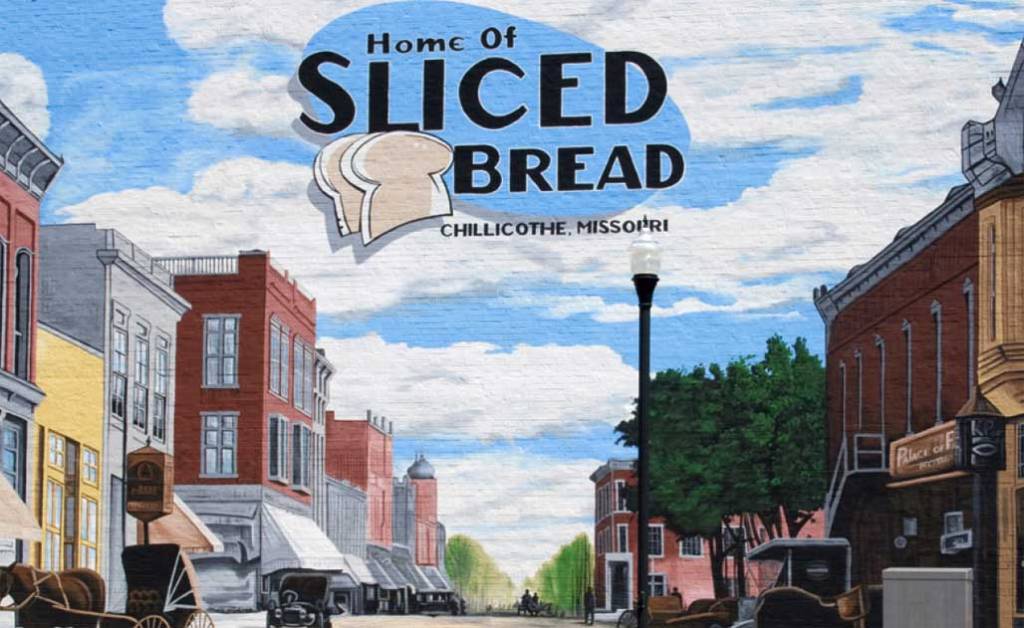
And in 1928, across the Atlantic, the Chillicothe Baking Company in Missouri sold the very first sliced loaf. In England, the delights of the sliced loaf arrived in 1937, courtesy of the Wonderloaf Bakery in Tottenham, London. By the 1950’s, the majority of bread sales were both pre-sliced and pre-packaged.

Sliced white bread in Chilliclothe
https://purepng.com/public/uploads/large/purepng.com-sliced-white-breadfood-bread-941524637306lfujv.png

The tide had certainly turned for the working classes with widely available and affordable sliced white bread in all its sandwichy glory and convenience.

But even as white bread began its journey into everyone’s homes, slowly but surely a section of educated people in England were beginning to turn their backs on white bread and recognise the nutritional value of brown bread.

As early as 1800, George III ate brown bread in an attempt to convert people to its value, but the crowds responded to his iniative by simply nicknaming him ” Brown George”.

But in 1865 the discovery of the advantages of bran on health meant that brown bread had commenced its comeback. From its lowly beginnings, brown bread slowly shrugged off its negative image and rose again in popularity as the public gained more knowledge and information on food and nutrition. Food could be questioned once people did not have to worry where it was coming from and had options, unlike previous eras.

We all have our preferences for types of bread but today it is generally held that brown bread is indeed of a higher nutritional value than white, and certainly more so than pre-packaged sliced white bread. The wheel has come full circle.

Photo by Daria Shevtsova on Pexels.com
Categories
English life

A ploughman’s lunch

Photo by Glammmur, CC BY-SA 4.0 https://creativecommons.org/licenses/by-sa/4.0, via Wikimedia Commons

The ploughman’s lunch, shown above, has been around for hundreds of years in England. It typically consists of crusty bread and a couple of hunks of cheese and a variety of items may or may not be added : pickles, chutneys, pies, salad, sliced meat, hard-boiled eggs or even an apple or grapes. It is often presented on a wooden platter, as in the photo above.

Probably no two ploughman’s lunches are ever quite exactly the same. And of course, it needs to be washed down with an ice-cold beer or cider.

Origins

Bread, cheese and beer have existed in England since its beginning, and the phrase “a ploughman’s lunch” was first recorded around the end of the 14th century in a medieval poem called Pierce the Ploughman’s Crede. It is not difficult to imagine that these three items would be easy to pack for a farm labourer who needed an economical but hearty packed lunch after a morning working in the fields. Cheese was a good source of protein in this midday sustenance.

This type of cold, easily prepared meal has also been on offer in inns or other establishments for centuries. At times it may have been all they had to offer, especially throughout rationing at the time of the second world war, and afterwards. But it remained a popular combination.

Bread and cheese
Photo by NastyaSensei on Pexels.com

Ploughman’s lunch hits the big time

There is some argument over whether “a ploughman’s lunch” always referred to the bread and cheese combo, or if it meant whatever the ploughman had in his lunch box for his midday meal that particular day.

But by the 1950’s it definitely had the meaning of the meal pictured above. The Cheese Board began promoting the sale of cheese when rationing ended and in the 60’s and 70’s the Milk Marketing Board began a campaign to promote the ploughman’s lunch itself. It was also a dream for caterers as the ingredients were flexible and the meal was so easy and quick to prepare. So understandably, it was always on the menu for the pubgrub of this period, and maybe brought with it the nostalgia of a less complicated, rural England.

New versions

A modern take on ploughman’s lunch
With thanks to https://communitykitchenatl.com/recipe/ploughmans-platter/

Nowadays chefs and gastropubs have added their own twists to the ploughman – and it has become a lunch that can stand up to most occasions. Scotch eggs, olives, paté, fancy meats and even fish can all adorn a contemporary ploughman’s lunch – but the cheese, unlike the substantial slices of bread, remains a staple ingredient, whatever variety it may be.

A relatively simple, timeless dish. Arrange the foodstuffs of your choice on a plate or platter or in a tray or a bowl. And off you go. Bon appetit!

Categories
English life

A calorie-laden trip through English food

Photo by Laurenz Kleinheider on Unsplash

A  completely personalised and random list

There’s a lot of negative news out there and coronavirus lockdown restrictions haven’t been exactly a bundle of fun.  Some of us have had to develop our culinary skills a little further than usual in these trying times. Some of us may have turned to the comfort food we crave. It got me thinking about the food of my childhood. I was born and grew up in the north of England. In the 80’s, when globalisation was beginning to take place, and people began to travel further afield on holiday, the range of foodstuffs on offer gradually began to increase. Nowadays any reasonably sized supermarket has a huge variety of goods, much of it imported from abroad, as our culinary tastes have broadened. But what about food we consider to be quintessentially English ?

In no particular order, here are some of my favourite typically English foodstuffs from my childhood.  Maybe I should warn you first that this post is not for anyone strictly controlling their calorie intake. But it makes for divine comfort food.

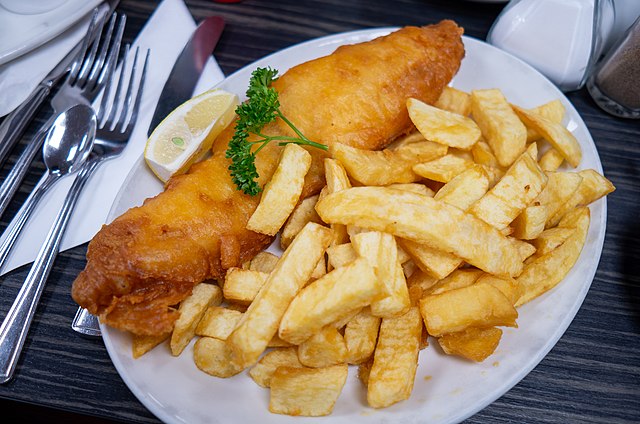
https://commons.wikimedia.org/wiki/File:Fish_and_chips_blackpool.jpg
  • I know it’s a cliché but I have the best memories of steaming hot battered  fish and chips with lashings of malt vinegar, brought home by Mum or Dad as a treat . The first takeaway I ever sampled  –  before takeaway was even a thing. Or as an adult, buying this tasty comforting fare, best eaten out of the wrapping paper on the way home after a few drinks in the pub. Pure bliss.

Selection of English Cheese
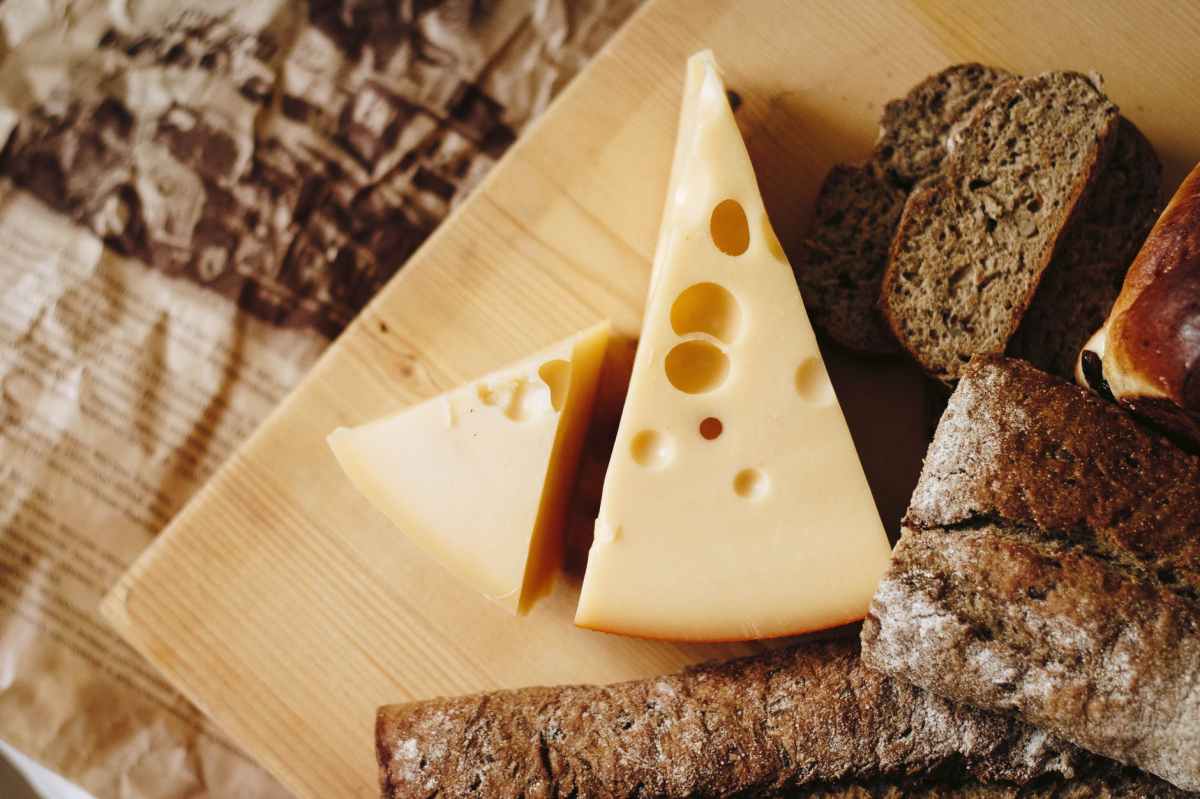
Photo by Polina Tankilevitch on Pexels.com
  • Cheese – my personal favoutite is tangy, crumbly Cheshire cheese. But there’s an immense range of around 700 English cheeses you can sample …..it’s not all about Cheddar. And there are some great names ….Cornish Yarg, Dorset Drum, Fine Fettle Yorkshire and the marvellously named Stinking Bishop, whose name orginates from Stinking Bishop pears, which are used to make an alcoholic drink known as perry, in which the cheese is steeped while it matures. In turn,  Stinking Bishop Pears are named after Mr. Frederick Bishop, who first cultivated them. Mr Bishop is said to have once shot at his kettle when it did not heat water quickly enough for his liking. Interesting guy.
A 99 ice-cream
Photo by Pixabay on Pexels.com
  • Ok, English weather in general can be pretty dismal but when conditions are right and it’s sunny, the sky is blue, it’s around 24 degrees and there is no more than a gentle breeze, an English summer’s day is not far from perfect. And top it off with a 99 from the ice-cream van. A 99, for those of you not in the know, is a soft ice-cream cone with a Cadbury’s chocolate flake. Heaven.
The fry-up
Photo by Thought Catalog on Pexels.com
  • The full English breakfast. Typically consists of bacon, sausages, fried eggs, baked beans, fried tomatoes, hash browns, fried bread, black pudding and any thing else you care to throw in. Yes, it involves a lot of frying. That’s why it’s also known as a fry-up. It also contains a huge amount of calories. But it is a tried and tested hangover cure, possibly because you are unable to move anyway if you scoff the lot. Variations include the Full Scottish, Full Irish and Full Welsh breakfast.

Plate of delicious freshly baked Xmas mince pies with one broken open to reveal the rich fruity filling. (Stockarch Free Stock Photos )
  • Mince pies. These are a Christmas delicacy and if you are unfamiliar with them, you would probably assume they are savoury….but no, they are made with sweet mincemeat consisting of dried fruit with spices. Orginally, however, in the 13th century mince pies were much bigger, generally rectangular in shape and surprise, surprise, they did contain meat well as fruit and spice. By the time of Queen Victoria, the mince pie had evolved into the the sweet- flavoured individually sized pie that we know and love today…. the mouthwatering taste of a traditional English Christmas.

So there you have some of my favourite food treats from my country of birth.

Anything else you would add to the list ? Tell me your thoughts ….

Categories
English life

And here is the weather forecast ….. from Saint Swithin

Who was Saint Swithin ?

It is truly amazing how snippets of information, no matter whether they are based on fact or fiction, can filter through hundreds of generations and become part of our traditions and culture. Such is the case of Saint Swithin (or Swithun, if you prefer), who was the bishop of Winchester in the 9th century. Despite the fact that not much has been recorded about his life, it is the events after his death that have earned him a place in history.

What we do know for sure is that Swithin was the bishop of Winchester from October 852 until July 853, and that on his deathbed, he requested to be buried in the cathedral grounds where the rain could fall on his grave.

But after a church reform, on 15th July in the 970’s, Swithin’s remains were transferred from his burial place in the grounds to a new shrine in the Old Minster in Winchester. The removal of the remains were carried out in heavy rain storms, which were said to last 40 days and 40 nights. Swithin was evidently not amused.

As we do not have access to weather records from the 10th century, the 40 day downpour has never been confirmed. But the legacy of Swithin has endured. He is the patron saint of Winchester. He is the saint we should address if we are in need of water in the event of a drought. He is also remembered in this verse:

St. Swithin’s day if thou dost rain
For forty days it will remain
St. Swithin’s day if thou be fair
For forty days ’twill rain nae mair. 

And translated into contemporary English – if it rains on 15th July, now known as Saint Swithin’s day, you are going to see a lot more rain. 40 days and nights’ worth, to be exact. But should the opposite be true, that is, the sun deigns to make an appearance, then you will enjoy 40 days of fine weather.

Sadly , I am obliged to admit that there are no years on record when this prediction actually came true. A meterologist would tell you that the weather can often change mid-summer in England and this is a phenomenon dependent on jet streams. But I would stake a guess that numerous people in England will look at the sky on 15th July 2020 and remember Saint Swithin.

Categories
English life

Quirky place names in England

Where are we ?   Photo by Leah Kelley on Pexels.com

Bizarre names

There are many locations in England with outlandish names. Some are rude, some are funny and some are just, well, really silly.

Here are are some of my favourites :

Beer

Beer is a picturesque little village on the coast of Devon. I am sure you can have a beer in Beer, but its name isn’t related to the drink. It is from the Old English bearu which meant grove, and this referred to the vegetation that originally surrounded the village.

Bell End 

This village in Worcerstershire shares its name with the British slang for part of the male genitalia, and has a secondary meaning, also slang,  which applies to someone who is annoying. Not to be used in polite company, unless you are referring to the location, of course.  Bell End won a competition in 2016 when it was voted the most hilarious place name in Britain.

Crackpot

Crackpot, a perjorative word for someone with irrational ideas, is also the name of a village in Yorkshire. It is believed to be the amalgation of an old English word, kranka, meaning crow,  and the word pot from Viking, which referred to a rift or a cavity. As is the case with many other place names, it describes what the settlers first spotted when they arrived at the location.

Giggleswick

Well, first of all, the name Giggleswick just makes me want to giggle. This town in the Yorkshire dales has the classic Anglo-Saxon ending – wick, (also appearing as –wich and -wyke in other place names) which meant dwelling or settlement.  The giggles bit  doesn’t have anything to do with laughing though. It’s because the particular site  in question belonged to Gichel, according to A Dictionary of British Place Names.

Pant

There are three places called Pant in Wales and one in England, namely in Shropshire, near the Welsh border. In the Welsh language, a pant is a valley, a dip or a hollow.  Pant in Shropshire is , unsurprisingly, located in a dip directly below Llanymynech Rocks Nature Reserve. In the same way I would like to have a beer in Beer, I would also like to pant in Pant. Obvious I know, but having a beer in Pant or panting in Beer just wouldn’t be the same.

Sandy Balls

Sandy Balls, close to the River Avon and the New Forest in Hampshire, is comprised of woods and parklands which are now managed as a holiday centre. It was originally called Sandyballas, which referred to the sand dunes, and the name Sandyballas appears on documents from  Henry VII’s time. By 1939, the name Sandy Balls was in use for the promotion of the location as a holiday spot, with a possibly unintentional play on words.

Ugley and Nasty

Ugley is located in the Essex countryside and was registered in the Domesday Book as Ugghelea.  The theory is that someone called something like Ugga owned the original land which was a leah (Old English for a meadow or open field). Nothing to do with Ugley being ugly  – in fact it is said to be very pretty.  Ugley is not that far away from Nasty, in Hertfordshire. According to Wikipedia, the name Nasty is derived from Anglo-Saxon, æt þǽm éastan hæge, meaning “at the eastern hedged enclosure” or similar. And no, I don’t understand how the name evolved into Nasty, either.

Westward Ho!

The only place in the British Isles that includes an exclamation mark in its name, Westward Ho! can be found on the North Devon coast. Its attention grabbing name comes from the novel of the same name, by Charles Kingsley, published in 1855. His novel would not fare well in contemporary times due to its imperialist bias, but in its day, it was a bestseller. Ten years after publication,  some local businessmen from Bideford (where the storyline begins) set up a holiday village in close proximity, christening it  Westward Ho! and cashing in on the novel’s success and the Victorians’ love for seaside breaks.

And finally ….. all the Bottoms

Forgive my puerile sense of humour, but I just love all those place names that include the word bottom (which, incidentally is derived from Old English botm , meaning the lowest part of something). Too many to mention here but thank you to Bottom’s Fold in Lancashire, Broadbottom in Greater Manchester, Clay Bottom in Bristol, and the marvellously named Scratchy Bottom in Dorset, for making us laugh.

Feel free to tell me about any other place names that make you laugh – in England or anywhere else…..hope you enjoyed reading this post as much as I have in creating it.

Categories
English life

British icons – the red pillar box

A famous British icon – the red post box
Photo by sl wong on Pexels.com

A burst of colour in the streets

Modern technology may have diminished the longstanding tradition of sending letters, but the red pillar box remains a well-known and much loved British emblem in the same way as the iconic red phone box. (see post of 4th October, 2019 British icons – the red phone box).

But how did red letter boxes come about ?

A brief history

Sir Rowland Hill was a teacher and social reformer who campaigned for changes in the postal system in the 1830’s. At that time, the postal service was poorly managed, costly, and slow. There was a complicated system of postal rates, and it was the recipient who paid for the letter and not the sender, so letters could be refused. Despite some fierce opposition, Hill revolutionised the postal system to create affordable standard rates by the use of postage stamps, to be paid by the sender.

This image has an empty alt attribute; its file name is pexels-photo-247801.jpeg
Postage stamps have long been collectable items
Photo by Pixabay on Pexels.com

However, in order to post a letter, it still needed to be taken to a receiving office, which were not always located near to the letter writer. These offices were usually coach inns or places where road tolls were collected, very different from the Royal Mail Post Offices we use today. As the country became more urbanised and industrialised, people needed more convenient places to deposit their correspondence. In 1852, Rowland Hill sent Anthony Trollope, a civil servant and a novelist, to trial the use of a “letter-receiving pillar” in the Channel Islands, a location which was further hindered by its dependence on a boat to and from the mainland for its postal service.

The use of pillar boxes along with scheduled collection times was a success. Letter boxes were introduced in Jersey in 1852, and later extended to the rest of Britain, where the first pillar box was inaugurated in Carlisle in 1853. The first post boxes were hexagonal but there have been more than 800 different types of post box over the years. One thing they generally have in common is that a post box displays the insignia of the incumbent monarch at the time of its installation.

Up to 1859, there was no standard colour for the pillar box. From 1859 to 1874 the standard colour was green, which was eventually deemed too inconspicious. Using the same logic as in the case of the phone box, the colour was changed to red to make post boxes easily identifiable. By 1900, the number of pillar boxes amounted to 33,500 in Britain, plus those throughout the British colonies.

A George V post box
Photo by Nadi Lindsay on Pexels.com

There are numerous types of pillar box which have survived until the present day. They are referred to by designated letters, type A, B, C and so on. John Penfold designed some of the first letter boxes and his nine different designs are now simply known as Penfolds. British post boxes have been copied and replicated in other countries in colours such as blue, green and yellow. And did you know that every time a British athlete won a gold medal in the 2012 London Olympics, a pillar box from their home town was painted gold to commemorate the occasion?

So not only do pillar boxes still serve their original purpose, they brighten our streets and add a little bit of history.