This September the Oxford English Dictionary updated its entries. This includes words, phrases or new definitions of words that already existed.I love updated words as a few of these definitely indicate the way we live in the 21st century. And that’s just it, language reflects life.
Here are a handful of my favourites, in no particular order. All definitions in italics are provided by the Oxford English Dictionary.
Al desko
An adverb that indicates an activity done at a desk, inspired by the Italian phrase ” al fresco.” Anyone who has ever worked in an office can probably relate to the idea of an al desko lunch. Deskfast –“Breakfast eaten at work, typically at a desk in an office.” also makes the list.
Have you deskfasted at any time in your life?
Deplatforming
Definition: ” “The action or practice of preventing a person, group, or organization from contributing to a public forum or debate.”
Speak to Donald Trump about this one.
Binge viewing
Thanks to streaming services for this one. We all know what this is (and maybe indulge in it ourselves) but you can rest assured that binge viewing and binge-viewers are now officially in the dictionary. Its predecessor, binge watching, that is ” the practice of watching several episodes of a TV show on one occasion, usually by means of DVDs or digital streaming” was admitted to the OED in 1998.
So a binge-watch might be a one-off activity but binge viewing is next level, defined as “The activity or practice of viewing television, film, video content on social media, etc., for intensive or extended periods, esp. by watching multiple episodes of a particular programme, series, etc., consecutively or in rapid succession.
Are you guilty of binge viewing or not?
Crackalack
This one is U.S. slang, nothing wrong with that. It’s a verb generally used in present participle as in ” What’s crackalacking?” in other words, what’s going on?
You’ve got to admit that it’s also quite enjoyable. Try it out and let me know how it goes.
Asparagussy
Okay, not a terribly useful adjective if you don’t talk about asparagus a lot, but this word just rolls off the tongue if you need to describe erm, an asparagus, for example.
Humans are funny creatures. We drink, we tell stories and then we invent dozens of different ways to say we’re drunk. One word is never enough. After all, “tipsy” isn’t the same as “smashed.” Language loves nuance, and apparently, so do we when we’ve had a few.
So, pour yourself something (or just grab a coffee if it’s too early), and let’s go on a tour of all the colourful, ridiculous, and occasionally historical ways we talk about being drunk.
Why So Many Words for “Drunk”?
We don’t have 30 different ways to say “hungry.” But when it comes to alcohol? Whole thesauruses have been filled. Why? Because drinking has always been social and humans get creative when they’re social.
Slang also softens things: “buzzed” sounds way cuter than “intoxicated by alcohol.” At the same time, exaggerations like “hammered” or “legless” help us laugh about what’s essentially a messy state of affairs.
Basically, we’ve been turning drunkenness into a language playground for centuries.
Classic & Common Synonyms
Let’s start with the words almost everyone recognises:
Tipsy – Polite, harmless, maybe even a little charming. Tipsy is someone y at a wedding, complimenting everyone’s outfit.
Buzzing – Very casual, very safe. Imagine a glass of wine after work.
Smashed / Wasted – No ambiguity here. If you’re “smashed,” you’re not going anywhere
Plastered – Old-school, but still used. “Plastered” suggests gravity is not on your side.
These are the solid, dependable workhorses of drunk-slang, which most Brits would use and recognise. And remember there are levels of drunkenness – “tipsy “suggesting a much lower level of inebriation than ” smashed”, “wasted” and “plastered” ( all conditions which we are not actually recommending, you understand.)
Colourful & Creative Slang
But there are some expressions which are basically cartoons in themselves:
Hammered – Precisely what happens to a nail after the hammer.
Sloshed – Conjures the delightful (or horrifying) image of liquid literally sloshing inside you.
Three sheets to the wind – A nautical phrase from the 1800’s, meaning the sails were not under control and the ship was lurching unsteadily.
Legless – A straightforward favourite in Britain, because in that state, you’ve got no legs left to stand on.
They’re vivid, they’re silly and they make you laugh even when you’re stone-cold sober.
A ship lurching on the sea – Deviant Art image created by Panna10
Creative Modern Additions
Fast forward to the 21st century and slang keeps evolving……..
Turnt – Popular in hip-hop culture, meaning hyped and drunk (or otherwise mentally altered).
Zooted – A blend of high and drunk, usually from drugs and alcohol.
The word “lit” meaning “drunk” dates back to the early 1900s long before Instagram existed. Nowadays it is used by to describe anything that looks fun and exciting.
And let’s be honest, in a few years we’ll probably have TikTok-inspired slang we can’t even imagine yet.
The Serious Side
Okay, drunk slang is hilarious, but drinking itself isn’t always. There’s a big difference between a glass of wine after work and and being “soused” on a Tuesday night. The fun words work best for silly, social situations, but are not always appropriate for more serious situations, where alcohol may have been the cause of a more serious incident. The words “inebriated”, “intoxicated” or ” impaired by alcohol” are generally used in these cases.
So, enjoy the humour, but know when to swap “sloshed” for something more thoughtful. Remember that depending on both the level of formality and drunkenness these words are not all interchangeable.
Conclusion – Your Turn!
From “squiffy” to “bladdered” to “stewed,” we’ve basically written a whole dictionary of words for “drunk”. And it’s still growing – every generation seems to invent more.
So next time you’re tempted to just say “drunk,” maybe try out something more colourful. Personally, I like “sozzled.”
👉 Pub Trivia: According to slang historians, English has more words for being drunk than for any other condition, even being in love. Make of that what you will.
How about you – what’s your favourite word for drunk?
Trends come and go. Flared trousers, permed hair, avocado-coloured bathrooms… But when it comes to names in England, some have stood the test of time so well that they’ve been on the guest list for christenings, weddings and school registers for centuries. Let’s take a look at the stalwarts of English first names.
A Quick Stroll Through History
Names in England have always been shaped by big cultural forces. Medieval times leaned heavily on saints and the Bible – for instance, John and Mary. However, interestingly. the name Jesus was seen as a holy name that was too sacred to be used – although it is widely used in Spanish/ Hispanic culture where its use is seen as an act of devotion.
But back to England. The Tudors and Stuarts sprinkled in a dash of royal glamour – enter William, Elizabeth and James. Victorians loved names that sounded a little grand, romantic and dignified. Many were influenced by the Bible, classical literature, royalty and a taste for flourish- look at Augustus, Leopold, Theodore or Clementine, Lavinia and Florence. Fast forward to today, and while some baby names might mirror the latest teen heartthrob or YouTuber, the classics are still quietly holding their ground.
Thomas – A steady favourite since the Middle Ages. From doubting apostles to Tank Engines, Thomas has kept its friendly, approachable charm.
John – Once the name in England. For centuries, if you called “John!” in a medieval marketplace, half the crowd would turn around. Even if it’s not topping charts anymore, it’s still there in respectable numbers.
William – The Normans brought it over in 1066, and the English never let it go. Royals, poets, explorers… William’s got pedigree. Also in disguise as Will, Billy, Liam – take your pick.
James – Biblical, royal, and endlessly adaptable. Jim, Jimmy, Jamie – all still around.
The Girls Still in Style
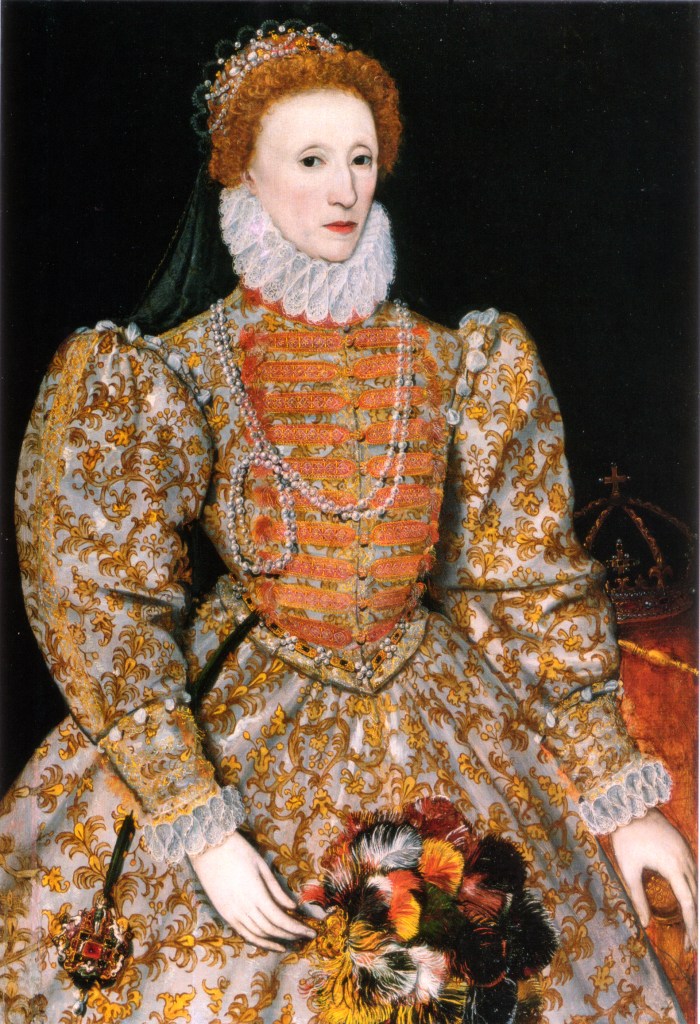
The Darnley portrait of Elizabeth 1 – Wikipedia Commons, in public domain
Elizabeth – Thanks to a certain Virgin Queen, this name has royal sparkle. Add in the endless nicknames (Liz, Lizzie, Beth, Ellie, Eliza…) and you’ve got staying power.
Mary – Queen of the popularity charts for centuries. Once so common that it’s said half of 16th-century England answered to it. Today, less so, but still timeless. (And has also morphed into Marie, Maria, Mariah…)
Margaret – Worn by saints, queens, and the odd prime minister. While fewer babies are being christened Margaret these days, its modern cousins (Maggie, Megan, Maisie) keep it alive.
Catherine/Katherine – Another regal choice with saintly roots. Kate and Katie keep it fresh in modern-day England.
How Names Stand the Test of Time
What’s the secret? Adaptability. John morphed into Jack. Elizabeth reinvented herself a dozen ways. Even Margaret found new life in Megan. The names that survive aren’t rigid – they’re shapeshifters.
Meanwhile, some names that once ruled the roost – think Mildred, Ethel, Gertrude (or the 20th-century Gary )haven’t yet managed a comeback. But you never know. Stranger things have happened.
The Modern Charts
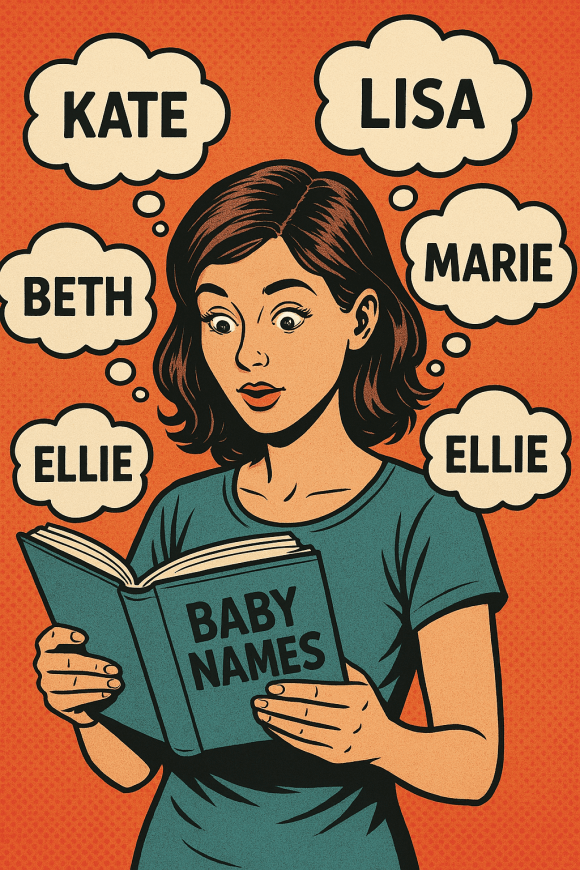
Computer Generated Image – yes, I know that Ellie is there twice. This proved quite a challenging image for Chat GPT to create.
According to the Office for National Statistics, names like William, James, and Elizabeth are still hanging in there. John and Mary might be backstage at the moment, but you’ll still meet plenty of Jacks, Wills, and Ellies running around the playground. The classics never really leave us; they just slip into new disguises.
So, whether you’re a William, Elizabeth, Thomas or Mary, you’re part of a long, noble tradition of names that have survived medieval plagues, Tudor court dramas and celebrity culture. Trends may change, but these names are as English as a cup of tea and a queue.
Let me know in the comments if your name made the timeless list, or are you waiting for a revival in the popularity of your name ? Do you like or dislike your name?
We tend to imagine the Victorians were all top hats, stiff collars and serious faces, but it’s a fact that they also had a sweet tooth. By the late 1800s, ice-cream had become the ultimate street food. For just one penny, you could enjoy a refreshing scoop from a colourful street cart on a hot day. Enter the penny lick.
The idea was simple. Vendors would place a blob of ice-cream into a thick little glass with a shallow dip at the top. You’d lick it clean (hence the name), hand the glass back, and off it would go to the next eager customer. Sadly, the Victorians were not so aware of the importance of hygiene or the existence of germs. This, combined with lack of pasteurised milk ( yet to be a legal requirement ) and the prevalence of common diseases like cholera and tuberculosis, meant passing around the same unwashed glass turned out to be a recipe for disaster.
The penny licks were banned in London in 1899 after a medical report linked the re-use of unwashed glassware to the rise of tuberculosis. Along came a much better idea: the edible cone. Not only was it safer, it was also tastier and you got to eat the container as well as the ice-cream.
The Ice-Cream Cone
But who invented the ice-cream cone? As usual, the story is not clear cut. One idea is that Ernest Hamwi, a Syrian immigrant in New York, improvised an ice-cream from a Syrian pastry, called zalabia, in 1904. Another theory credits the invention of the cone to Italo Marchiony, an Italian immigrant in New York, who created ice-cream containers made from dough, although they were more cup-shaped than actual cones.
Another earlier contender was Agnes Marshall, who ran a cookery school in London and published The Book of Ices in 1885. The publication comprised 170 sweet recipes with ice-cream figuring prominently. A later offering, her Book of Cookery in 1888, made reference to an edible cone and was called a cornet. Although the cornet was actually designed to be eaten using cutlery, Agnes Marshall is also regarded as a pioneer of ice-cream cornets. In 1894 the follow-up to The Book of Ices arrived, namely Fancy Ices – see book cover above.
So next time you’re happily munching on a ice-cream, spare a thought for the Victorians. Without their dodgy glassware, we might never have had the immense joy of the cone. Are you an ice-cream lover?
On the evening of 7 August 1606, the halls of Hampton Court Palace glowed with candlelight. The Great Hall, hung with rich tapestries, was filled with the rustle of silks and the low murmur of voices as courtiers found their seats. Outside the palace walls, England still trembled in the wake of the Gunpowder Plot, a failed attempt to assassinate the king and topple his fragile new dynasty. Inside the hall anticipation hung in the summer air: Shakespeare’s company was about to unveil a brand-new play.
This performance was no ordinary entertainment. Written in haste, sharpened by politics, and laced with supernatural dread, Macbeth was carefully tailored for its royal audience – King James I, the Scottish monarch who had inherited the English throne just three years earlier. Shakespeare knew his patron’s obsessions: the divine right of kings, the dangers of treason and a personal fascination with witchcraft. The play that would unfold that night would flatter, warn and captivate in equal measure.
As the actors prepared to summon thunder and witches onto the stage, few in the room could have guessed that they were about to witness the birth of one of the greatest tragedies in the English language – a story of vaulting ambition and bloody consequence that still grips audiences four centuries later.
🏰 The Backdrop: England in 1606
When Shakespeare’s players stepped onto the stage at Hampton Court, the court was still haunted by the spectre of treason. Only months earlier, in November 1605, the kingdom had narrowly avoided catastrophe when a band of Catholic conspirators attempted to blow up Parliament and kill King James I in what became known as the Gunpowder Plot. The king had survived, but the shock lingered. England was jittery, suspicious and deeply aware of the fragility of peace.
James himself was still a relatively new monarch on the English throne. In 1603 he had inherited the crown from Elizabeth I, uniting Scotland and England under a single ruler for the first time. His accession had promised stability after the long Tudor age, but it had also brought unease. James was a foreign king to the English, unfamiliar in manner and accent, and he faced the constant challenge of proving his legitimacy.
This was the tense world into which Shakespeare offered his new tragedy. Macbeth was no simple tale of murder and ambition. It was a mirror held up to a kingdom still recovering from conspiracy, where questions of loyalty, kingship and divine authority were painfully fresh.
🎭 Why Macbeth? Politics Meets Theatre
Shakespeare was no fool. He knew that a play performed for the king had to do more than entertain; it had to flatter, reassure and, if possible, speak to the monarch’s deepest concerns. Macbeth was crafted with this purpose in mind, weaving together themes that aligned perfectly with King James I’s interests.
First was the matter of ancestry. James traced his royal line back to Banquo, the noble companion of Macbeth in Scottish legend. In the play, Banquo is portrayed as virtuous and unjustly murdered, while his descendants are prophesied to inherit the throne. For James, this was more than a clever plot point – it was a theatrical confirmation of his right to rule, projected in flickering candlelight before the entire court.
Then came the witches. James had a personal fascination with witchcraft, even publishing his own treatise on the subject, Daemonologie, in 1597. He believed witches had conspired against him, and his fear of the supernatural was well known. By placing three sinister witches at the heart of the story, Shakespeare tapped directly into his king’s obsession,blending entertainment with a subtle nod to James’s authority as the man who could confront and defeat such dark forces.
Finally, the play was a stark warning against regicide. In the wake of the Gunpowder Plot, England needed no reminder of the dangers of treason. Yet Macbeth drove the point home with visceral clarity: the murder of a king unleashes chaos, guilt and ruin, while the rightful line of succession endures. For James, it was a political reassurance staged as gripping drama.
In short, Macbeth was more than a tragedy. It was a play of loyalty and legitimacy – a performance that fused Shakespeare’s genius with the anxieties and ambitions of his age.
⚡ The Performance: Sights, Sounds, Sensations
As the candles dimmed and the first lines echoed through Hampton Court’s Great Hall, the audience would have felt a chill that had little to do with the summer air. Shakespeare’s actors conjured a storm with the crude but effective stagecraft of the day – rolling cannonballs to mimic thunder, rattling sheets of metal for lightning, stamping feet to suggest the earth itself trembling. Out of the shadows emerged the three witches, hissing their riddles and chants. For a court still haunted by whispers of real sorcery and conspiracy, the effect must have been spine-tingling.
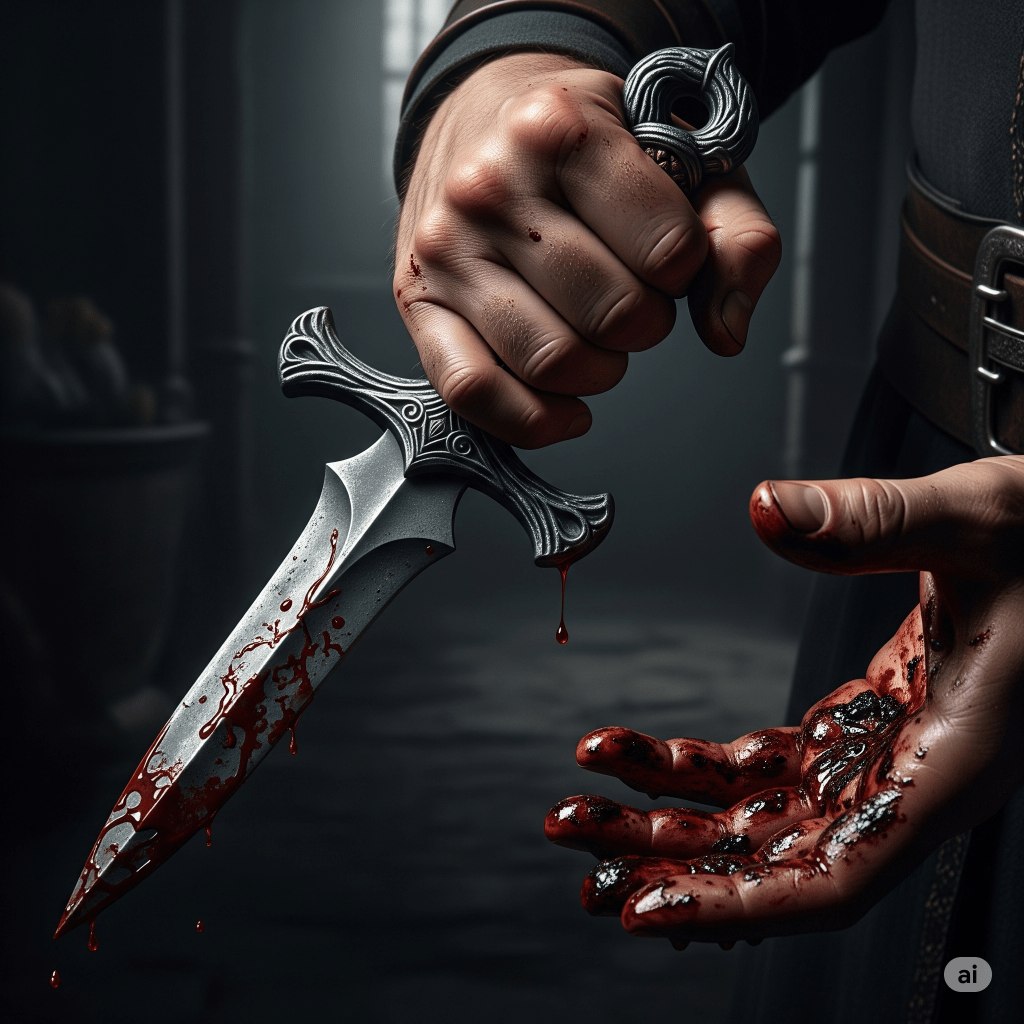
The action unfolded with a pace and brutality that set Macbeth apart from Shakespeare’s earlier histories and comedies. The murder of Duncan, though never shown on stage, was made palpable through the imagery of blood-stained hands, daggers that seemed to hover in the air and Macbeth’s tormented soliloquies. The courtiers would have watched in uneasy silence, perhaps casting sidelong glances at James himself during scenes of treason and regicide.
The performance was intimate, too. Unlike the bustling Globe Theatre, where audiences of commoners shouted and jostled in the pit, this was a royal performance in a confined, candlelit space. Every whispered line, every flick of a dagger, every flicker of flame would have carried weight. The courtiers were also participants in a carefully staged ritual of power, loyalty and warning.
By the time Macbeth fell and Malcolm reclaimed his throne, the message was clear. Kingship was sacred, rebellion doomed, and order would prevail. Just the reassurance King James wanted to hear. Yet beyond its politics, the play had cast a darker, deeper spell, one that would outlast monarchs and dynasties.
🌒 Legacy and Influence
That August night at Hampton Court was only the beginning of Macbeth’s long life. What began as a performance tailored for a king soon became one of Shakespeare’s most enduring tragedies, staged in playhouses, palaces and eventually on screens around the world.
Its themes of ambition, tyranny, and fate proved timeless. Though written to flatter James I, Macbeth transcended its political moment. Audiences saw in it not just a sermon on loyalty but a haunting exploration of the human hunger for power and the ruin it brings. From Cromwell’s England to the Victorian stage, from modern theatres to classrooms today, the “Scottish play” continues to resonate wherever people wrestle with corruption, violence and guilt.
Over the centuries, Macbeth also gathered a reputation as a cursed play. Actors whispered that disasters stalked its productions, from accidents on stage to mysterious deaths in the cast. Some blamed the witches’ spells, said to be real incantations lifted from folk magic. Others thought its violent energy simply courted misfortune. Whatever the truth, the legend only added to the play’s mystique, ensuring that its power to unsettle extended far beyond its script.
In this way, the candlelit performance of August 1606 became more than a royal entertainment. It was the spark that ignited over four hundred years of fascination, fear, and admiration. In short, a tragedy that once summoned, could never be banished back into silence.
🔮 Macbeth‘s enduring spell
Macbeth has never truly left the stage. Its witches still unsettle, its daggers still gleam, and its questions about power and fate are just as urgent today. What began as a carefully crafted performance for King James has become a universal tragedy, performed and reinterpreted for centuries.
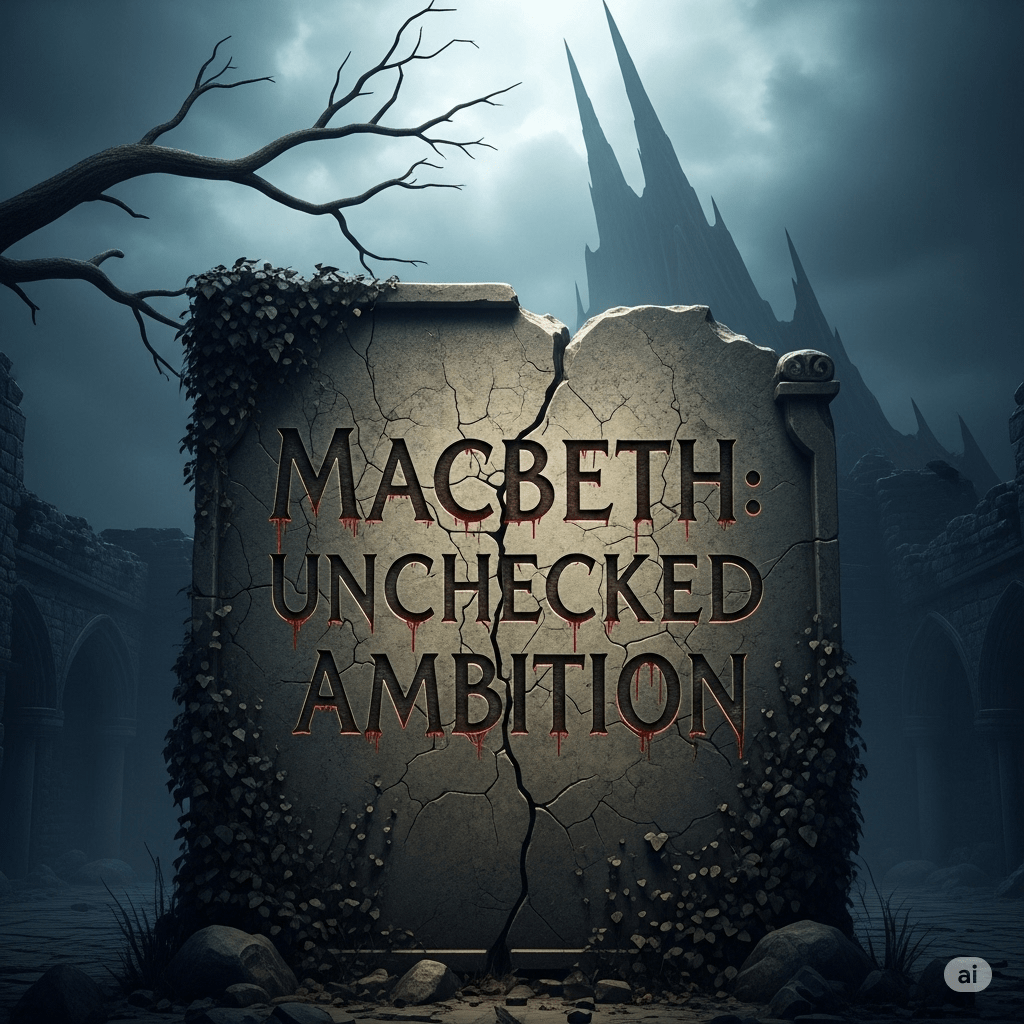
Every August, when we look back at this moment in English history, we glimpse not only a king and his court but the birth of a story that still speaks to us across four hundred years, A reminder that unchecked ambition can unravel even the mightiest of crowns. A message still relevant today.
Think Shakespeare only gave us Romeo & Juliet? Think again! He also coined words we still often use even today. Shakespeare didn’t just transform theatre – he made a huge contribution to the English language. Words like fashionable, lonely, and bedazzled first appeared in his plays. This latest post is a brief exploration of how the Bard’s creativity still shapes our language today.
Everyday Words Invented by Shakespeare
When people think of Shakespeare, they often imagine lofty poetry, grand tragedies or Elizabethan costumes. But did you know he also shaped the English we speak every day? The Bard had a knack for coining new words and phrases when nothing else quite fitted – and many of them stuck.
Here are a few you might use without even realizing their origin:
Eyeball – First appeared in A Midsummer Night’s Dream. Before that, people didn’t have a word for the literal ball of the eye.
Lonely – Found in Coriolanus and Twelfth Night, this word helped capture the feeling of isolation that still very much resonates today.
Fashionable – Used in Troilus and Cressida to describe someone stylish or in vogue. Clearly, that one never went out of style. (See what I just did there?)
Swagger – From A Midsummer Night’s Dream, where Shakespeare used it to describe a presumptuous strut. It’s been walking confidently ever since.
Bedazzled – First appearing in The Taming of the Shrew, it described someone overcome with wonder. Today, it’s also what you maybe did to your denim jacket.
Of course, Shakespeare didn’t invent every word he’s credited with – some may have existed in speech before he wrote them down. But as his plays were so widely performed and printed, he often gave words their very first spotlight in print.
So next time you use a word like lonely or swagger, you might have the world’s most famous playwright to thank.
👉 Do you have a favourite Shakespearean word or phrase? Drop it in the comments – it would be fun to see which others still resonate with us today.
A Christmas pudding is a British emblem of Yuletide. Love it or loathe it, no traditional British Christmas meal is complete without one. Similar to Brussel sprouts, (which tend to be more loathed than loved but also still make an appearance) our Christmas dessert, in my humble opinion, is part and parcel of the Christmas festivities.
Our beloved Christmas pudding has history – it’s been around for longer than you might think.
Who made the first Christmas pudding?
Sadly, we do not know the name of the person who invented our pudding. But we do know thatits forerunner, a type of pottage, a mixture of beef, suet, dried fruit and spices existed in England in the Middle Ages. Pottage was the name for a soupy kind of stew, generally eaten by peasants, and comprised of ingredients that were readily available to them – mainly vegetables and pulses. If the nobility chose to eat pottage, then more expensive items such as spices and meat would be included.
Many pottages later, around the end of the Tudor era, our pudding gained a more solid form, and a new name, plum pudding, but beef still figured amongst its ingredients. It was also a possibility that there were actually no plums in the pudding, plum being used to refer to various different fruits. At the same time the humble pottage was also still in existence and no doubt the size of your wallet would decide which version you chose.
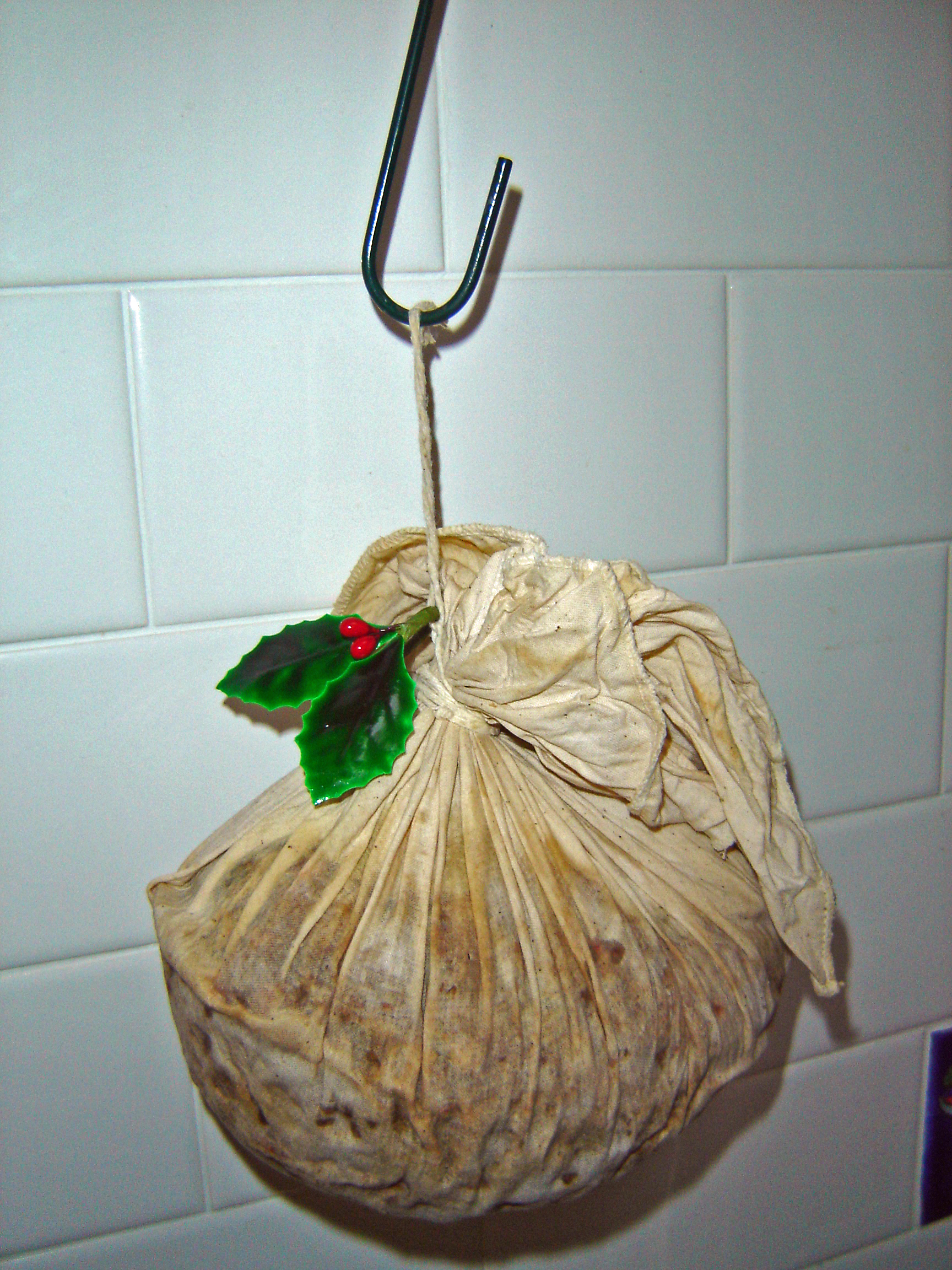
A Christmas pudding hanging on a hook to dry. Photographed by DO’Neil.
In the 18th century, pudding cloths arrived, supplanting the animal intestines that had been used before ( yes, better not to think about it…). The mixture would be left in a muslin cloth for some time, followed by a lengthy cooking process. This is when plum pudding began to acquire the spherical shape that we know so well today. It was generally eaten alongside beef, if you were well-heeled enough to afford it, of course.
The golden age of Christmas pudding
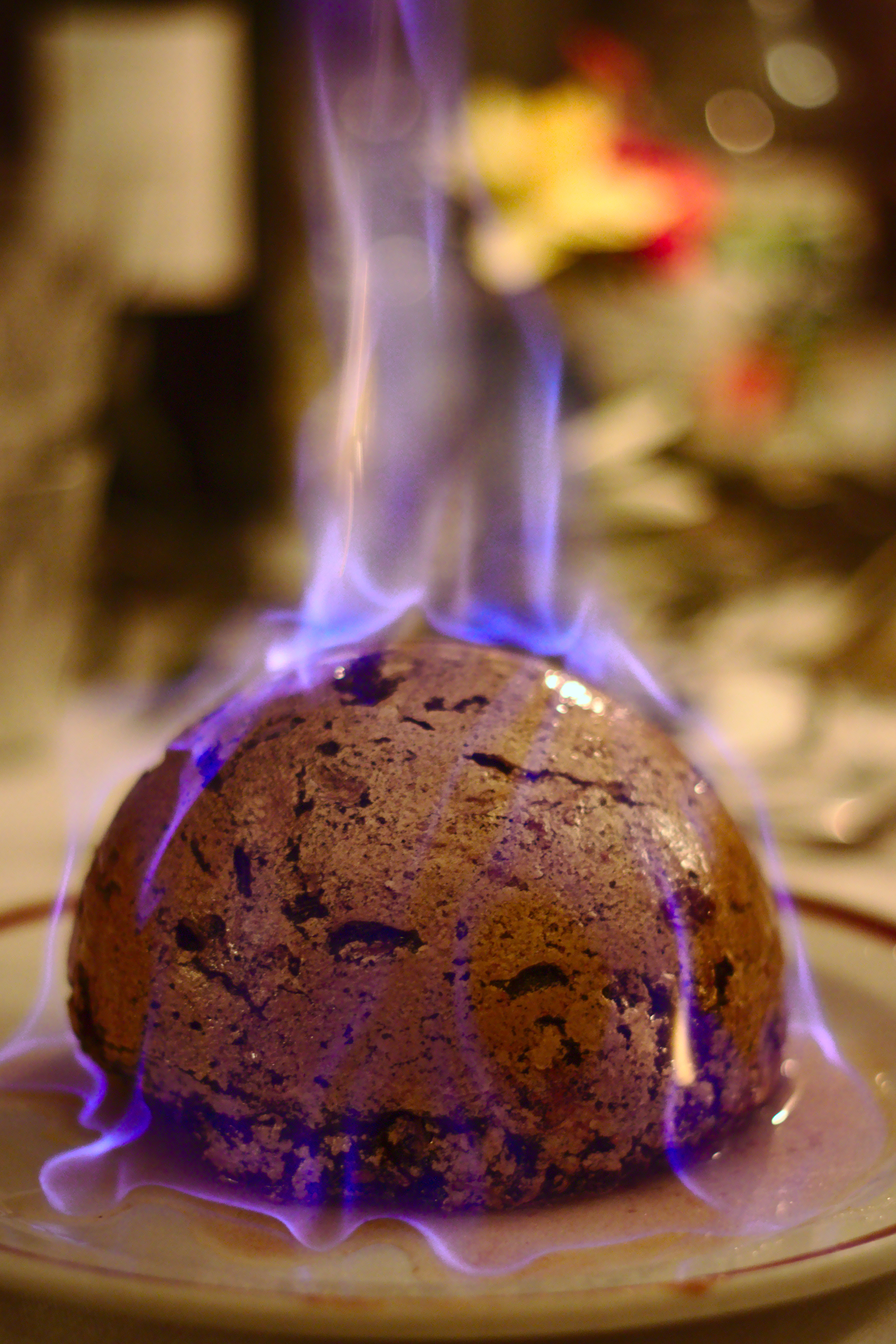
Fast-forwarding to the Victorian era, Queen Victoria and Prince Albert were known to enjoy lavish meals at Christmas, (see: https://wordpress.com/post/english-stuff.com/1197 ) with plum pudding often on the menu. Charles Dickens also promoted the idea of a Christmas pudding as a special delicacy at the end of A Christmas Carol when Mrs. Cratchit presents a sweet, round pudding, blazing in ignited brandy.
Two years after the publication of A Christmas Carol, our dish appeared as an official “Christmas pudding” in Eliza Acton’s Modern Cookery for Private Families, a bestseller in 1845. This was Christmas pudding as we would recognise it – that is, a round sweet pudding, with no beef, but plenty of fruit and spices. The pudding mixture could be moulded to give it a more ornate shape. It was however, still served alongside the meat course.
During the twentieth century, this sweet dish became exactly that – the dessert we instantly recognise, served with cream, custard or brandy butter. Supermarkets began to stock a convenient packaged version, which only needs to be heated and served.
But times continue to change. Nowadays many older Brits, (but certainly not all), are still attached to Christmas pudding, maybe because it has been part of our lives for so long. However, the younger generation, it seems, are not particularly supportive of the Christmas pud, probably as it usually follows a very rich and heavy first and second course. The Royal Mint in a 2024 survey found that a whopping 59% of the British population said they did not consider the Christmas pudding to be essential to the festivities. What do you think?
Christmas pudding has been with us in various guises for hundred of years. It is still cherished by some. But do you think Christmas pudding will survive in the future? Do youlove it or loathe it? Let me know!












 english-stuff.com

You must be logged in to post a comment.