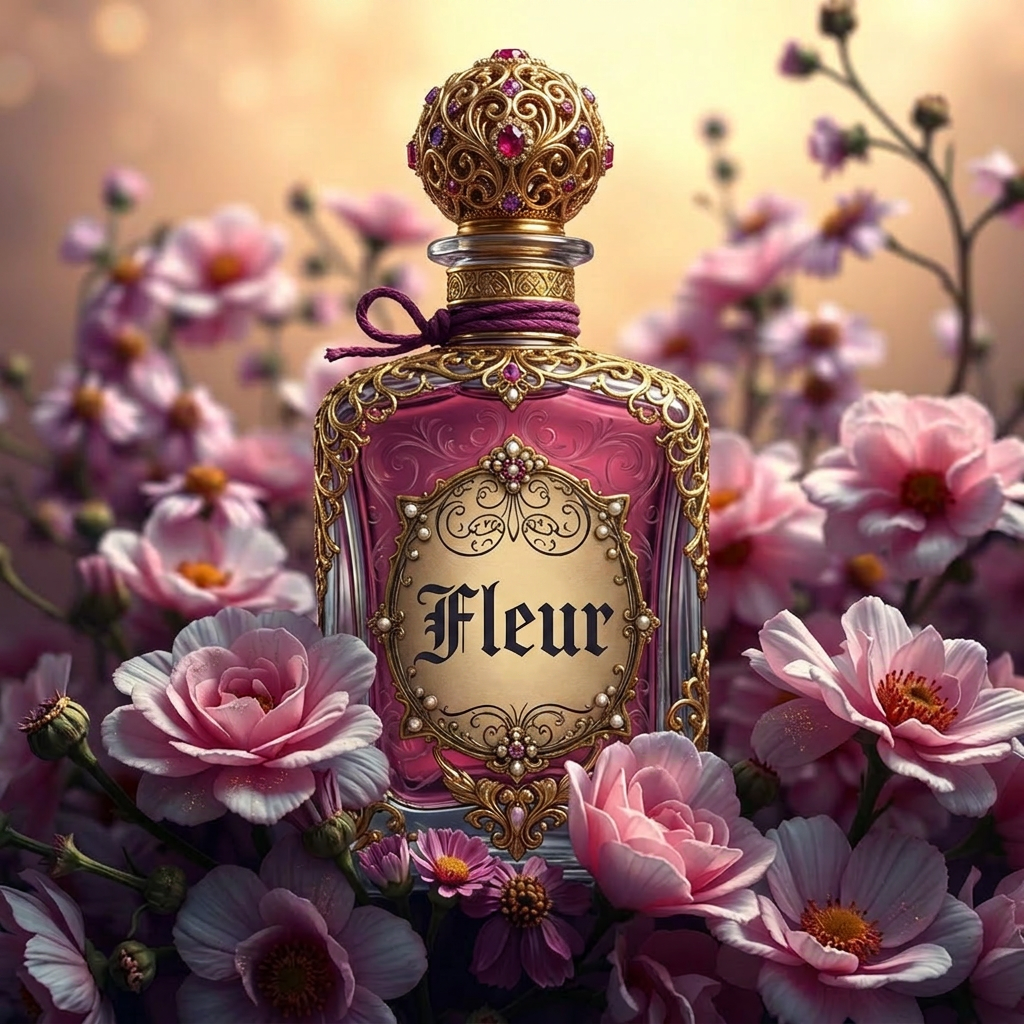
First – a quick quiz…true or false?
- Victorians didn’t use a lot of perfume.
- Perfume was about vanity, nothing else.
- Perfume was only for the wealthy.
- Strong perfume was fashionable.
- Working-class people didn’t care about how they smelled.
All the above statements are false.
So, let me explain a little more.
We often have an extreme idea of the Victorians as staid, stiff-upper lipped gentlemen or dirty street urchins. While these stereotypes existed – and often make for great storytelling – the Victorians enjoyed the pleasures of life more than we tend to think, perfumes included.
The royal precedent
Full immersion bathing was less frequent than today, but Victorians were very concerned with cleanliness. Daily washing of hands, face and body with cloths was common. Scented waters were widely used to freshen the skin and clothing between washes.
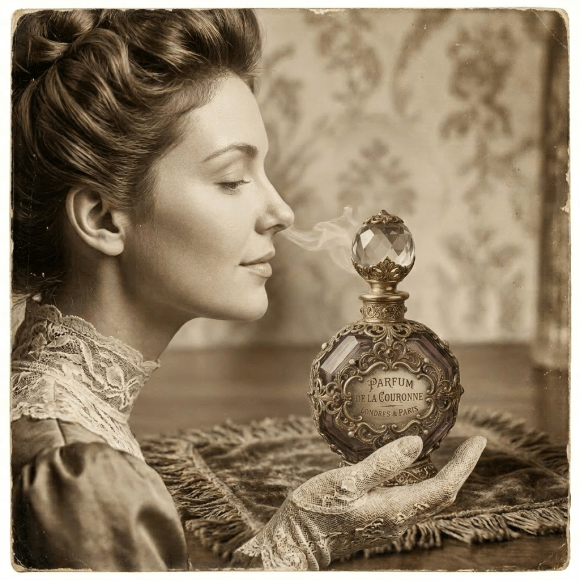
Typical fragrances were delicate florals – violet, rose, jasmine – to name a few. Several high-end perfume houses were established during this era – Floris London and Penhaligon’s, for example.
Queen Victoria had a surprisingly important influence on the spread of perfume and personal grooming. Despite the idea we often have of Victorians being prudish and anti-vanity, Victoria enjoyed fragrance and helped normalise perfume use across society, She had a liking for rose, orange blossom, lavender and violet, and a royal warrant could turn a perfume into an overnight success.

The house of Creed – another distinguished perfume house that still exists today – created a bespoke scent for Victoria called ” Fleurs de Bulgarie” with an emphasis on rose. Sadly, this is no longer available today, but where Queen V went, everyone else followed, even if it was only a cheaper version.
The less well-off
Victoria came to the throne in 1837 at only 18 years old. During her reign:
- mass manufacturing expanded
- railways transformed distribution
- department stores grew
- branded consumer goods became fashionable
Perfume sales benefited enormously from all these factors. Their influence filtered down to the middle classes and working classes and gave a touch of luxury to the less well-heeled. In many ways, Victorian perfume culture was not so different from today’s “affordable luxury” market. Just as modern shoppers treat themselves to a favourite body spray, scented candle or designer-inspired perfume dupe, Victorian consumers often bought small, inexpensive scented items that allowed them to enjoy a hint of elegance without spending a fortune.
Working-class women regularly used scented handkerchiefs, perfumed soap, hair pomade, and sachets to perfume clothing and drawers. On offer for men were hair tonics, pomades and shaving products – often the barber would apply scent after a shave.

Newspapers and magazines promoted affordable fragrances, scented soaps and beauty preparations. This helped create the idea that fragrance was part of a daily routine, not just an aristocratic indulgence.
Modern advertising still uses many of the same ideas. Perfume today is rarely marketed simply due to the smell – it is sold as confidence, attractiveness, sophistication or self-care. Victorian advertisers were already doing something remarkably similar over 150 years ago.
Perfumes and Miasmas
An interesting Victorian belief was that pleasant smells could actually protect health. Before germ theory became fully accepted, many people believed disease spread through “miasmas” – bad air or foul smells.
As a result, pleasant scents were often viewed as healthy or protective. Lavender, herbs such as thyme or rosemary, and floral waters were believed to purify the air.
Ironically, while we now understand that disease is caused by germs rather than “bad air,” many people still associate certain scents with cleanliness and wellbeing. Lavender sprays for sleep, eucalyptus oils during winter illnesses and “fresh linen” cleaning products all show that fragrance remains psychologically linked to our health and comfort.
Practicality
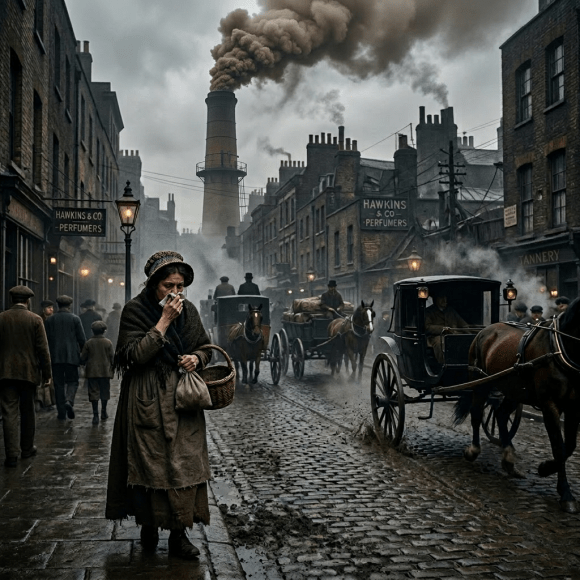
Victorian cities could smell dreadful. Besides unregulated industries, factories and smoke pollution, there was also overcrowded housing, horse manure in the streets and poor drainage. Perfume and scented products also had a practical purpose in that it masked unpleasant odours. Not so different from our modern-day deoderants and body sprays.
Lavender, rose, violet, bergamot and lemon verbena were popular. Lavender water was especially common because it was relatively inexpensive, strongly associated with freshness and cleanliness and therefor found everywhere in Victorian England.
This meant scent was associated not only with beauty, but also with:
- health
- cleanliness
- safety
But for the working classes, smelling pleasant had even more significance – it conveyed self-respect, cleanliness, morality and social aspiration.
Scent and Respectability
Victorian society placed enormous importance on appearing “respectable.”
For the working classes, smelling pleasant could help convey:
- cleanliness
- self-respect
- morality
- femininity
- social aspiration
A factory girl or servant might not own expensive jewellery, but a dab of scent or scented soap could provide a small feeling of refinement and dignity. This was especially important because the Victorian middle and upper classes often unfairly associated bad smells with moral failings or poverty itself.
Even today, many people describe perfume as emotional armour – something that provides confidence before a difficult day, an important meeting or a social occasion. Victorians may not have used that phrase, but they clearly understood the feeling.
At the other end of the scale, wearing too much perfume or wearing a heady, exotic scent was perceived to be unsuitable, or even immoral. Heavy animalic scents popular in parts of 18th-century Europe became less fashionable, partly because Victorian ideals increasingly linked femininity with freshness, delicacy and purity.
The Victorians were also quite obsessed with purity, morality and the symbolic language of flowers – for more info see https://english-stuff.com/2023/09/15/the-language-of-flowers/
In short….
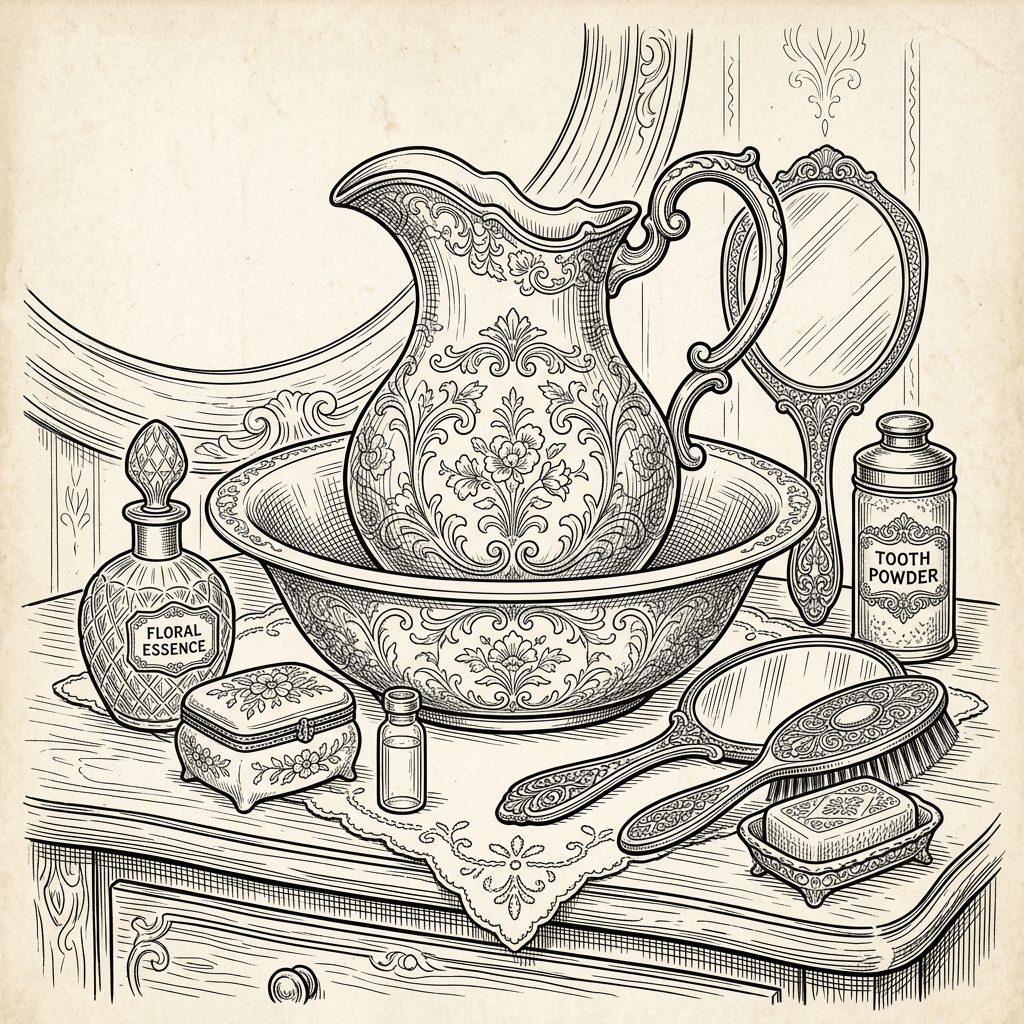
So Victorian life was probably far more fragrant than modern stereotypes suggest. While fine perfumes remained symbols of wealth, Victorian fragrance culture reached far beyond the aristocracy.
For working-class men and women, scent offered practicality, dignity, comfort and a small touch of luxury in often difficult lives. In many ways, our relationship with fragrance today – whether it’s a designer perfume, a favourite shampoo or a comforting room scent – is not quite as different from the Victorians’ as we might imagine.
Which scents instantly make you feel comforted, nostalgic or at home?


You must be logged in to post a comment.