Take a walk through almost any British town or village and you’ll notice that pubs rarely have ordinary names, like the surname of the owner, for example. Instead, you’ll find The Red Lion, The Crown, The Swan (& maybe Something), But why?
The tradition goes back hundreds of years. In medieval England, many people couldn’t read, so pubs were identified by pictures on their signs rather than words.
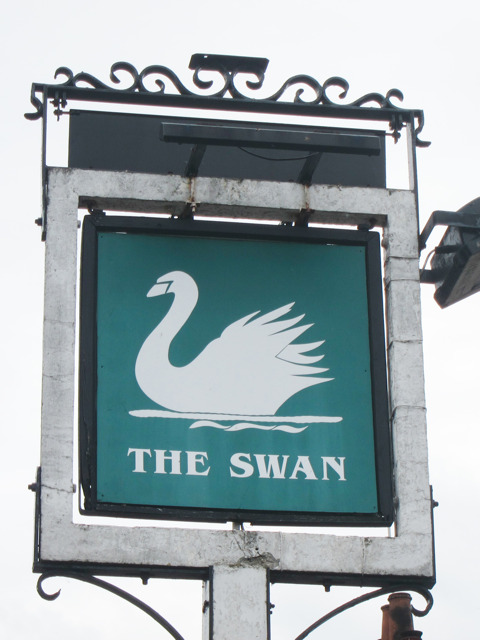
At first these images were of leaves or bushes to show that these establishments sold wine. Over the years, signs began to include other recognisable elements or hot topics in daily life. A painted lion, a crown or a swan was much easier to recognize than letters on a board. Over time, those images became the official “names” of the pubs.
Certain themes were especially popular, with the Red Lion at the top of the list. Why? It is believed that James I encouraged this name to strengthen support for the new Stuart dynasty after the demise of Elisabeth Tudor.
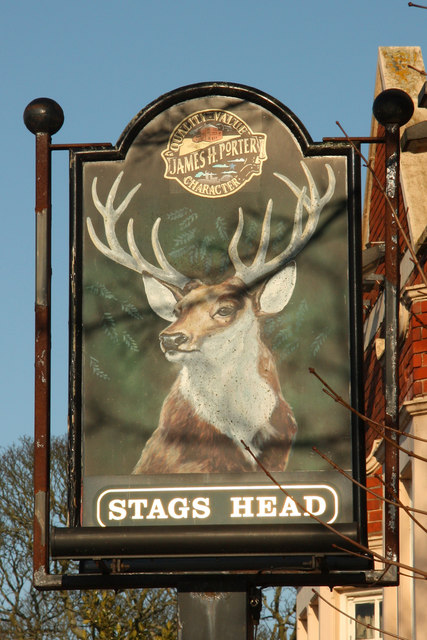
But other animals such as stags, swans, horses, cats, dogs and foxes also figure heavily on pub signage – see below for a sample.
Royal Symbols
The Crown – One of the most popular pub names, it’s a clear indication of loyalty to the monarchy. During times when public houses also served as community gathering spots, aligning with the royal family was both patriotic and practical.
The King’s Head – A name often tied to specific monarchs. After the English Civil War, many “King’s Head” pubs displayed signs with portraits of Charles II, showing royalist sympathies. (Others, more daring, kept King Charles I’s head – literally nodding to his execution….)
The Royal Oak – Refers to a famous incident in 1651 when the young Charles II hid in an oak tree to escape capture by Parliamentarian forces after the Battle of Worcester. Naming a pub “The Royal Oak” became a subtle political statement supporting the Stuart monarchy.
The King’s/Queen’s Arms – not literally referring to body parts, but their heraldic coats of arms. Again, the establisment woud be generally easy to recognise even if you could not read, and associated with the royalty or aristocrat of the owner’s choice.
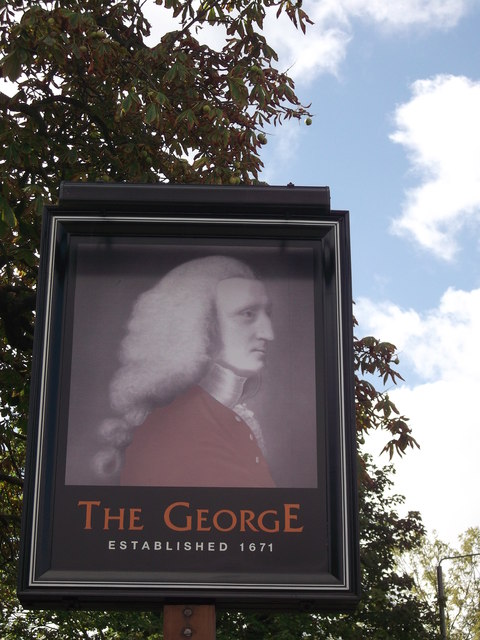
Or simply call your pub after the name of your favourite monarch – The Queen Victoria, The Prince Albert, The George. This is when the pub’s name will often give you a clue to its age. See below for two examples.
A King and a Queen – photos from Openverse
Trades and Tools
Not all pubs were about kings and crowns as many reflected the everyday lives of their patrons:
The Plough – A popular name in rural areas, symbolising the farming life central to England for centuries.
The Blacksmith’s Arms – Celebrating one of the most vital trades in a community, where metalwork kept villages running.
The Carpenter’s Arms / The Mason’s Arms – Similar trade-linked names honoured the craftspeople whose work built towns and churches.
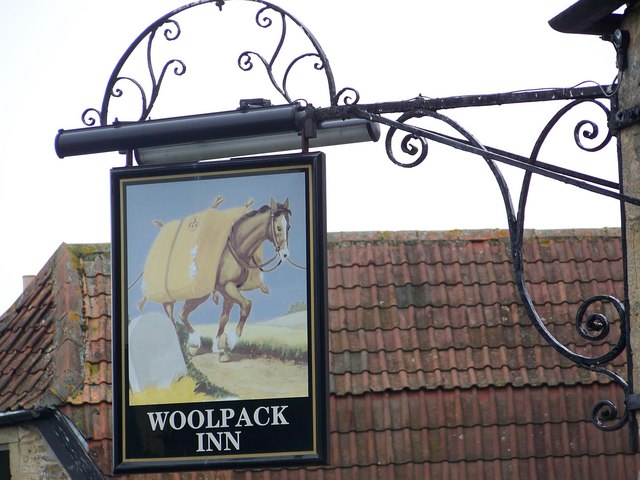
The Woolpack – A nod to England’s historic wool trade, which was a backbone of the medieval economy.
These names served as landmarks, meeting points, and symbols of local identity. They were also practical, often chosen for imagery that could be painted on a sign and easily recognised in a largely illiterate society.
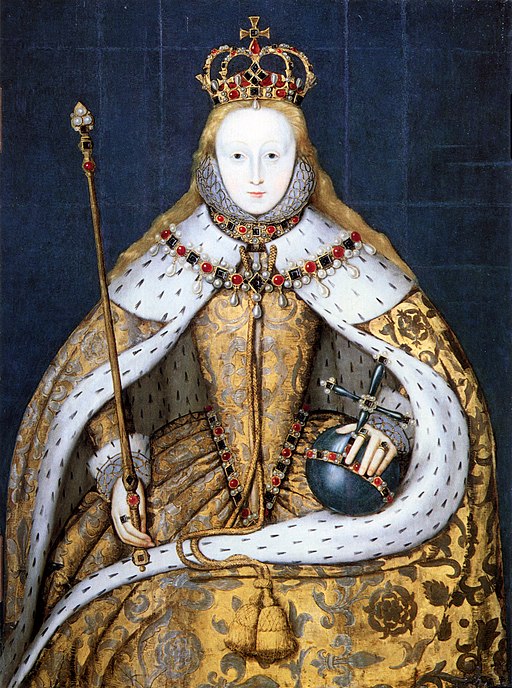
Elizabeth I was a woman who truly understood the meaning of “leader.” She strolled through the 16th century with a steely resolve that would make even the most seasoned politician quake in their velvet boots.
She was born into a family drama that could easily have been a twenty- first century reality TV show. Her father, the notorious Henry VIII of the six wives, was not known for his stable relationships. Elizabeth started life as a royal Tudor princess but only a few years later found herself in a precarious position. Her mother, Anne Boleyn, was executed, and young Elizabeth was promptly declared illegitimate. Talk about a rough start. Most people would throw in the towel, maybe become a nun or just spend their days complaining about their dad. But not Elizabeth.
Her childhood
She survived treacherous plots, imprisonment in the Tower of London as a child and constant questioning of her legitimacy. Imagine having to constantly prove you’re worthy, not just of a job, but of an entire realm. And just in case you’ve forgotten, she was a female – in a world where women were expected to defer to men without question. Only her royal bloodline made her an exception to this rule.
But Elizabeth was astute. She dedicated herself to her education, honed her diplomatic skills and watched with a keen eye as her half-siblings, Edward VI and Mary I, preceded her turns on the throne through religious wars and tumultuous times. It is difficult to imagine the importance of religion in daily life from our secular viewpoint today. Nonetheless, England faced social unrest during the reign of a Protestant King Edward VI, followed by the devout Catholic Mary I.
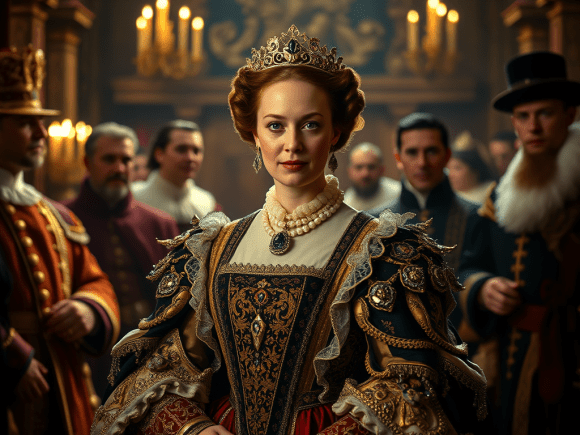
Elizabeth I as a young woman – image created by Panna 10.
Her predecessors on the throne
Edward VI, Henry’s much-desired son, was the first English sovereign raised as a Protestant. Edward was just 9 years old when he came to throne and governed with the help (some would say manipulation) of a regency council. It does, however, appear to be true that Edward was a fervent supporter of the English Reformation and the spread of Protestantism.
But Edward died at the age of 15. The new queen, Mary I, daughter of Catherine of Aragon, was imbued with the desire to overthrow the English Reformation, no doubt spurred on by Henry VIII’s shoddy treatment of her mother. She was then forced by her father to swear an oath of allegiance to him and repudiate her Catholic religion. When Mary became queen, her religious persecution of Protestants saw riots and rebellion and earned her the undesirable name of Bloody Mary.
When it was finally Elizabeth’s time to reign in 1558, many doubted that another woman would be able to rule effectively. “She’ll be weak! She’ll be easily manipulated!” Oh, how wrong they were. Elizabeth handled it well when she finally came to the throne and would prove her doubters wrong.
Elizabeth was sharp. She had paid attention to the religious see-sawing under the past two sovereigns. Religion was the most dangerous political issue of Elizabeth’s time. Her sister, Mary I, had burned hundreds of Protestants at the stake, while their father had broken with the Catholic Church entirely. But there were still a significant proportion of English man and women who declared themselves as Catholic. Elizabeth knew she couldn’t afford to alienate either side too much. Her solution was a brilliant, pragmatic compromise known as the Elizabethan Religious Settlement of 1559.
The Act of Supremacy: This act re-established the monarch as the head of the church, but Elizabeth chose the title “Supreme Governor” instead of “Supreme Head.” This was a clever move. It satisfied Protestants while allowing Catholics to believe that the Pope was still the “Head” of the universal Church, a distinction that made it easier for some to accept her rule.
The Act of Uniformity: This act set out what the English Church would look like. It introduced a new Book of Common Prayer that combined elements of Catholic and Protestant services. Churches could still have some decorations and priests wore traditional vestments, which appeased many Catholics. But the services were in English and the doctrine was Protestant. Elizabeth famously said she wouldn’t “make windows into men’s souls,” meaning she was less concerned with what people believed in private, as long as they outwardly conformed to the Church of England. This “middle way” was a masterpiece of political manoeuvring that prevented the kind of religious civil war that was tearing apart other European nations.
For more details on Elizabeth I’s religious settlement, there is this video on YouTube : The Religious Settlement 1559.
The Thorn in Her Side: Mary, Queen of Scots 👸🗡️
While Elizabeth was busy masterfully running the show, she had one major rival who presented an existential threat to her reign: her Catholic cousin, Mary, Queen of Scots. Mary had a claim to the English throne through her grandmother, Henry VIII’s sister, and many English Catholics considered her the rightful queen. Mary was a constant focal point for plots and conspiracies to overthrow Elizabeth.
The Ridolfi Plot (1571): A plan hatched by an Italian banker to have the Duke of Norfolk marry Mary, assassinate Elizabeth, and invade England with Spanish troops. It was, of course, foiled by Elizabeth’s brilliant spy network, led by her spymaster, Francis Walsingham.
The Babington Plot (1586): This was the final nail in the coffin for Mary. Conspirators planned to assassinate Elizabeth, and Mary was caught red-handed when her coded letters approving the plot were intercepted and decoded by Walsingham’s team.
The discovery of this plot gave Elizabeth and her court the irrefutable evidence they needed. After decades of hesitation, Elizabeth was finally persuaded to sign the death warrant. The execution of Mary in 1587 was a monumental moment. While deeply controversial, it eliminated the most significant internal threat to her rule and removed a rallying point for Catholic rebels both at home and abroad.
The threat from Spain and the Spanish Armada
Following Mary’s execution, Philip II of Spain decided to launch a massive invasion to depose Elizabeth and restore Catholicism to England. He assembled a gigantic fleet of 130 ships, known as the “Invincible Armada,” and set sail in 1588. The victory for England was due to a mix of English naval skill (they had faster, more manoeuvrable ships) plus a dose of sheer luck. English fire ships were sent into the Spanish fleet, causing chaos, and a strong gale known as the “Protestant Wind” scattered the remaining Spanish ships.
Elizabeth I overseeing the defeat of the Spanish Armada
The defeat of the Armada was a colossal victory for England and for Elizabeth personally. It wasn’t just a military win; it was a massive propaganda triumph. It was seen as a sign of God’s favour for Elizabeth and the Protestant cause, solidifying her power and cementing her image as a truly legendary queen.
She delivered one of her most famous speeches to her troops at Tilbury, declaring, “I know I have the body of a weak and feeble woman; but I have the heart and stomach of a king.” It’s a perfect encapsulation of her entire reign – a powerful woman in a man’s world, who not only survived but thrived.
Elizabeth’s reign was a masterclass in political pragmatism, especially when it came to the deeply divisive issue of religion. But she was also clued up on the economy.
A New Deal for England: Economic Control 💰
Elizabeth I inherited an economy in somewhat of a mess. Her predecessors, particularly her father Henry VIII, had “debased” the coinage by secretly reducing the gold and silver content to pay for wars. This caused high inflation and a lack of trust in the currency. One of Elizabeth’s first acts was to launch a major recoinage. She recalled all the old, dodgy coins and replaced them with new, high-quality currency. This was a massive win and helped stabilise the economy and restore public confidence.
She was also incredibly fiscally responsible. Unlike her father, she hated costly wars and tried to keep England out of foreign conflicts. This allowed her to reduce the national debt and even build up a surplus. When money was needed, she relied on loans from wealthy subjects and more efficient tax collection rather than burdening the general populace.
She also laid the groundwork for England’s future as a global economic power. She encouraged overseas trade and granted charters to new trading companies, like the famous East India Company in 1600. These companies had a monopoly on trade in certain regions, which was a brilliant way to bring wealth back to England and challenge Spain’s dominance.
She also implemented the Poor Laws, which, while harsh by modern standards, created a standardised system of poor relief for the first time, funded by local taxes.
The Original Independent Woman 👑
The new queen was a true master of the long game, especially when it came to her personal life. Her refusal to marry wasn’t just a quirky personality trait; it was a calculated political strategy.
Elizabeth I and her suitors
It was a brilliant, decades-long negotiation. She could play different European powers against each other without ever having to submit to a husband, who by law would have been the head of the household and, by extension, the kingdom. She famously declared she was “already bound unto a husband which is the Kingdom of England,” cementing her image as the “Virgin Queen” who sacrificed her personal life for her country. This powerful piece of propaganda made her seem selfless and untouchable.
Elizabeth had made a wise choice in William Cecil, who was her chief advisor and who accompanied her for most of her 45-year reign. She was neither perfect nor a saint, but they she put England on a path to stability and prosperity. This post is only a very brief journey through some of her main achievements.
She was a woman who kept her power and independence at a time when women were regarded as little more than men’s property or playthings. Certainly not their equals. She was renowned for her political acumen, sharp intelligence and strong will. Her intelligence and determination not only secured her place in history but also set a standard for strong, independent leadership that still resonates today.
What do you think made Elizabeth I such a successful ruler – her political skill, her intelligence or her sheer willpower?
Would you say that that our longest serving female queens – Elizabeth I, Victoria, Elizabeth II, are generally perceived in a positive light?
Trends come and go. Flared trousers, permed hair, avocado-coloured bathrooms… But when it comes to names in England, some have stood the test of time so well that they’ve been on the guest list for christenings, weddings and school registers for centuries. Let’s take a look at the stalwarts of English first names.
A Quick Stroll Through History
Names in England have always been shaped by big cultural forces. Medieval times leaned heavily on saints and the Bible – for instance, John and Mary. However, interestingly. the name Jesus was seen as a holy name that was too sacred to be used – although it is widely used in Spanish/ Hispanic culture where its use is seen as an act of devotion.
But back to England. The Tudors and Stuarts sprinkled in a dash of royal glamour – enter William, Elizabeth and James. Victorians loved names that sounded a little grand, romantic and dignified. Many were influenced by the Bible, classical literature, royalty and a taste for flourish- look at Augustus, Leopold, Theodore or Clementine, Lavinia and Florence. Fast forward to today, and while some baby names might mirror the latest teen heartthrob or YouTuber, the classics are still quietly holding their ground.
Thomas – A steady favourite since the Middle Ages. From doubting apostles to Tank Engines, Thomas has kept its friendly, approachable charm.
John – Once the name in England. For centuries, if you called “John!” in a medieval marketplace, half the crowd would turn around. Even if it’s not topping charts anymore, it’s still there in respectable numbers.
William – The Normans brought it over in 1066, and the English never let it go. Royals, poets, explorers… William’s got pedigree. Also in disguise as Will, Billy, Liam – take your pick.
James – Biblical, royal, and endlessly adaptable. Jim, Jimmy, Jamie – all still around.
The Girls Still in Style
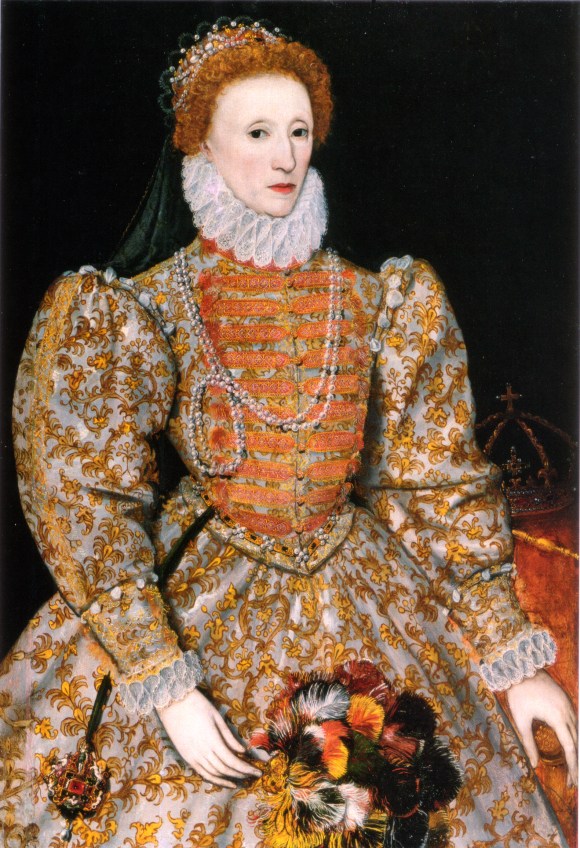
The Darnley portrait of Elizabeth 1 – Wikipedia Commons, in public domain
Elizabeth – Thanks to a certain Virgin Queen, this name has royal sparkle. Add in the endless nicknames (Liz, Lizzie, Beth, Ellie, Eliza…) and you’ve got staying power.
Mary – Queen of the popularity charts for centuries. Once so common that it’s said half of 16th-century England answered to it. Today, less so, but still timeless. (And has also morphed into Marie, Maria, Mariah…)
Margaret – Worn by saints, queens, and the odd prime minister. While fewer babies are being christened Margaret these days, its modern cousins (Maggie, Megan, Maisie) keep it alive.
Catherine/Katherine – Another regal choice with saintly roots. Kate and Katie keep it fresh in modern-day England.
How Names Stand the Test of Time
What’s the secret? Adaptability. John morphed into Jack. Elizabeth reinvented herself a dozen ways. Even Margaret found new life in Megan. The names that survive aren’t rigid – they’re shapeshifters.
Meanwhile, some names that once ruled the roost – think Mildred, Ethel, Gertrude (or the 20th-century Gary )haven’t yet managed a comeback. But you never know. Stranger things have happened.
The Modern Charts
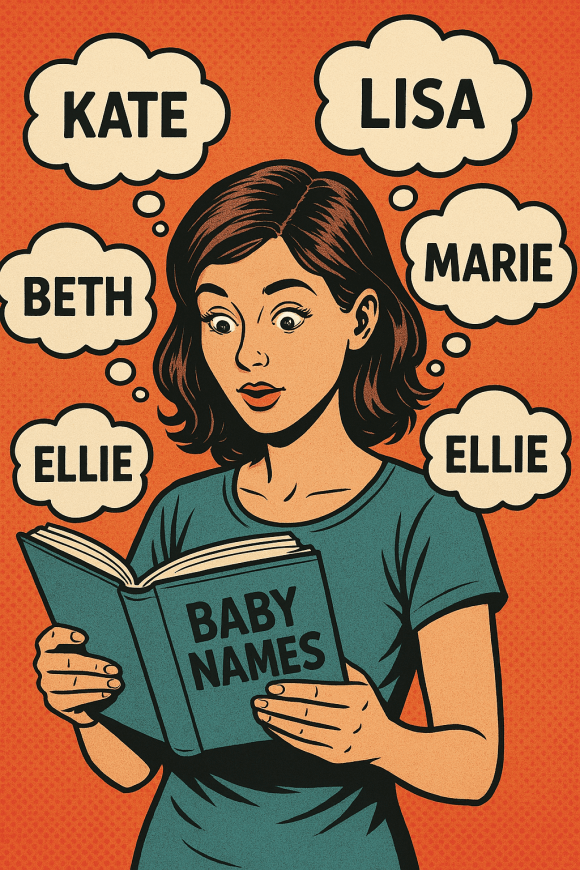
Computer Generated Image – yes, I know that Ellie is there twice. This proved quite a challenging image for Chat GPT to create.
According to the Office for National Statistics, names like William, James, and Elizabeth are still hanging in there. John and Mary might be backstage at the moment, but you’ll still meet plenty of Jacks, Wills, and Ellies running around the playground. The classics never really leave us; they just slip into new disguises.
So, whether you’re a William, Elizabeth, Thomas or Mary, you’re part of a long, noble tradition of names that have survived medieval plagues, Tudor court dramas and celebrity culture. Trends may change, but these names are as English as a cup of tea and a queue.
Let me know in the comments if your name made the timeless list, or are you waiting for a revival in the popularity of your name ? Do you like or dislike your name?
On the evening of 7 August 1606, the halls of Hampton Court Palace glowed with candlelight. The Great Hall, hung with rich tapestries, was filled with the rustle of silks and the low murmur of voices as courtiers found their seats. Outside the palace walls, England still trembled in the wake of the Gunpowder Plot, a failed attempt to assassinate the king and topple his fragile new dynasty. Inside the hall anticipation hung in the summer air: Shakespeare’s company was about to unveil a brand-new play.
This performance was no ordinary entertainment. Written in haste, sharpened by politics, and laced with supernatural dread, Macbeth was carefully tailored for its royal audience – King James I, the Scottish monarch who had inherited the English throne just three years earlier. Shakespeare knew his patron’s obsessions: the divine right of kings, the dangers of treason and a personal fascination with witchcraft. The play that would unfold that night would flatter, warn and captivate in equal measure.
As the actors prepared to summon thunder and witches onto the stage, few in the room could have guessed that they were about to witness the birth of one of the greatest tragedies in the English language – a story of vaulting ambition and bloody consequence that still grips audiences four centuries later.
🏰 The Backdrop: England in 1606
When Shakespeare’s players stepped onto the stage at Hampton Court, the court was still haunted by the spectre of treason. Only months earlier, in November 1605, the kingdom had narrowly avoided catastrophe when a band of Catholic conspirators attempted to blow up Parliament and kill King James I in what became known as the Gunpowder Plot. The king had survived, but the shock lingered. England was jittery, suspicious and deeply aware of the fragility of peace.
James himself was still a relatively new monarch on the English throne. In 1603 he had inherited the crown from Elizabeth I, uniting Scotland and England under a single ruler for the first time. His accession had promised stability after the long Tudor age, but it had also brought unease. James was a foreign king to the English, unfamiliar in manner and accent, and he faced the constant challenge of proving his legitimacy.
This was the tense world into which Shakespeare offered his new tragedy. Macbeth was no simple tale of murder and ambition. It was a mirror held up to a kingdom still recovering from conspiracy, where questions of loyalty, kingship and divine authority were painfully fresh.
🎭 Why Macbeth? Politics Meets Theatre
Shakespeare was no fool. He knew that a play performed for the king had to do more than entertain; it had to flatter, reassure and, if possible, speak to the monarch’s deepest concerns. Macbeth was crafted with this purpose in mind, weaving together themes that aligned perfectly with King James I’s interests.
First was the matter of ancestry. James traced his royal line back to Banquo, the noble companion of Macbeth in Scottish legend. In the play, Banquo is portrayed as virtuous and unjustly murdered, while his descendants are prophesied to inherit the throne. For James, this was more than a clever plot point – it was a theatrical confirmation of his right to rule, projected in flickering candlelight before the entire court.
Then came the witches. James had a personal fascination with witchcraft, even publishing his own treatise on the subject, Daemonologie, in 1597. He believed witches had conspired against him, and his fear of the supernatural was well known. By placing three sinister witches at the heart of the story, Shakespeare tapped directly into his king’s obsession,blending entertainment with a subtle nod to James’s authority as the man who could confront and defeat such dark forces.
Finally, the play was a stark warning against regicide. In the wake of the Gunpowder Plot, England needed no reminder of the dangers of treason. Yet Macbeth drove the point home with visceral clarity: the murder of a king unleashes chaos, guilt and ruin, while the rightful line of succession endures. For James, it was a political reassurance staged as gripping drama.
In short, Macbeth was more than a tragedy. It was a play of loyalty and legitimacy – a performance that fused Shakespeare’s genius with the anxieties and ambitions of his age.
⚡ The Performance: Sights, Sounds, Sensations
As the candles dimmed and the first lines echoed through Hampton Court’s Great Hall, the audience would have felt a chill that had little to do with the summer air. Shakespeare’s actors conjured a storm with the crude but effective stagecraft of the day – rolling cannonballs to mimic thunder, rattling sheets of metal for lightning, stamping feet to suggest the earth itself trembling. Out of the shadows emerged the three witches, hissing their riddles and chants. For a court still haunted by whispers of real sorcery and conspiracy, the effect must have been spine-tingling.
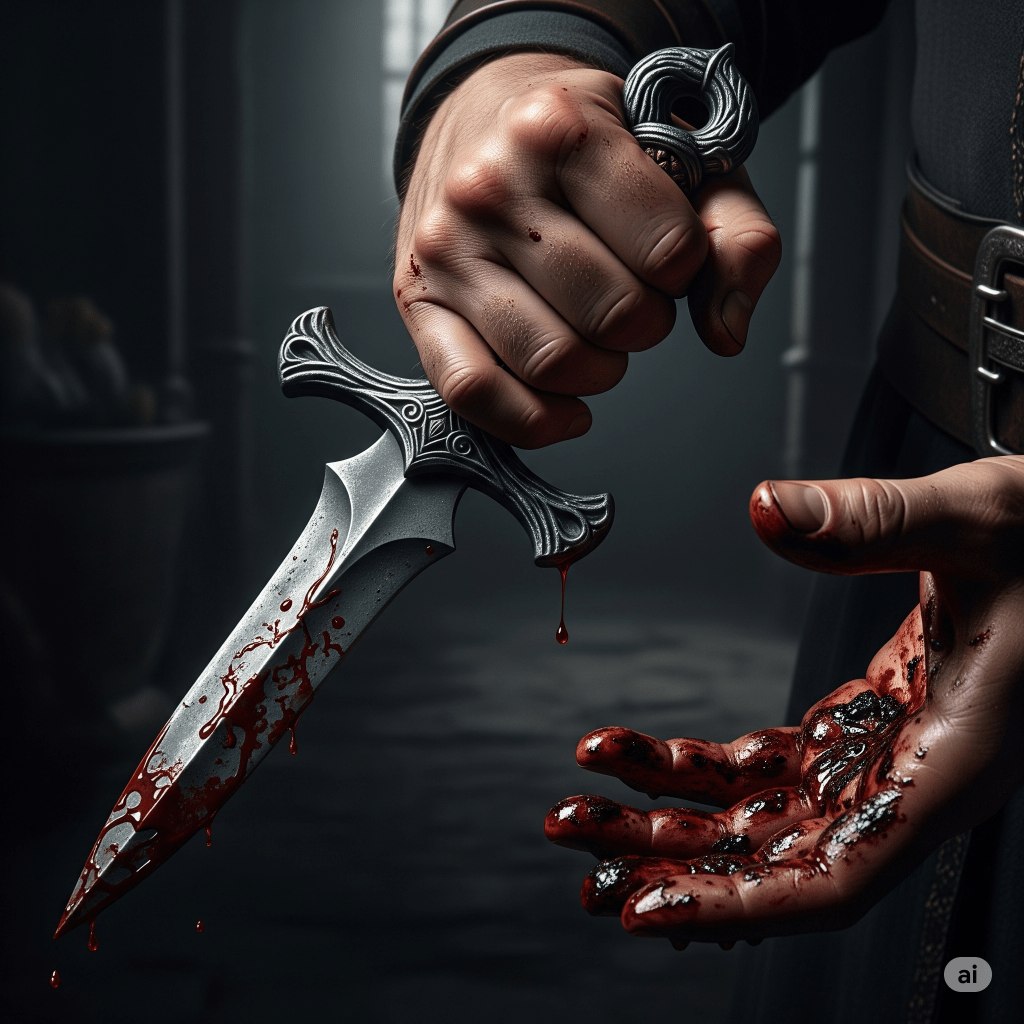
The action unfolded with a pace and brutality that set Macbeth apart from Shakespeare’s earlier histories and comedies. The murder of Duncan, though never shown on stage, was made palpable through the imagery of blood-stained hands, daggers that seemed to hover in the air and Macbeth’s tormented soliloquies. The courtiers would have watched in uneasy silence, perhaps casting sidelong glances at James himself during scenes of treason and regicide.
The performance was intimate, too. Unlike the bustling Globe Theatre, where audiences of commoners shouted and jostled in the pit, this was a royal performance in a confined, candlelit space. Every whispered line, every flick of a dagger, every flicker of flame would have carried weight. The courtiers were also participants in a carefully staged ritual of power, loyalty and warning.
By the time Macbeth fell and Malcolm reclaimed his throne, the message was clear. Kingship was sacred, rebellion doomed, and order would prevail. Just the reassurance King James wanted to hear. Yet beyond its politics, the play had cast a darker, deeper spell, one that would outlast monarchs and dynasties.
🌒 Legacy and Influence
That August night at Hampton Court was only the beginning of Macbeth’s long life. What began as a performance tailored for a king soon became one of Shakespeare’s most enduring tragedies, staged in playhouses, palaces and eventually on screens around the world.
Its themes of ambition, tyranny, and fate proved timeless. Though written to flatter James I, Macbeth transcended its political moment. Audiences saw in it not just a sermon on loyalty but a haunting exploration of the human hunger for power and the ruin it brings. From Cromwell’s England to the Victorian stage, from modern theatres to classrooms today, the “Scottish play” continues to resonate wherever people wrestle with corruption, violence and guilt.
Over the centuries, Macbeth also gathered a reputation as a cursed play. Actors whispered that disasters stalked its productions, from accidents on stage to mysterious deaths in the cast. Some blamed the witches’ spells, said to be real incantations lifted from folk magic. Others thought its violent energy simply courted misfortune. Whatever the truth, the legend only added to the play’s mystique, ensuring that its power to unsettle extended far beyond its script.
In this way, the candlelit performance of August 1606 became more than a royal entertainment. It was the spark that ignited over four hundred years of fascination, fear, and admiration. In short, a tragedy that once summoned, could never be banished back into silence.
🔮 Macbeth‘s enduring spell
Macbeth has never truly left the stage. Its witches still unsettle, its daggers still gleam, and its questions about power and fate are just as urgent today. What began as a carefully crafted performance for King James has become a universal tragedy, performed and reinterpreted for centuries.
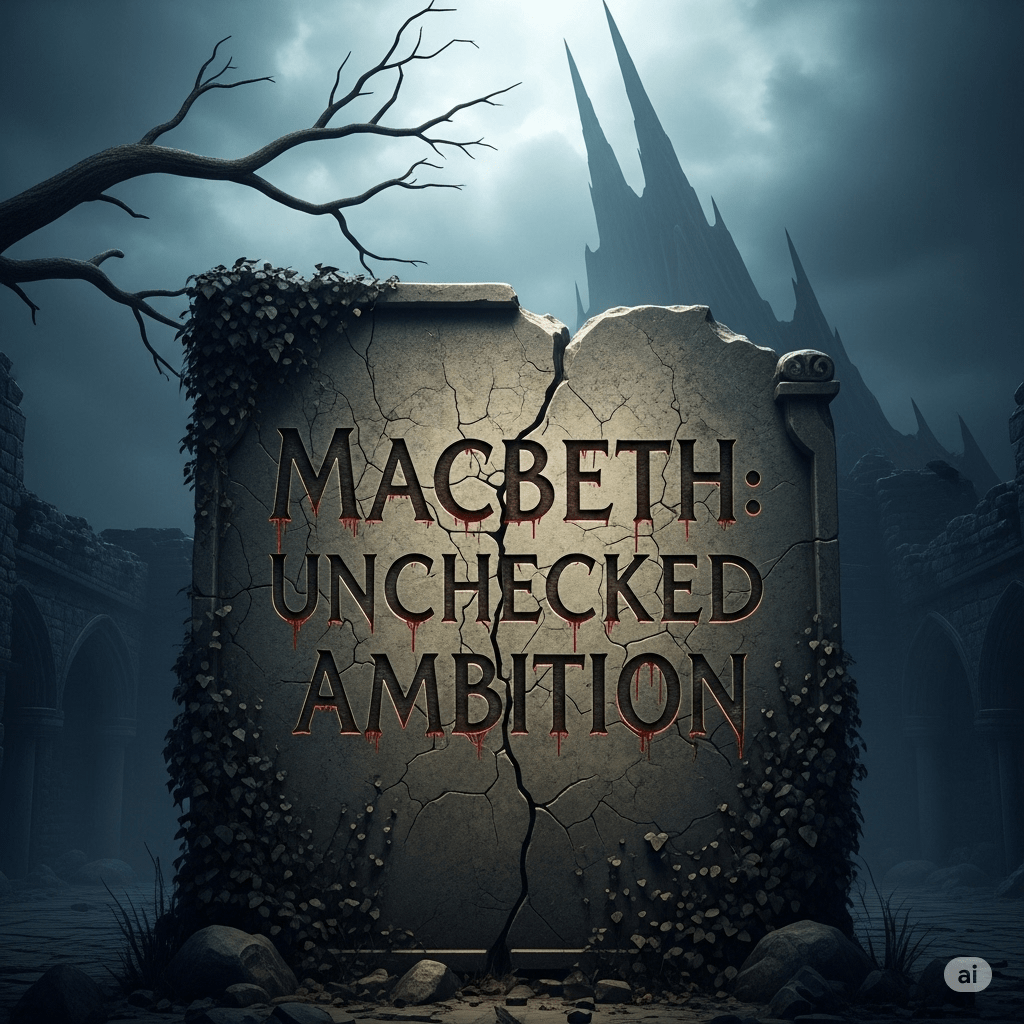
Every August, when we look back at this moment in English history, we glimpse not only a king and his court but the birth of a story that still speaks to us across four hundred years, A reminder that unchecked ambition can unravel even the mightiest of crowns. A message still relevant today.
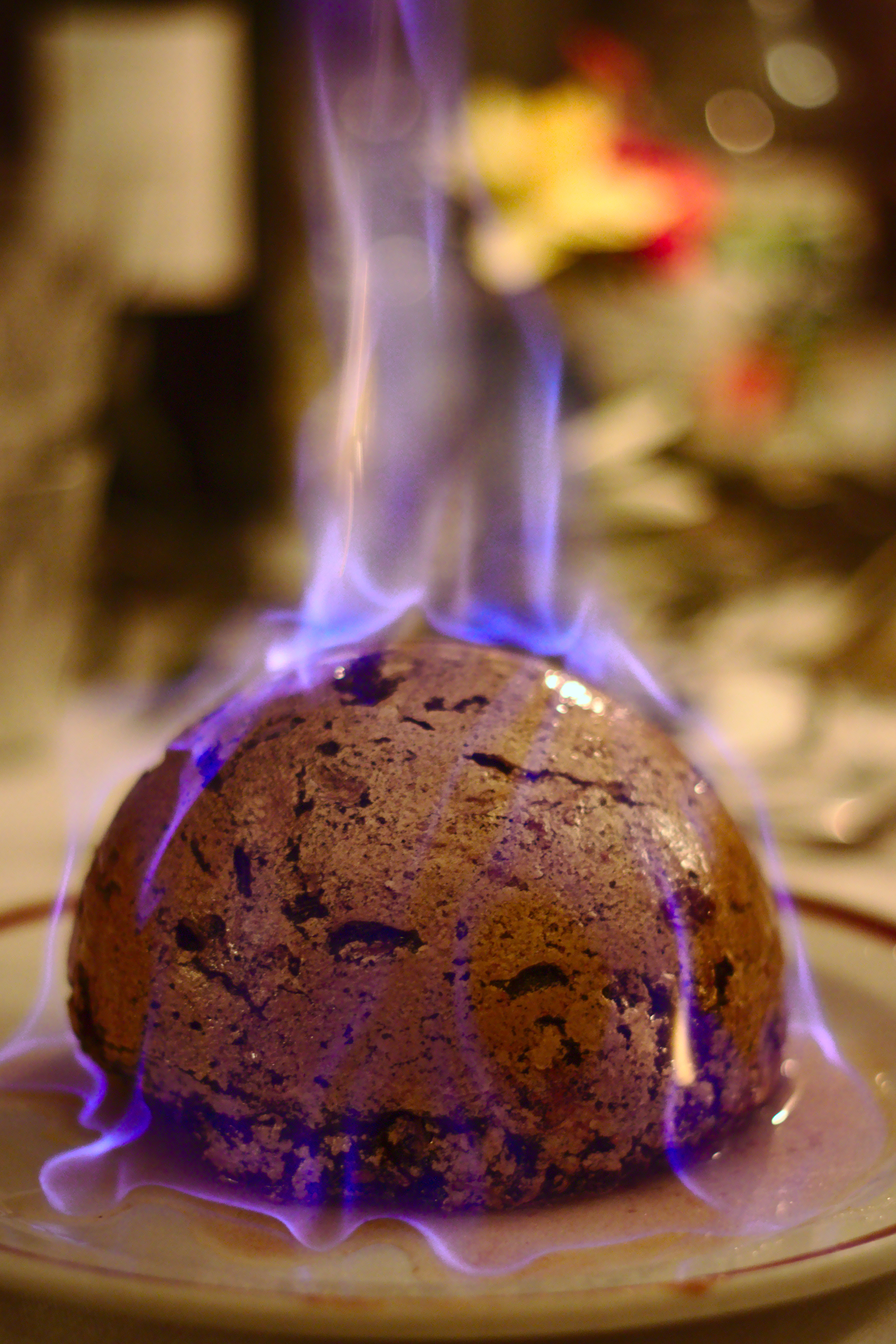
A Christmas pudding is a British emblem of Yuletide. Love it or loathe it, no traditional British Christmas meal is complete without one. Similar to Brussel sprouts, (which tend to be more loathed than loved but also still make an appearance) our Christmas dessert, in my humble opinion, is part and parcel of the Christmas festivities.
Our beloved Christmas pudding has history – it’s been around for longer than you might think.
Who made the first Christmas pudding?
Sadly, we do not know the name of the person who invented our pudding. But we do know thatits forerunner, a type of pottage, a mixture of beef, suet, dried fruit and spices existed in England in the Middle Ages. Pottage was the name for a soupy kind of stew, generally eaten by peasants, and comprised of ingredients that were readily available to them – mainly vegetables and pulses. If the nobility chose to eat pottage, then more expensive items such as spices and meat would be included.
Many pottages later, around the end of the Tudor era, our pudding gained a more solid form, and a new name, plum pudding, but beef still figured amongst its ingredients. It was also a possibility that there were actually no plums in the pudding, plum being used to refer to various different fruits. At the same time the humble pottage was also still in existence and no doubt the size of your wallet would decide which version you chose.
A Christmas pudding hanging on a hook to dry. Photographed by DO’Neil.
In the 18th century, pudding cloths arrived, supplanting the animal intestines that had been used before ( yes, better not to think about it…). The mixture would be left in a muslin cloth for some time, followed by a lengthy cooking process. This is when plum pudding began to acquire the spherical shape that we know so well today. It was generally eaten alongside beef, if you were well-heeled enough to afford it, of course.
The golden age of Christmas pudding
Fast-forwarding to the Victorian era, Queen Victoria and Prince Albert were known to enjoy lavish meals at Christmas, (see: https://wordpress.com/post/english-stuff.com/1197 ) with plum pudding often on the menu. Charles Dickens also promoted the idea of a Christmas pudding as a special delicacy at the end of A Christmas Carol when Mrs. Cratchit presents a sweet, round pudding, blazing in ignited brandy.
Two years after the publication of A Christmas Carol, our dish appeared as an official “Christmas pudding” in Eliza Acton’s Modern Cookery for Private Families, a bestseller in 1845. This was Christmas pudding as we would recognise it – that is, a round sweet pudding, with no beef, but plenty of fruit and spices. The pudding mixture could be moulded to give it a more ornate shape. It was however, still served alongside the meat course.
During the twentieth century, this sweet dish became exactly that – the dessert we instantly recognise, served with cream, custard or brandy butter. Supermarkets began to stock a convenient packaged version, which only needs to be heated and served.
But times continue to change. Nowadays many older Brits, (but certainly not all), are still attached to Christmas pudding, maybe because it has been part of our lives for so long. However, the younger generation, it seems, are not particularly supportive of the Christmas pud, probably as it usually follows a very rich and heavy first and second course. The Royal Mint in a 2024 survey found that a whopping 59% of the British population said they did not consider the Christmas pudding to be essential to the festivities. What do you think?
Christmas pudding has been with us in various guises for hundred of years. It is still cherished by some. But do you think Christmas pudding will survive in the future? Do youlove it or loathe it? Let me know!
Throughout the 1800’s there was a push towards literacy and education for everyone, leading to the Elementary Education Act of 1870. Times were changing, with industrialisation and scientific innovation leading the way. People were leaving the old, rural lifestyle behind them, flocking to the cities in droves, in search of better lives. This upheaval also meant that people needed more education or training in order to find better paid jobs.
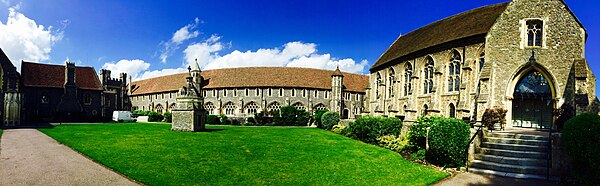
Prior to the 1870’s, education had always been at best, patchy and certainly not widely available to all and sundry. There were some independent voluntary schools, usually managed by the Church or a charity, with the emphasis onreligious education. The first of these was set up in 597 and known as the King’s School, Canterbury, and still exists today. Part of the impressive modern school campus is shown below.
The official educational establishments that existed were known as public schools, as opposed to private tuition, both systems only available to the wealthy. In time these schools would evolve into institutions that were and still are exclusive to the public at large – for example, today, public schools for the very wealthy include Eton, Westminster or Rugby. So confusingly, a public school in England is not for the public at all, in fact it is a highly expensive private school.
Of course, it should be noted that before the mid 1800’s education at school was for boys only. If girls received any type of academic education at all, it would be at home via a nanny or a governess. Today, of course, the vast majority of British boys and girls go to state schools, that is, those funded by the government.
Ragged Schools
The type of education a child would receive (or not) depended, of course, on their family’s place in society.
In the 1840’s voluntary schools which came to be known as Ragged Schools began to appear in the poorest areas of the country, and provided food, shelter and the rudiments of an education. These were for children at the opposite extreme from the public school students, minors who were extremely poor or destitute and often excluded from Sunday or voluntary schools because of their behaviour and/or appearance.
These schools were maintained by philanthropists, notably Charles Dickens amongst others, and staffed by volunteers, and newspapers spread the word about their existence. Not everyone liked the idea – common opinions were the schools were a waste of time, the children were too stupid or lazy to learn, or they would just learn how to become better criminals. Take your pick.
But there was a genuine feeling in Victorian society that the poor should be helped and the ragged schools established themselves, proving that the not only the well-heeled had a desire for education. In poor inner city ragged schools there could be between 50 to 70 children in a class. It is estimated there were about 350 schools of this type by the time the Elementary Education Act was passed in 1870.
The beginnings of education for all
Even so, many of the working class were unable to read and write. Child labour was also normal, with kids of school age working in factories for a pittance.
With the implementation of the Education Act in 1870 school boards were created and could use ratepayers’ funds to improve or set up schools, universal education finally becoming a government concern. The boards also laid down the priorities of education. By 1876 it became mandatory for all children between 5 and 10 years of age to attend school, considerably lower than the leaving age nowadays.
Yet again there was opposition; some of the upper classes opposed the idea of educating the working classes for fear it would cause a revolution, while a section of the lower classes feared their children would be indoctrinated by propaganda. The Church, who still provided voluntary schooling and Sunday schools, also did not want to lose its influence on young people. Sometimes the parents needed the small amount of money that their children earned at work and therefore prevented them from going to school.
However, it was also clear that an educated workforce would enhance Britain’s competitive status at large. By 1902, school boards were abolished in favour of local education authorities, which were responsible for education within their designated area, and the basis for our modern education system was created.
Let’s look at the mainstream schools during this time.
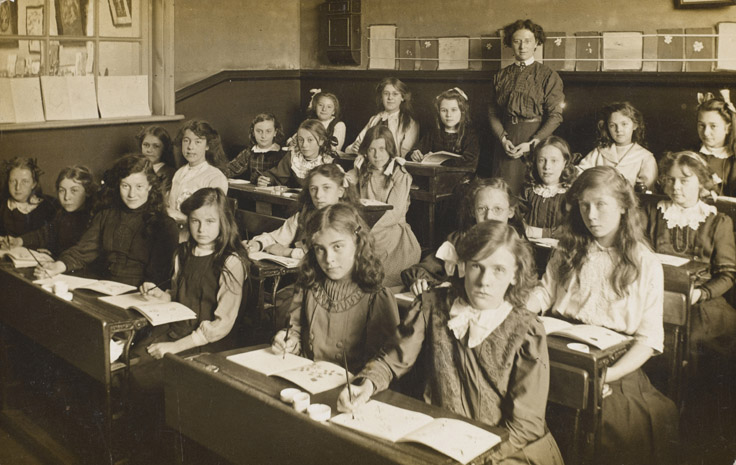
Miss Bowls’s class in an unidentified girls’ school Date: circa 1905 Source: postcard
What was taught?
Lessons were fairly basic and monotonous, with a huge focus on reading, writing and arithmetic. The pupils would copy what the teacher had written on the blackboard and a lot of attention was given to copperplate handwriting and learning by heart. Numeracy was also essential and usually involved the children chanting times tables until they all did it perfectly. There was no creativity and teaching through fun activities and games were an alien concept far off in the future.
However, depending on the school and the teacher, other things were taught. Religion was almost always included and sometimes history and geography. There were object lessons where a picture, model or artefact would be observed by the pupils.
If it was a mixed gender school, sometimes pupils were separated by gender into different classes – the boys might do woodwork or gardening, and the girls cooking or embroidery.
The classrooms
The classroom was generally called the schoolroom. The windows were situated high up to avoid distractions and as a result, it was often airless and stuffy. If there were more than one classroom, they were divided only by a curtain. As you can see in the photo below, the desks were bolted to the floor and the classroom often had tiers so all the children could see the blackboard, and the teacher, in turn, could see them.
The children wrote on slates which were rubbed out and re-used. The older students might have used ink pens that dipped into ink wells to produce their written work.
A Victorian classroom with high windows and tiered desks. Photo courtesy of edufirst.ng
The teachers
There were far more female teachers than males – the pay was low and therefore the profession did not attract many men. Schoolmistresses tended to be unmarried females, who gave up the job when they gained a husband.
The better establishments had teachers who had received certification in various subjects. The poorer schools could not afford to be so choosy. These teachers probably learnt their profession from day one at school.
Boy in dunce cap sitting on dunce stool. Origin unknown (but probably not Victorian.)
The teachers were generally very strict and expected all the children, even the youngest, to pay attention at all times. Poor work, speaking out of turn, answering back or any misdeeds from the pupils meant they could receive blows from either the teacher or a cane.
There was practically no understanding of slow learners, and pupils who did not keep up with the class could be made to sit or stand on a dunce’s stool wearing a dunce’s hat for up to an hour, Conformity was the name of the game, and the left-handed were forced to use their right hand for writing tasks.
With time, society has gained more knowledge about the learning process and our schools today have moved on in several aspects. New technology and not least, the recent coronavirus pandemic have introduced different ways of teaching – online, or encouraging more self-study for example. Nevertheless, the Victorians were responsible for thefoundation of our modern educational system.
Some questions for you:
Do you think schooling helped children in Victorian times?
Do you think our contemporary schools help students to face the working world today ?
Did you know that the name Big Ben, strictly speaking, only designates the bell that strikes the hour from inside the tower? The tower itself was named the Clock Tower, and then renamed the Elizabeth Tower in 2012, the year of Queen Elizabeth’s diamond jubilee. That said, most of us refer to the whole structure as Big Ben, probably because it trips off the tongue much more easily.
How old is Big Ben ?
The Palace of Westminster (a.k.a The Houses of Parliament) was badly damaged by a fire in 1834. The following year a Royal Commission was established to find an architect who could design a new palace in line with the surviving buildings of Westminster Abbey and Westminster Hall. Yes, you may remember that a time existed when projects were not just given to government cronies……
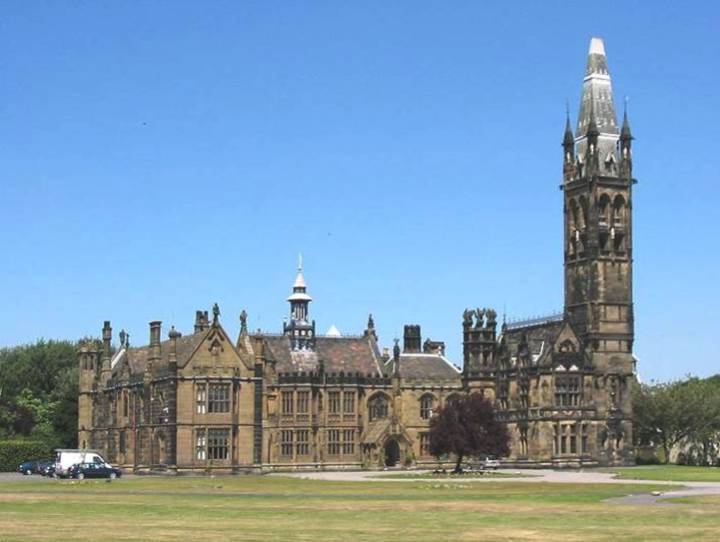
Anyway, the committee appointed a guy called Charles Barry and his collaborator, Augustus Pugin. Barry had included a clock tower in his plans, but it did not yet resemble the Big Ben we know and love today. Augustus Pugin was a Gothic revivalist and already had plans to redesign Scarisbrick Hall in Lancashire, including a 100 foot tower.
Scarisbrick Hall. Remodelled by A.W. N. Pugin. c. 1837-45; altered by Edward Pugin, 1860 onwards. Near Southport, Lancashire. Photo by Rob Scarisbrick.
Pugin’s influence
Although Charles Barry was the chief architect, it was Augustin Pugin who was mainly responsible for the design of the clock tower in London. Wikipedia quotes Pugin as saying “”I never worked so hard in my life [as] for Mr Barry for tomorrow I render all the designs for finishing his bell tower & it is beautiful & I am the whole machinery of the clock.”[
Mr Barry, however, did not deign to give any credit to Augustus for his undoubted contribution to both Big Ben and the interior design of The Houses of Parliament. Pugin’s son, Edward, (who incidentally would carry out his father’s project for Scarisbrick Hall) issued a statement in 1867 after both men had died , affirming that the “true” architect had in fact been his father, and not Charles Barry.
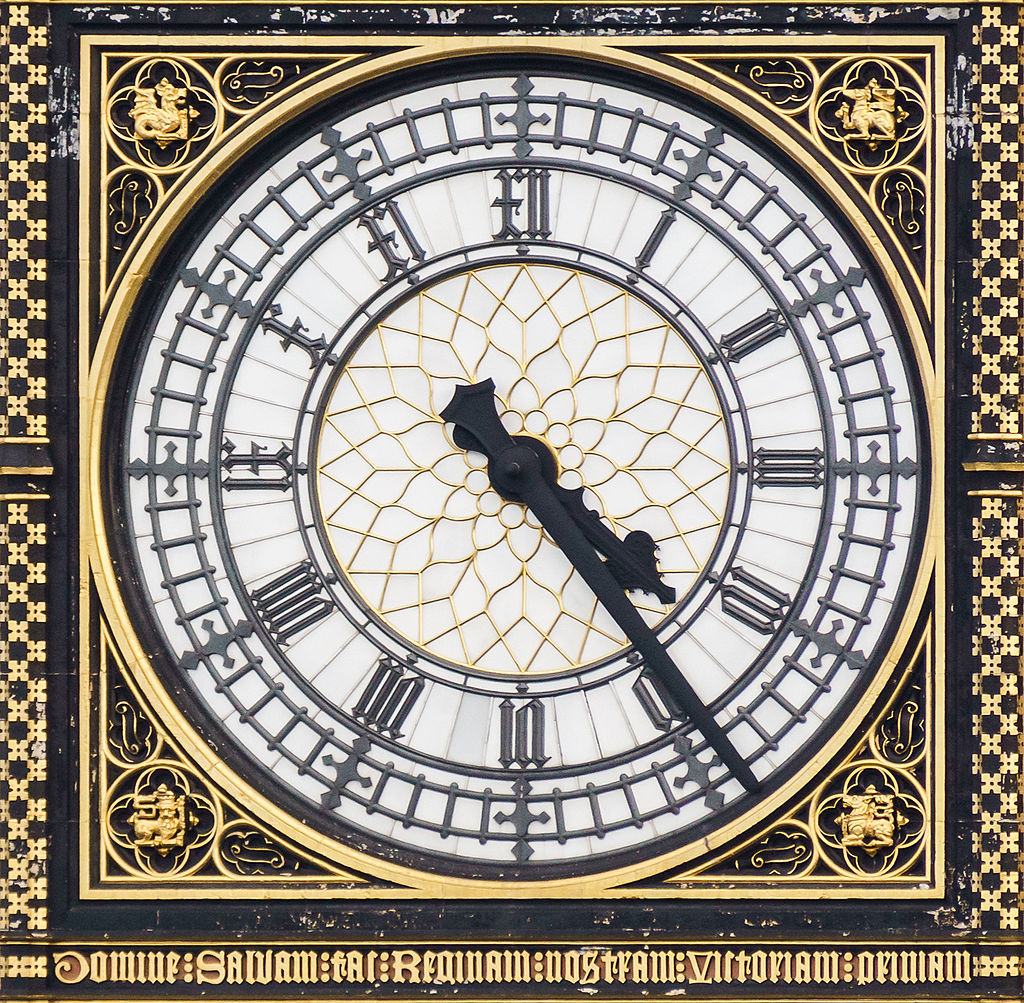
Augustus had re-designed the clock tower to be taller and more imposing, dominating the Parliamentary skyline. He added the symbols of the four nations of the British Isles – the rose, the leek, the thistle and the shamrock, as well as the portcullis which is the symbol of the House of Commons and the House of Lords. seen below.
Sadly, Augustus died at the age of 40, and never saw the clock tower completed.
Big Ben is known to be an extremely accurate clock and its mechanisms have been copied in many high tower clocks. It is reliable to within a few seconds a week.
Since 1859, the pendulum was controlled by a pile of pre-decimal penny coins which were added or removed as necessary to keep time-keeping punctual. In 2009 some of the pennies were replaced by 5 pound coins, specially produced for the London Olympics in 2012, and depicting, you guessed it, Big Ben.
Big Ben has stopped at various times due to heavy snow, including at New Year of 1962/3 when the New Year was chimed in nine minutes late.
The clock faces were not illuminated during some periods of World War I and the whole of World War II in order not to guide German bomber pilots. A German bomber did actually damage two of the clock dials in 1941.
Big Ben leans around 0.26 degrees to the north-west, but experts say this will not be a problem for thousands of years. ( 0.26 degrees is around one sixteenth of the tilt of the Tower of Pisa. )
A flock of starlings decided to sit on a clock hand in 1949, making it slow down by four and a half minutes. I would make a joke about a bird on the hand, but then again, maybe not…
In 2005 one of Big Ben’s clock faces stopped for a short period of time, possibly due to the high temperatures of 31.5 degrees C ( 90 degrees F). Global warming is real, people.
The London Olympics in 2012 were celebrated Big Ben chiming 30 times – it was the 30th Olympìc event.
Big Ben is currently undergoing a long period of maintenance which began in 2017 and is scheduled to finish in March 2022, athough this date currently appears to be in question. The original designs for the clock face have been sourced and the details on the clock face will be repainted to their orginal Prussian blue, replacing the black that we have always seen before, which was actually used to disguise pollution. The heraldic shields of each nation will be restored to their original colours, along with the roof and stonework.
A vindication of Augustus Pugin? I like to think so.
How did people buy and sell in the Medieval England?
The Middle Ages
The Middle Ages are often depicted as a dark period in time with few amenitites for ordinary people. No mobile phones !! No cars !! No supermarkets !! But despite the fact there was none of the technology that keeps business running today, the wheels of medieval society were kept turning as people relied on each other to provide their services.
A medieval community was generally split into three groups : fighters such as knights and soldiers, thosewho provided spiritual welfare namely, monks and nuns, and workerswho provided goods and services. Let’s look at the thitd group, the tradesmen and find out what was on offer in medieval shops……
Medieval shops and guilds
Medieval tradesmen worked from their houses. Downstairs their workshops were open to the public, and their residence was situated separately on the higher floor. As the great majority of people were illiterate, the shop sign would be a model or an object that indicated their trade.
Within a town, neighbours would trade with each other. Skilled tradesmen would pay a fee to become a member of a guild, and in turn the guild provided a guarantee that all products were of the required quality, standardised prices to avoid unfair competetion and provided assistance if one of their tradesmen were ill or died. Of course I say tradesmen as opposed to tradespeople, because predictably, it was generally always men, not women. There were a minuscule amount of cases where a widow was allowed to continue with her deceased husband’s business.
There were two type of guilds – merchants’ guilds for those who traded and travelled with their goods, and from which the financially stable middle classes would begin to emerge. But the workers in local trade belonged to crafts guilds. which encompassed many more professions that you might imagine – for example, brewers, butchers, bakers and fishmongers. Baking, for example, was a well-established industry where you would find both master bakers and apprentices, and was held in high regard as a skilled profession.
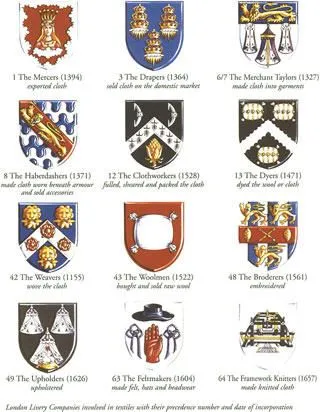
A selection of guilds, from London Livery Companies, with their coat of arms and date of establishment. Some of these were created at a later date from the Middle Ages.
Apart from those who provided food, there were locksmiths, blacksmiths, saddlers, carpenters, joiners, bricklayers…..and for sartorial needs, weavers, dyers, drapers, knitters, embroiderers, jewellers, glovers, and cordwainers, (who made new shoes, as opposed to cobblers who repaired old ones).
Medieval people didn’t have much of a life ? There were undoubtedly hard times for the poorest members of society, the same as in any era, but it doesn’t sound like everyone was dressed in sackckloth only eating plants and rotten vegetables, does it ?
The Medieval Market
Market activity had been in place in England since the time of the Romans; Colchester is generally ecognised as the oldest market town in England. Many of the names of market towns reflect the fact that trade played a important role in their origins : Market Drayton and Market Harborough, for example. The word “chipping” came from an old Anglo-Saxon verb meaning to buy and is preserved in town names like Chipping Ongar and Chipping Sodbury.
From the 12th century, towns and villages could pay a yearly fee to the monarch who would then grant them a charter to hold markets and trade fairs. Market day was once or twice a week in smaller towns and villages, and in some of the largest cities, it could even take place every day. It was held in the town square, and there were market stalls for the customer to buy fresh food, dairy produce, cereals, and items of necessity such as candlesticks, cloth or kitechen utensils.
There were regulations in place to avoid short measure, overpricing and quality control, to attract buyers and provide them with peace of mind that they would not be shortchanged in some way. The Statute of Winchester from 1285 enforced collective responsibility from market traders if one of them was found guilty of improper behaviour. After all, the town was dependent on its good reputation to attract shoppers.
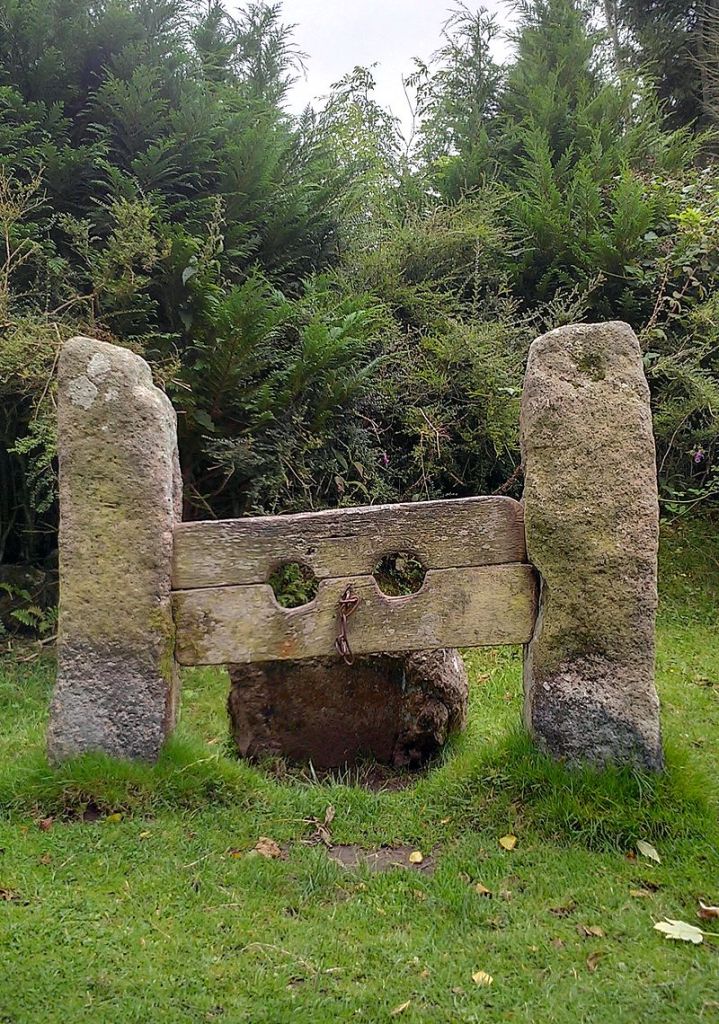
The stocks at Belstone in Dartmoor. Now a grade II listed monument. By Ethan Doyle White, CC BY-SA 4.0, https://commons.wikimedia.org
The stocks and the pillories were two devices that were in use for both sellers who violated the rules of fair play, and for petty thieves, drunkards and other wrongdoers. The stocks restrained offenders by their feet whilst the pillory restrained a person’s head and hands, and therefore was much more uncomfortable than the stocks, (which were also probably not a lot of fun after a while). The townsfolk would humiliate the trapped delinquents with verbal abuse and/or by throwing rotten food and other delights at them. Not a pretty sight. But probably effective as a deterrent.
The pillory, although thankfully no longer in use, left its mark on the English language by becoming a verb meaning to pour scorn on and ridicule in public.
And you know what ? A medieval market was probably noisy and smelly but a great source of entertainment to all those involved. It was a social event as well as a trading place. Town cryers would make their announcements in the market place as it was a central point for the community. Information was exchanged in addition to the products. It was a day that the citizens of the town probably looked forward to and enjoyed.
So markets would be held on designated days but a chartered fair was a special event generally held annually and lasted for days or weeks.. Whereas markets sold the stuff of daily life, in a fair the trade was based on items that were of higher value such as furniture or farm equipment or cattle, or more expensive items from afar, such as spices or furs. And the fair usually included entertainment such as tournaments or singing and dancing to attract the crowds.
One of most famous of these was Scarborough Fair – yes, the one in the song. Scarborough was given a charter in 1253 and the annual fair was celebrated until 1788. The fair started on 15th Ausgust and lasted 45 days, attracting vendors, tradesmen, merchants, entertainers and visitors from all over the country, and providing plenty of business for local suppliers.
Like many other fairs, over time it lost importance for various reasons and by the 19th century, the location of the old chartered trade fairs had often became the site for a funfair – still providing entertainment for the masses.
We may have more technology these days, but our need to socialise and be entertained is still a basic human necessity. And to go to the shops of course !
There is nothing like a gin and tonic Photo by Toni Cuenca on Pexels.com
When did we start drinking gin?
It may come as a surprise to you that gin, which we think of as a quintessentially British product, was first documented as a medicinal drink in the Netherlands, Flanders, Italy and the south of France in medieval times, But it probably existed even before then, although we have no record of it.
In the Middle Ages, alcohol was not intended for pleasure or partying; it was generally distilled in monasteries for health purposes. The forerunner of what we call gin was a fiery concoction made from malt wine or spirit and flavoured with juniper berries, well-known for their diuretic properties. It seems highly improbable that nowadays we would find this beverage very palatable.
Gin’s name comes from jenever (Dutch) or genièvre (French) which mean juniper. Juinperis Communis is still a popular flavour in gin nowadays. You need to make sure you have the right junipers though, as there are a few poisonous strains of this berry…….and that ‘s definitely not the type of intoxication you are looking for.
It is claimed that the expression dutch courage comes from gin-drinking British soldiers fighting in Antwerp against the Spanish Empire. The fighters would fuel their courage with a shot of jenever before a battle. Dutch courage is still in use and refers to the (often false) confidence that drinking alcohol can provide.
But why were the British soldiers fighting ? They were embroiled in what became known as the Eighty Years War (1568–1648), also known as the Dutch War of Independence. This was a political and religious conflict, where the British soldiers were a Protestant ally fighting alongside Protestant Netherlands, Belgium and Luxembourg set against the huge and powerful Catholic Spanish Empire.
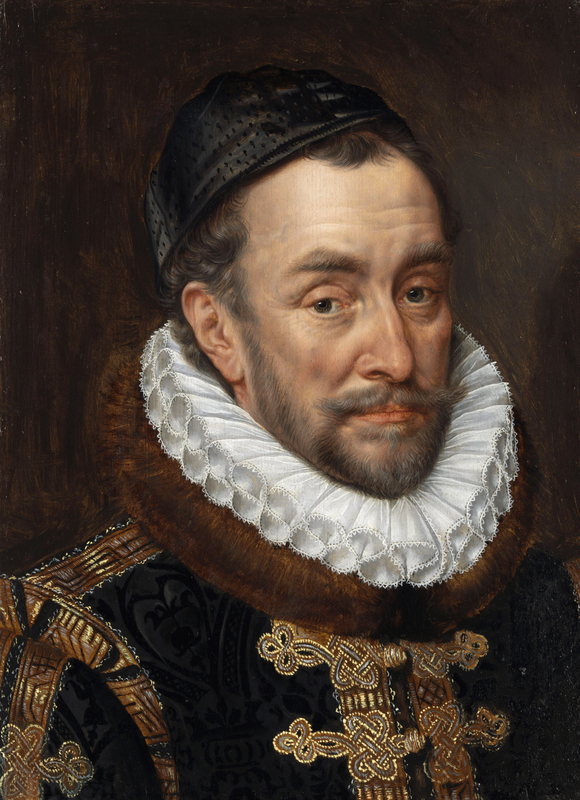
King William III of England, also known as William of Orange Photo via Good Free Photos under the CC0 / Public Domain License
Gin takes over
So why is this relevant to gin? To cut a long story short, the Dutch William of Orange eventually became King William III of England (also known as William II in Scotland, don’t ask.) The Catholic King James II had antagonised his subjects so much that he was deposed in 1688 and the Protestant William of Orange was invited to take the throne.
And William brought us gin. In a big way.
In the 17th century a precursor of our modern gin was already being sold in Dutch and Flemish chemists. For medicinal purposes only, generally aimed at gout, or kidney and stomach problems.
But gin had other connotations. It was promoted as a “Protestant” drink, not only for fuelling soldiers in battle, but as an alternative to “Catholic” French wine and cognac, which were heavily taxed to dissuade consumption. Furthermore, the goverment encouraged gin drinking as no licence was required for its production. Basically, anyone with access to the ingredients and the know-how was able to produce and sell it. Gin drinking became hugely popular, especially in London, leading to what is now known as the Gin Craze.
Mother’s ruin
We need to remember that what is referred to as “gin” in the eighteenth century was really a blanket term for any type of alcohol distilled from grain. Royalty and the aristrocracy drank high quality gin as a fashion statement; the poor drank the cheapest “gin” on offer because it was a cheap means of release from their squalid surroundings. It also has to be said that a pint of this type of gin was cheaper than a pint of beer, and even potentially safer than water, as the drinking water supply, especially in cities, could be polluted.
But as often happens with these things, it all got out of hand. Gin shops appeared all over England, and gin was also often sold by street vendors. London in particular had a gin drinking problem of epic proportions, resulting in drunken chaos on the streets. In deprived areas, gin was a cheap and readily available drug that would help someone forget their hardship. Unsurprisingly, the number of alcoholics soared and shockingly, large numbers of children died of alcoholic poisoning.
The government found themselves obliged to pass five different Gin Acts in the space of twenty years in order to control the gin drinking they had actively promoted earlier. As the measures got tighter, the illegal distillation of gin proliferated, often with toxic ingredients such as turpentine added to the mix. Lovely.
William Hogarth’s Beer-street-and-Gin-lane.jpg Wikipedia Commons (public domain)
To warn against the consequence of uncontrolled gin drinking in 1751 William Hogarth created the prints Gin Lane and BeerStreet – see above. Beer Street shows happy, prosperous people. Gin Lane shows madness, violence, drunkenness, starvation and infanticide. There was, in fact, a real life case of a mother who killed her infant daughter in order to sell the child’s clothing for money to buy gin. This gave rise to the expression mother’s ruin in relation to gin, an expression still with us today.
However, if you think about it, it was actually the elite of Beer Street who had set the gin drinking in motion in the first place.
In conjunction with the last Gin Act of 1751 and the increasing cost of grain, the Gin Craze was finally over by the late 1700’s.
In 1830 Aeneas Coffey revolutionised the distillation of spririts with the invention of the column, continuous or Coffey still. This allowed for a much cleaner, purer tasting alcohol to be produced. It became popular in Scotland for making whisky, and England used the still for manufacturing gin. This created a dry style of gin, known as London gin, still popular today. During this time, gin became gentrified, and the madness of the Gin Craze was practically forgotten.
In the nineteenth century, when British army officers were stationed in India to defend the now defunct British Empire. Malaria was a constant threat and the officers were issued with quinine to prevent them from it. The only problem was, the quinine tasted bitter and unpleasant when the powder was mixed with their carbonated water.
Some bright spark (to whom, if you are a gin and tonic drinker like me, we should be immensely grateful) had the idea of mixing the quinine and tonic water along with his gin ration and sugar and lime. And so the gin and tonic was finally born.
Today gin is a multi-million pound industry with an immense range of different brands and styles. A wide variety of flavours can be added to both the gin and the accompanying tonic.
The history of gin may have had its ups and downs, but it has never had a dull moment.
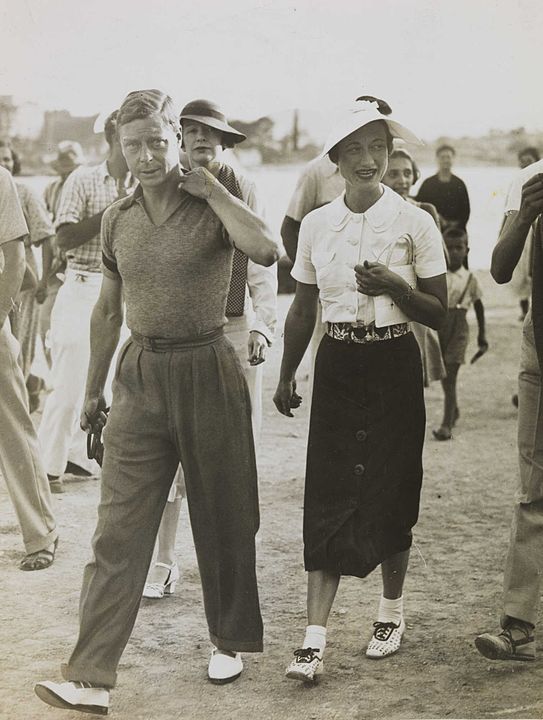
King Edward VIII and Mrs Simpson on holiday in Yugoslavia, 1936. By National Media Museum from UK . No restrictions, https://commons.wikimedia.org
I have always been fascinated by the the story of Edward VIII and Wallis Simpson, the king who abdicated with these famous words : “I have found it impossible to carry the heavy burden of responsibility and to discharge my duties as king as I would wish to do without the help and support of the woman I love.”
It goes without saying that times were very different in the 1930’s, and people held ideas that are difficult for modern sensibilities to comprehend. Divorce was not widespread and carried a significant social stigma, many of the British upper class were immersed in snobbery, and the British press protected the Royal Family from scandal. How times have changed.
Edward, the heir to the throne did as he pleased. He was originally a golden boy who enjoyed popularity in the press, he partied, he had affairs with married women and lived a hedonsitic life. But then he fell in love with his twice divorced American mistress, Wallis Simpson. In those times of harsh social judgement Wallis was never going to make the cut as a member of the British Royals. She was openly ambitious and relished power, she was outspoken and did not show deference, and furthermore. she was a twice-divorced American…….
I believe that Edward and Wallis were spurred on by the idea of rebelling against their detractors. Tied up in their relationship were their own desires and expectations of life. Edward did not have much time for court protocol and Wallis gave him escape from the constraints of the less exciting and intellectual royal duties, tasks where he fell considerably short. Wallis was charismatic with an irreverent wit. She was also a social climber who was undoubtedly attracted to the wealth, status and glamour afforded by being Edward’s love interest. Edward was determined to marry Wallis despite the fact that she had two ex-husbands and would be deemed both socially and politically unacceptable as a royal consort.
We already know how this ended, don’t we ? On 10 December 1936 Edward abdicated, and he and Wallis married in France and lived a life in exile. Edward may well have imagined he would be able to return to Britain and still retain some influence within the royal family, but he was finally told he would be cut off financially if they returned. Meanwhile, George VI and the late Queen Mother gained the public’s respect and affection during World War II in a way that may well have been impossible for Edward and Wallis. Furthermore, it was discovered that Edward had lied about his personal finances in order to gain a more profitable financial settlement from the royal family, who paid his post- abdication allowance as he was no longer on the Civil List. He further disgraced himself by his association with the Nazi regime. The Duke and Duchess of Windsor, as they were now known, were sent to Bermuda in 1940 where they could do less damage to the British war effort.
After the war, the couple lived in Paris as socialites. Edward had finally understood that his role as a functioning royal was over. There was still a lot of bitterness over his actions. And what of Wallis? She had gained an affluent lifestyle but would be permanently denied her royal title, despite the fact her husband was still a styled as a royal highness. She remained at Edward’s side and was always ready to publicly support the Duke. But were they really happy behind the scenes ? After the war ended, the Windsors shuttled between Paris and New York as minor celebrities, forced to stick with their fairytale ending. Wallis is reported to have said “You you have no idea how hard it is to live out a great romance.”
Edward died in 1972. He is buried in Frognore, near Windsor. Wallis died fourteen years later. She had dementia and was living as a recluse. She was given a simple funeral on 29th April 1986 at Saint George’s Chapel in Windsor and buried next to Edward. Despite her husband’s persistence in the matter, she was prevented by exceptional legal measures from using the title of royal highness although Edward insisted that she was addressed as such in their household. The late Queen Mother is known to have had a strong dislike for Wallis, and considered that she was to blame for George VI’s untimely death due to the stress of a of royal role for which he had not been prepared.
Nobody comes out well in this story. But what we know is that Edward declined to accept his royal destiny at the cost of his adored Wallis. The acrimony that arose from his abdication and his subsequent actions would prevent Edward and Wallis from ever returning permanently to Britain until their deaths.

























 english-stuff.com





You must be logged in to post a comment.