
Sweet Christmas
A Christmas pudding is a British emblem of Yuletide. Love it or loathe it, no traditional British Christmas meal is complete without one. Similar to Brussel sprouts, (which tend to be more loathed than loved but also still make an appearance) our Christmas dessert, in my humble opinion, is part and parcel of the Christmas festivities.
Our beloved Christmas pudding has history – it’s been around for longer than you might think.
Who made the first Christmas pudding?
Sadly, we do not know the name of the person who invented our pudding. But we do know that its forerunner, a type of pottage, a mixture of beef, suet, dried fruit and spices existed in England in the Middle Ages. Pottage was the name for a soupy kind of stew, generally eaten by peasants, and comprised of ingredients that were readily available to them – mainly vegetables and pulses. If the nobility chose to eat pottage, then more expensive items such as spices and meat would be included.
Many pottages later, around the end of the Tudor era, our pudding gained a more solid form, and a new name, plum pudding, but beef still figured amongst its ingredients. It was also a possibility that there were actually no plums in the pudding, plum being used to refer to various different fruits. At the same time the humble pottage was also still in existence and no doubt the size of your wallet would decide which version you chose.
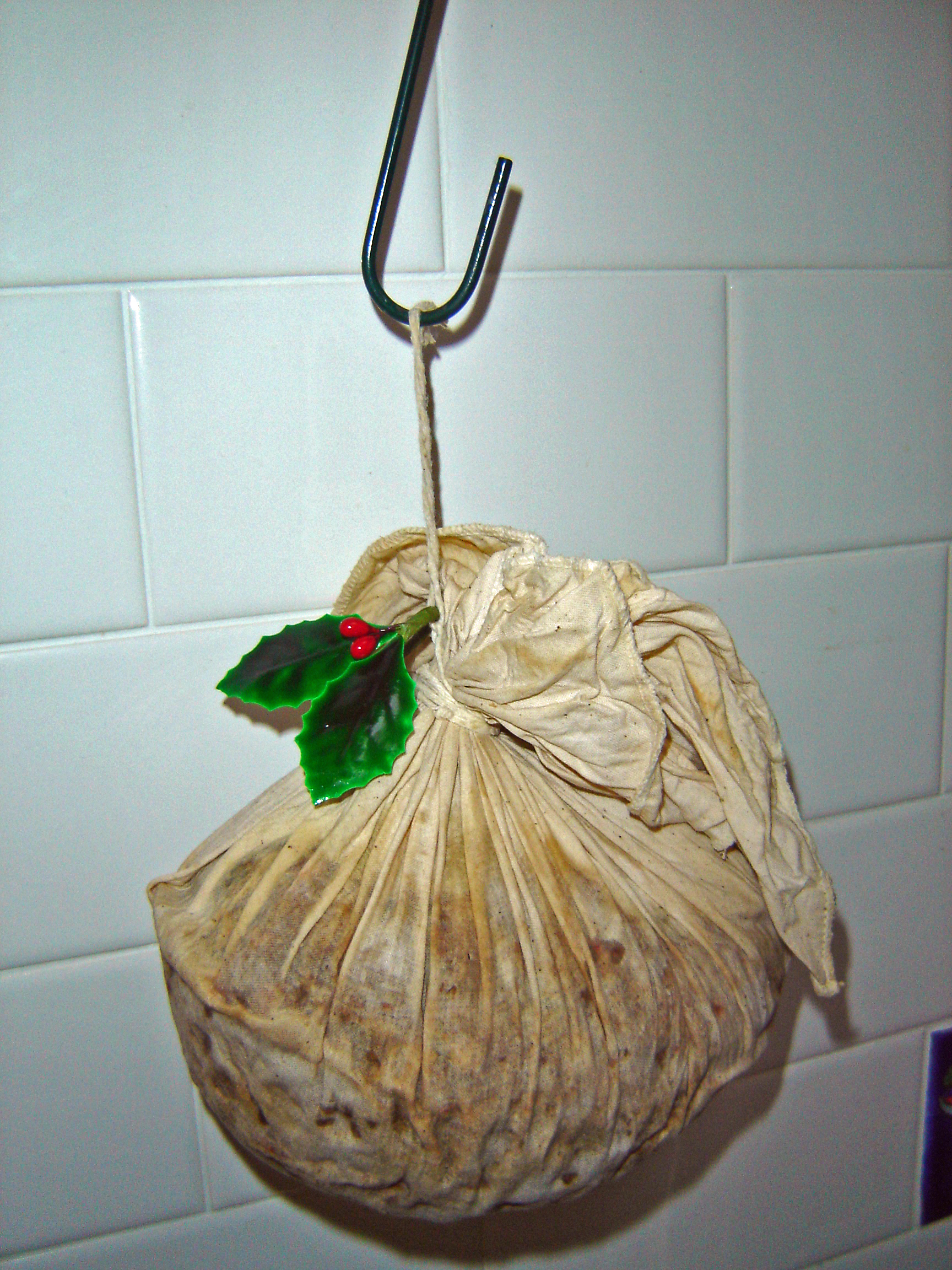
In the 18th century, pudding cloths arrived, supplanting the animal intestines that had been used before ( yes, better not to think about it…). The mixture would be left in a muslin cloth for some time, followed by a lengthy cooking process. This is when plum pudding began to acquire the spherical shape that we know so well today. It was generally eaten alongside beef, if you were well-heeled enough to afford it, of course.
The golden age of Christmas pudding
Fast-forwarding to the Victorian era, Queen Victoria and Prince Albert were known to enjoy lavish meals at Christmas, (see: https://wordpress.com/post/english-stuff.com/1197 ) with plum pudding often on the menu. Charles Dickens also promoted the idea of a Christmas pudding as a special delicacy at the end of A Christmas Carol when Mrs. Cratchit presents a sweet, round pudding, blazing in ignited brandy.
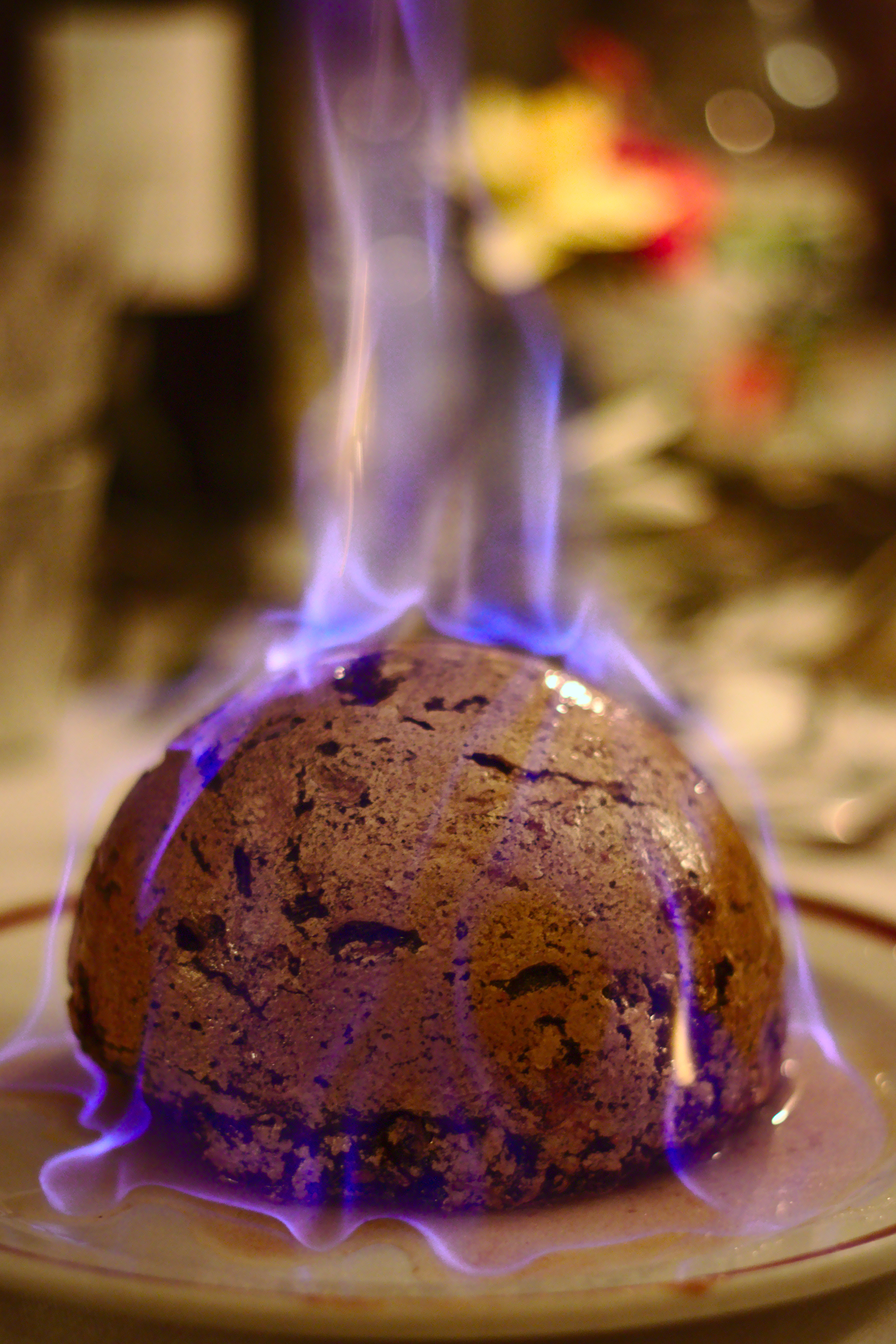
Two years after the publication of A Christmas Carol, our dish appeared as an official “Christmas pudding” in Eliza Acton’s Modern Cookery for Private Families, a bestseller in 1845. This was Christmas pudding as we would recognise it – that is, a round sweet pudding, with no beef, but plenty of fruit and spices. The pudding mixture could be moulded to give it a more ornate shape. It was however, still served alongside the meat course.

Demise of the Christmas pudding?
During the twentieth century, this sweet dish became exactly that – the dessert we instantly recognise, served with cream, custard or brandy butter. Supermarkets began to stock a convenient packaged version, which only needs to be heated and served.
But times continue to change. Nowadays many older Brits, (but certainly not all), are still attached to Christmas pudding, maybe because it has been part of our lives for so long. However, the younger generation, it seems, are not particularly supportive of the Christmas pud, probably as it usually follows a very rich and heavy first and second course. The Royal Mint in a 2024 survey found that a whopping 59% of the British population said they did not consider the Christmas pudding to be essential to the festivities. What do you think?

Christmas pudding has been with us in various guises for hundred of years. It is still cherished by some. But do you think Christmas pudding will survive in the future? Do you love it or loathe it? Let me know!
 english-stuff.com
You must be logged in to post a comment.