Categories
English history

The history of Halloween

Photo by Pixabay on Pexels.com
Flames and fire were once an integral part of Halloween

The beginnings

Hallowe’en or Halloween is a contraction of the Scottish expression All Saints’ Eve, which falls on 31st October before All Saints’ Day on November 1st.  Our modern Halloween celebrations stem from a variety of much older customs, from Celtic rituals and medieval traditions.
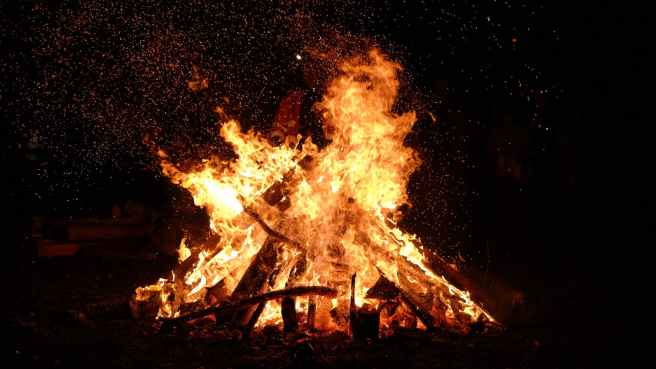
Photo by Jens Mahnke on Pexels.com
Bonfires were lit during Samhain

Samhain

Celtic occupation of the British Isles can be traced back to the 13th century B.C. In Celtic Ireland, Scotland and the Isle of Man, an important festival called Samhain was celebrated on 31st October/1st November, which was the beginning of a new year in the Celtic calendar. It was believed that on this first day of winter, the dead returned to Earth.  The Celts in England, Wales and Brittany had a similar tradition, known as Calan Gaeaf in Welsh, also involving the belief that the ghosts of the dead were roaming amongst the living. On this day, sacred bonfires were lit, crops were burnt and animals were sacrificed. The Celts wore costumes, generally animal skins and heads, in order to ward off evil spirits, and they also told fortunes and made predictions for the coming year. Bowls of food were left out to gain goodwill from malevolent ghosts. These festivals not only marked the beginning of winter when it was thought it would be easier for spirits to enter the world, they also were a means of asking for protection from the evils of a long, dark winter period. 
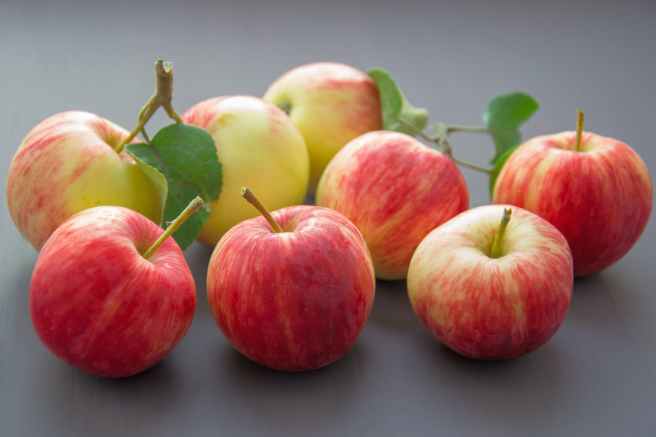
Photo by Mareefe on Pexels.com
Apples are a longstanding element of Halloween

Some historians believe that with the advent of the Roman Empire, a Roman festival was added to the Halloween mix. Pomona was the goddess of fruit trees and orchards and was associated with the blossoming of fruit.  Her symbol was an apple and as a result, this fruit became incorporated into Halloween activities, still around today in the guise of toffee apples and games such as apple bobbing. However, as Samhain and Calan Gaeaf marked the end of harvest time, it is likely that apples were already used in these festivities during the Celtic period.

Photo by Pixabay on Pexels.com
The Church created Holy Days to take precedence over pagan rites

Church intervention

During his reign from 731-741, Pope Gregory III dedicated a chapel in Rome to all saints on November 1st.  In Medieval England this day became known as All Hallows and the previous day became Hallowe’en.   Around the year 1000, the Church created All Souls’ Day on Nov 2nd and the period from 31st Oct to Nov 2nd was called Allhallowtide or Hallowmass.   It is generally thought nowadays that the Church was trying to impose holy days over the pagan Celtic festival which was still being celebrated, but in fact, these designated holy days would begin to include some of the elements of Samhain and Calan Gaeaf.
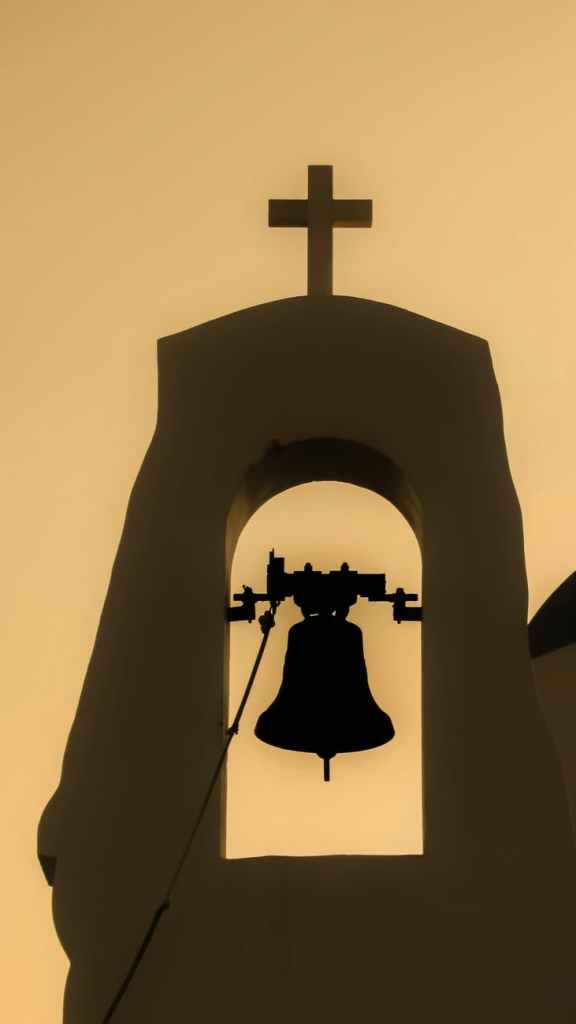
Photo by Pixabay on Pexels.com
Church bells were tolled for the dead

The Middle Ages

Early traditions from Allhallowtide included the ringing of church bells for the souls in purgatory along with town criers dressed in black. By the 15th century the tradition of souling had begun, which appears to be the starting point for our modern custom of trick or treating.  Families with the economic means would provide soul cakes to poor people, who in turn would pray for the souls of the dearly departed from the family. Soul cakes were small fruit-filled pastries, and, similar to the hot cross buns we eat at Easter, they were marked with a cross to show that they were given in alms, that is, with a charitable purpose. This practice was encouraged by the Church in order to replace the pagan habit of leaving food and drink to appease the evil spirits afoot at Halloween.

Photo by Pixabay on Pexels.com
A souler

Souling

From the 16th century onwards souling had evolved into a practice whereby people dressed up to personify the dead spirits and received food and offerings on their behalf in return for protection. These people were guisers, or at Allhallowtide they were also known as soulers. It was also believed that by impersonating a dead soul, the soulers themselves were safe from evil spirits in the same way that the Celts had used animal skin disguises at Samhain to ward off unearthly enemies. However as time went on, in England Halloween waned in popularity, although there is evidence that it was still celebrated in Ireland, Scotland and rural areas. The emigrants from these areas to the United States, particularly the Irish, implanted their Halloween traditions in their new country. From the areas mainly inhabited by immigrants, Halloween festivities began to spread into mainstream culture.

Photo by Kevin Bidwell on Pexels.com
Today Halloween is vey much about children

Halloween in the 20th century

At the turn of the 20th century, Halloween games for young women included using apple peel to predict the name of their future husbands – just like the Celts had told fortunes many centuries ago. People dressed up in Halloween costumes, and went from house to house asking for food or money, a latter day version of soulers.  For a time, vandalism and Halloween pranks  threatened to become the main part of the festivities, but in the 1920’s and 30’s there was a concerted effort in America to make Halloween more community-centred and remove references to its more grisly and/or uneasy aspects.  By the 1950’s, this aim had generally been achieved and Halloween was both a secular and family–based celebration. Particularly after the baby boom of the 1950’s, Halloween became a mainstream event for children and trick or treating at Halloween was a perfectly normal activity for younger members of the family.

To date

Nowadays, Halloween is a hugely commercial event in the United States, generating billions of dollars from sales of costumes and sweets, along with parades and other activities. Although some people dismiss this new version of Halloween as an American import, it has, in fact, also increased in popularity in recent years in the United Kingdom and Ireland. What would our Celtic ancestors make of it, I wonder?

Categories
Wordpower

What are the oldest words in English?

Photo by Pixabay on Pexels.com

Earliest known words

The earliest words in English cover the same concepts as old words in other languages and logically, relate to basic needs of communication. The University of Reading conducted a study in 2013 that came up with words that have remained unchanged for at least 900 and possibly up to 15,000 years. It is, of course, practically impossible to pinpoint the first word in English with 100% accuracy, but here are are some of the contenders that are deeply rooted in the origins of the English language.

I, we and this

It is clear that humans need pronouns to refer to themselves and objects when communicating. Therefore, hardly surprising that these words are on the list.

Mother

A little bit of girl power here, as the word “mother” is quite a bit older than “father”, and was clearly recognised as the vital starting point of the life cycle.

Black

In prehistoric times, it was necessary to have a word that indicated “no light at all.” Interestingly, the word “white” took a significantly longer time to appear in our vocabulary.

Fire and ashes

Fire was a basic element of prehistoric daily life, not only because it provided warmth. light and security but was also a cooking tool. It is a no-brainer then, for both “fire” and “ashes” to be on the list.

Old

So funnily enough, “old” is an old word. Older people in these times were generally revered for their wisdom and experience. Not always the case today…..

Hear

The word “hear” has been around for longer than the verb ” speak”. Of course, being able to hear was another basic survival skill, necessary for hunting or fleeing from wild animals, along with listening for sounds of danger or cries for help. Speaking was not as highly-rated as the ability to hear….maybe there is a lesson to learn here ?

Hand

A vital body part which may have been in constant danger in a prehistoric world, with predators, fire and other dangers from the natural world.

Spit

At first sight, this may look like a surprising entry, but spitting was another survival technique – someone had to taste those foul tasting or poisonous plants first, so we know not to eat them, right ?

Worm

Very possibly related to the need for a word to spit. And evidence that these creatures have been around for a long, long time.

Love and give

Satisying human interaction involves loving and giving, together with the fact that cooperation and teamwork were also key in the struggle for survival.

Conclusion

A common theme in this blog is that our vocabulary relates to our human circumstances. This fact is evident once more, in the words used by our prehistoric ancestors. Whilst fire, ashes, worm and spit are concepts that may have lost urgency in the modern world due to our more comfortable surroundings , several of the words in this list are still considered as basic human necessities of life itself.

Categories
English history

British icons – the red phone box

Photo by Pixabay on Pexels.com
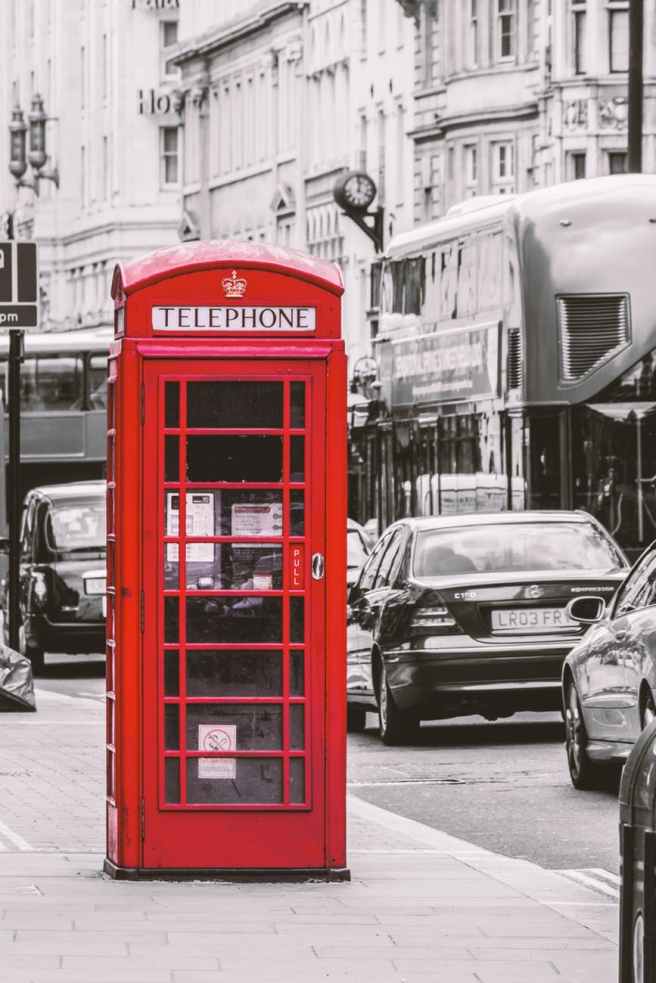
The great British phone box

A famous icon

Practically everyone in the Western world can probably identify a red British phone box which is undoubtedly a cultural icon. Despite the fact that mobile phones are now commonplace, the instantly recognisable red phone cabins can still be found in the U.K. and in former or present colonies.

The beginning

The very first British phone kiosk, now known as K1, was made in 1921, using concrete. In 1924 a competition was held to design a new phone box, and the winner was Sir Giles Gilbert Scott. He suggested that the exterior be painted silver with a green/blue interior. The Post Office used his prototype but decided to paint the cast iron phone boxes in red so they could easily be identified in case of an emergency.. This K2 model is generally what people have in mind when they imagine a British phone kiosk, although in fact there have been several later versions.  As the K2’s were also relatively expensive to manufacture and transport, this particular model was mainly installed in London, and of course, is where you will find most of the remaining K2’s today. The K3 was also the work of Sir Giles Gilbert Scott, due to the need for a cheaper alternative to its predecessor. The next model in the series, K4, was produced by the Post Office Engineering Department in 1927 and comprised a post box and a machine for buying stamps in addition to the phone, although only 50 of these kiosks were manufactured.

Yellow phone boxes

Some 50 years later, there was a public outcry in 1980 when British Telecom announced they were going to paint public phone boxes yellow. In the end, only a tiny percentage of the boxes were painted a different colour “as an experiment”, but the plan to repaint all phone boxes yellow never came to fruition. In 1982 British Telecom introduced the KX100, an open-sided booth that was easier to maintain and could be used by people in wheelchairs. At this point, B.T. also eliminated many of the older red phone boxes, although the British people were in uproar again over the loss of their beloved British symbol.

Reinvention

In spite of the digital era in which we now live, the old-fashioned red phone box is far from obsolete. Apart from the booths which still operate with their original intention, you can find red phone boxes being used in a variety of imaginative ways. They are used to house libraries, defibrillators, and art galleries. One is a colour therapy box and another provides hot dogs, ice-cream, tea and coffee. In the Virgin Isles, a red phone kiosk acts as a beach shower. The red phone box is a British icon which intends to remain as part of our lansdcape and lives.

Categories
Wordpower

Do you know these new words?

Photo by Pixabay on Pexels.com

10 new words in English

In one of my previous posts, namely English is Alive, we looked a little at the evolution of vocabulary and the way that words can survive, drift in meaning or die out. With this in mind, here are 10 new words which might make it to the mainsteam English dictionaries of the future or may just fade into oblivion…..

Badassery – I love this one where a noun has been created to describe the behaviour of a badass, in other words, someone with rebellious ways.

Bromance/ Brogrammer – The first relates to a strong male non-sexual friendship. A brogrammer, in contrast to a geek, works in technology, but takes pride in his masculinity at the same time.

Buzzworthy/Buzzkill – two antonyms to express something creating excitement amongst the masses (buzzworthy) and its opposite, advising that the buzz of excitement has been killed off.

Cyberchrondriac – a person who thinks they are ill after reading their about their symptoms on Internet.

Frankenfood – used to describe food created by artificial or scientific means

Humblebrag – to talk about yout achievements , attempting to show modesty, but bragging all the same.

Locavore – a person who sources food locally

Trashion – fashionable items made from old or recycled clothing.

Some of this vocabulary might just be a passing fad. Other words could still be around in the next hundred years. Which of these words do you think have staying power ?

Categories
Wordpower

Origins of the word “hipster”

Photo by iiii iiii on Pexels.com
A twenty-first century hipster

1920-1940’s

The term “hipster” was first heard in the 1920’s and according to the Merriam- Webster dictionary defines “a person who is unusually aware of and interested in new and unconventional patterns (as in jazz or fashion)”. In the early days of jazz music, there were two prefixies -“hep” and “hip” which meant non-mainstream and/or “in-the-know”. However , the use of “hep” declined whilst “hip” survived.

The 50’s until present day

Towards, the end of the 50’s the word “hipster” may have drifted to become the word “hippie”, the famous youth movement that began in San Francisco and which became popular as an alternative lifestyle at the end of the 60’s. But the word “hipster” never really went away and in the 21st century has become a word for a young trendsetter, often with creative facial hair. Its meaning still focuses very much on a way of dressing, although a typical facet of a “hipster” nowadays is also being a fan of indie music. So there you have it – the word “hipster” is actually much older than you might think.

Categories
Wordpower

The origin of the expression “red tape”

Photo by Ekrulila on Pexels.com
Graduate holding their official cerificate

    I currently live in Spain, an incredibly diverse country with a great quality of life. But one of the downfalls of living here is the amount of red tape you need to deal with at times. What does this mean? Dealing with red tape means going through a lot of (often perceived as unnecessary and finicky) bureaucracy. Everyone who lives in Spain knows how much time you can spend in a government office with regards to a bureaucratic procedure, such as applying for residency, or completing a tax return, or ……the list is long.

Why do we call it red tape? Well, if you think about historical films that depict, say, the Middle Ages, important official documents are either sealed with red wax, or yes, you guessed it, tied with a red ribbon or tape. And from this idea, administrative paperwork in the 21st century has come to be known as red tape. We still sometimes use the tradition of red tape when handing out certificates ( see photo above.).

For me, the benefits of living in Spain definitely outweigh the drawbacks, but that frustrating red tape is definitely part of the price you need to pay.

Categories
Wordpower

Does formal English matter anymore?

Photo by Minervastudio on Pexels.com
Formal English –  do we still need it ?

Different registers in language

When we  communicate,   we use different registers of language, which, to simplify matters, in the English teaching world, we class into formal, neutral and informal.  Most English words are, in fact, neutral.But if we are writing or speaking to people we know well, we are most likely using contractions, slang and informal expressions as well. Formal English is for more serious communication, such as a writing a letter of application. In these cases, we generally use longer sentences and ((hopefully) correct grammar. A lot of our communication may not fit perfectly into these formal/informal pigeonholes, but we do have an idea of the register when we look at how the writing is formulated.

Formal versus informal

For non-native speakers of English, the difference between these two registers can be sometimes difficult to understand. Students have often asked me the past if a word is “formal” or “informal” when it is a neutral word that belongs in neither category.  Generally it is the words and expressions around these neutral words that lend your correspondence a formal or informal style. A good English language teacher will always tell you if vocabulary is very formal, and therefore probably old-fashioned and/or used in very specific situations, or on the other hand, very informal, and therefore has no place in formal writing. Besides,  a formal register uses grammatically correct sentences, and therefore tends to have longer sentences, and unlike an informal email, has no contractions, no text language like “C u l8ter”, and definitely no emoticons.

Photo by freestocks.org on Pexels.com
Emoticons – save them for your private messages

Latin influence

  In English, a lot of the words that originated from Latin tend to be classed as more formal, which is useful for English language students whose first language is of Roman origin, as the word they need in English is frequently  similar to the word they use in their own language, for example, ” I received your email.”  and not ” I  got your email “. When words began to be documented, the official language used was Latin, and its influence is still present today, even if we have anglicised the word.

The business world

The process of business writing has changed immensely since we started using email and the Internet for correspondence in the workplace. Whereas in previous centuries, formality was highly regarded, today the crucial issue is having the skills in order to express ideas clearly in a comprehensible way. Time is of the essence.  But few people would disagree that a well-written business proposal looks much more trustworthy than one with grammatical mistakes. In the workplace, your emails and other written documents are an advertisement of your professional image. .  This is key with clients and people you do not know well. In the business world, no-one is expecting you to be Charles Dickens or write an academic essay – in fact, this is not what they   want at all. They need concise and easy to understand information. 

Which register should I use ?

And if you are in doubt how to respond to an email, follow the style of the person  who wrote to you. . If they say “speak to ya later ” then it is certain they are using an informal tone. This register is  generally much easier to recognise and reproduce because it’s similar to the way we speak.  If the writer says ” I look forward to seeing you at the meeting”, this should point you towards a more formal reply. If you are unsure about formal writing, there are tons of examples of formal letter writing on the net. Emails haven’t been around long enough to have the same amount of etiquette attached as letter writing, but on the whole, professional business emails should be written in a neutral tone, and grammar and spelling mistakes should be avoided. Save the emoticons and textspeak for your private messages.

Relevance today

So is formal writing still relevant ?  Well,  I would say that if you are thinking about old-fashioned expressions, such as ” I remain yours faithfully”, well, it is exactly that, an old-fashioned expression which is nowadays out of touch with the modern world. But there are certain circumstances when you may need to write very politely to someone in a superior position and/or you want to make the best impression. Formal writing, by which I mean, accurate grammar and spelling and the correct tone and format, is always going to create a positive impression. 

Categories
English history

Great British traditions – a cup of tea

Photo by Kate Amos on Pexels.com
A short history of the British love for tea

How did the British fall in love with tea?

According to historians, tea first came to Europe in the 16th century, via Dutch and Portuguese traders. The habit of tea drinking gradually spread throughout Europe and the first person to sell tea in Britain was Thomas Garway in London in 1657. Around fifty years later, in 1701, Thomas Twining opened London’s first teashop.

At first tea drinking was an expensive habit that only the rich could afford. Tea was classed as a luxury item with high taxes, and at one point tea tax was at the ridiculous amount of 119%. This gave rise to tea smuggling, which often involved tea adulterated with herbs, other leaves and even previously used tea leaves. Tea smuggling was generally halted in 1784 when the tax on tea dropped to 12.5%.

The East India Company was given a monopoly for selling tea in Britain in 1832. They soon began to use “clippers” – sailing ships prized for their speed. The tea market was highly competitive and the faster the ship, the more the owner could charge for the mission. The Cutty Sark is a British tea clipper built in those times, and can still be visited today in the Greenwich Maritime Museum.

Tea in Britain was originally drunk on its own, but the additions of milk and sugar increased its popularity. Sugar was becoming widely available to due to the boom in sugar plantations in the Caribbean. Originally considered as a drink only for the rich and the aristocracy, during the 19th century tea gradually became more available to the middle classes and tea shops soared in popularity. Drinking tea became the norm in middle class households.

By the 19th century, the working classes were also fans of tea drinking. It was seen as a warm, energy giving drink which was extremely useful in Britain’s cold and damp climate. The working classes probably began drinking tea as a source of energy at work before it became a ritual at home.

Although there has been a slight decline in “normal” tea drinkers in recent years, and fruit and herbal teas are becoming more widespread, tea is still very much a longstanding and essential part of British culture. Twinings is thought to be the world’s oldest commercial logo which is still in use today. Not only is tea still incredibly popular in Britain, it is estimated that the Brits drink around 60 billion cups of tea per year.

Anyone for a cuppa?

Categories
Wordpower

Order of adjectives in English

Photo by Magda Ehlers on Pexels.com
Adjectives follow a specific order

Have you ever wondered why we say “a lucky black cat ” and not a “black lucky cat” ? Or why it sounds wrong to say a “green square big” object ?

If you are a native English speaker, this is something you have probably never studied, but you automatically know which order adjectives should be placed in, because they sound really strange if not, right ?.For non-native speakers of English, there is a grammatical rule which you can learn to make sure you always have your adjectives under control.

What you need to know

1) Opinion e.g. attractive, fascinating, silly, disgusting, foolish, beautiful

2) Size e.g. massive, huge, tall, tiny, minuscule

3) Dimension e.g. heavy, weighty, round, rectangular, lengthy, tall

4) Age e.g. old, ancient, antique

5) Colour e.g. pink, black, greenish, pearly white

6) Pattern e.g. striped, spotty, flowery, splotchy

7) Origin e.g.African, Irish, Mediterranean, Roman

8) Material: e.g.wooden, linen, metal, silicone

And then we add the noun – the object/person/situation we are describing.

It is unlikely we are ever going to use 8 adjectives in a sentence. The amazing, tiny, weightless, ancient, grey, spotty, French paper doll doesn’t exactly roll off the tongue. But we often use two, and sometimes three……beautiful, blue sky, or big, round, yellow, spotted ball. And the words in any other order are going to sound extremely weird. So welcome to this incredible, new, red-hot working week !

Categories
Wordpower

Origins of the expressions “flying colours” and “show true colours”

Photo by Enrique Hoyos on Pexels.com
Ship flying colourful flags

To pass with flying colours

We usually use “to pass with flying colours” in conjunction with some type of test or exam to express the idea that the candidate has achieved high marks.  

“ My son passed his exam with flying colours”. “ Oh really, that’s wonderful!”

But where does this phrase come from? Like other expressions still in common use today, this has its origins in nautical history and refers to the colourful flags flying from a masthead of a ship. In the past, before the use of the widespread communication channels of today, a ship’s appearance was the key to how they had fared on their voyage.  If a ship had been defeated in battle, flags were not flown. But when a ship returned to port victorious from a mission, all their flags would be on display to show their achievement and to communicate this from afar, before the ship docked.

And….

Photo by Peter Crosby on Pexels.com
A ship destroyed by pirates

To show your true colours

In a similar way, “to show your true colours” also has its roots in naval history. Sometimes pirate ships would use the tactic of a friendly flag in order to deceive their prey and gain proximity. Once they had secured access to the ship, the pirate flag would be shown and they would attack in search of treasure. Of course, nowadays we use this expression to denote that someone has shown their real (usually unpleasant) feelings or personality after a period of initial friendliness.