We raise our glasses, clink them together and say “Cheers.” But do you know why this custom began ?
Across the world, people generally accompany the clinking of glasses with a toast, be it “salud” (Spain), “proost” (the Netherlands), “skál” (Scandinavia) or many others we could add to the list. All these expressions refer to health or happiness or both.
The custom of toasting your companions is thought to originate from the Ancient Greeks and Romans who would toast the gods when feasting and celebrating at their banquets. Bound up with the celebratory toast would be the desire for a long, happy life and since then, humans have expressed the same idea with by raising their glasses upwards and wishing each other well, even if we do this almost without thinking about it today.
The word “cheer” is derived from the Latin “cara” which meant face, but by the Middle Ages, the meaning had evolved and it signified mood or expression. By the late 1500’s, the word began to be linked to positive sentiments, and from there it became a toast to health and happiness.
I’m off for a drink. Cheers, everyone and all the best for 2026.
This September the Oxford English Dictionary updated its entries. This includes words, phrases or new definitions of words that already existed.I love updated words as a few of these definitely indicate the way we live in the 21st century. And that’s just it, language reflects life.
Here are a handful of my favourites, in no particular order. All definitions in italics are provided by the Oxford English Dictionary.
Al desko
An adverb that indicates an activity done at a desk, inspired by the Italian phrase ” al fresco.” Anyone who has ever worked in an office can probably relate to the idea of an al desko lunch. Deskfast –“Breakfast eaten at work, typically at a desk in an office.” also makes the list.
Have you deskfasted at any time in your life?
Deplatforming
Definition: ” “The action or practice of preventing a person, group, or organization from contributing to a public forum or debate.”
Speak to Donald Trump about this one.
Binge viewing
Thanks to streaming services for this one. We all know what this is (and maybe indulge in it ourselves) but you can rest assured that binge viewing and binge-viewers are now officially in the dictionary. Its predecessor, binge watching, that is ” the practice of watching several episodes of a TV show on one occasion, usually by means of DVDs or digital streaming” was admitted to the OED in 1998.
So a binge-watch might be a one-off activity but binge viewing is next level, defined as “The activity or practice of viewing television, film, video content on social media, etc., for intensive or extended periods, esp. by watching multiple episodes of a particular programme, series, etc., consecutively or in rapid succession.
Are you guilty of binge viewing or not?
Crackalack
This one is U.S. slang, nothing wrong with that. It’s a verb generally used in present participle as in ” What’s crackalacking?” in other words, what’s going on?
You’ve got to admit that it’s also quite enjoyable. Try it out and let me know how it goes.
Asparagussy
Okay, not a terribly useful adjective if you don’t talk about asparagus a lot, but this word just rolls off the tongue if you need to describe erm, an asparagus, for example.
Humans are funny creatures. We drink, we tell stories and then we invent dozens of different ways to say we’re drunk. One word is never enough. After all, “tipsy” isn’t the same as “smashed.” Language loves nuance, and apparently, so do we when we’ve had a few.
So, pour yourself something (or just grab a coffee if it’s too early), and let’s go on a tour of all the colourful, ridiculous, and occasionally historical ways we talk about being drunk.
Why So Many Words for “Drunk”?
We don’t have 30 different ways to say “hungry.” But when it comes to alcohol? Whole thesauruses have been filled. Why? Because drinking has always been social and humans get creative when they’re social.
Slang also softens things: “buzzed” sounds way cuter than “intoxicated by alcohol.” At the same time, exaggerations like “hammered” or “legless” help us laugh about what’s essentially a messy state of affairs.
Basically, we’ve been turning drunkenness into a language playground for centuries.
Classic & Common Synonyms
Let’s start with the words almost everyone recognises:
Tipsy – Polite, harmless, maybe even a little charming. Tipsy is someone y at a wedding, complimenting everyone’s outfit.
Buzzing – Very casual, very safe. Imagine a glass of wine after work.
Smashed / Wasted – No ambiguity here. If you’re “smashed,” you’re not going anywhere
Plastered – Old-school, but still used. “Plastered” suggests gravity is not on your side.
These are the solid, dependable workhorses of drunk-slang, which most Brits would use and recognise. And remember there are levels of drunkenness – “tipsy “suggesting a much lower level of inebriation than ” smashed”, “wasted” and “plastered” ( all conditions which we are not actually recommending, you understand.)
Colourful & Creative Slang
But there are some expressions which are basically cartoons in themselves:
Hammered – Precisely what happens to a nail after the hammer.
Sloshed – Conjures the delightful (or horrifying) image of liquid literally sloshing inside you.
Three sheets to the wind – A nautical phrase from the 1800’s, meaning the sails were not under control and the ship was lurching unsteadily.
Legless – A straightforward favourite in Britain, because in that state, you’ve got no legs left to stand on.
They’re vivid, they’re silly and they make you laugh even when you’re stone-cold sober.
A ship lurching on the sea – Deviant Art image created by Panna10
Creative Modern Additions
Fast forward to the 21st century and slang keeps evolving……..
Turnt – Popular in hip-hop culture, meaning hyped and drunk (or otherwise mentally altered).
Zooted – A blend of high and drunk, usually from drugs and alcohol.
The word “lit” meaning “drunk” dates back to the early 1900s long before Instagram existed. Nowadays it is used by to describe anything that looks fun and exciting.
And let’s be honest, in a few years we’ll probably have TikTok-inspired slang we can’t even imagine yet.
The Serious Side
Okay, drunk slang is hilarious, but drinking itself isn’t always. There’s a big difference between a glass of wine after work and and being “soused” on a Tuesday night. The fun words work best for silly, social situations, but are not always appropriate for more serious situations, where alcohol may have been the cause of a more serious incident. The words “inebriated”, “intoxicated” or ” impaired by alcohol” are generally used in these cases.
So, enjoy the humour, but know when to swap “sloshed” for something more thoughtful. Remember that depending on both the level of formality and drunkenness these words are not all interchangeable.
Conclusion – Your Turn!
From “squiffy” to “bladdered” to “stewed,” we’ve basically written a whole dictionary of words for “drunk”. And it’s still growing – every generation seems to invent more.
So next time you’re tempted to just say “drunk,” maybe try out something more colourful. Personally, I like “sozzled.”
👉 Pub Trivia: According to slang historians, English has more words for being drunk than for any other condition, even being in love. Make of that what you will.
How about you – what’s your favourite word for drunk?
Shakespeare wasn’t just a master of storytelling and poetry – he was also a supreme wordsmith when it came to insults. His plays brim with creative, humorous and razor-sharp put-downs that still sting or make us laugh centuries later. From the jabs of Iago in Othello to the biting wit of Beatrice in Much Ado About Nothing, Shakespeare proves that language can be both elegant and deadly.
The Art of Shakespearean Insults Unlike today, Shakespeare’s insults often use elaborate metaphors, inventive compounds and colourful adjectives. They don’t just offend – they paint a picture. For example:
“Thou pribbling ill-nurtured knave!” (Henry IV, Part 2)
Pribbling implies petty or insignificant, ill-nurtured suggests poor upbringing, and knave is a lowly scoundrel. The insult is layered and theatrical.
“Peace, filthy worm.” (Timon of Athens)
Short, direct, and visually repulsive. Shakespeare could make a simple word like worm feel devastating.
Common Ingredients in Shakespeare’s Insults
Compound adjectives: “Fool-born,” “puny-headed,” or “lumpish”
Animal imagery: “Dog,” “hedgehog,” “toad”
Bodily references: “Pox-marked,” “pox-ridden,” or “beetle-headed”
Misdirection or irony: Using a word with double meaning for both humor and sting
The Fun of Modern Usage Incorporating Shakespearean insults into modern conversation can be both hilarious and classy. Imagine telling someone:
“Thou art as fat as butter!”
“Peace, thou pribbling dizzy-eyed hedge-pig!”
Not only does it elevate your language, but it also gives your insults a literary flair.
20+ Hilarious Shakespearean Insults
Thou pribbling ill-nurtured knave! (Henry IV, Part 2)
Peace, filthy worm. (Timon of Athens)
You scullion! You rampallian! You fustilarian! (Henry IV, Part 2)
Thou art as fat as butter. (Henry IV, Part 1)
Thou art unfit for any place but hell. (Richard III)
Your brain is as dry as the remainder biscuit after a voyage. (As You Like It)
Thou art a boil, a plague sore. (Timon of Athens)
Thou lumpish hedge-pig! (Henry IV, Part 1)
Thou spongy hasty-witted miscreant! (Henry IV, Part 2)
More of your conversation would infect my brain. (Cymbeline)
I do desire we may be better strangers. (As You Like It)
You have no more brain than I have in mine elbows. (Troilus and Cressida)
Thou art a flesh-monger, a fool and a coward. (Hamlet)
Methink’st thou art a general offence and every man should beat thee. (Much Ado About Nothing)
Peace, thou knotty-pated fool! (Romeo and Juliet)
Thou art a very ragged wart. (Henry IV, Part 1)
Thou art as loathsome as a toad. (King Lear)
Your wit’s as thick as Tewkesbury mustard. (Love’s Labour’s Lost)
Thou art a boil, a plague-sore, an embossed carbuncle in my corrupted blood. (King Lear)
I do wish thou were a fool, that thou mightst be honest. (Twelfth Night)
Thou art a boil, a scurvy, plague-sore, filthy, nasty knave! (Henry IV, Part 1)
Shakespearean Insult Generator – create your own insults!
Instructions: Pick one word from Column A, one from Column B, and one from Column C. Start with “Thou” and string them together. Instant Shakespearean burn!
Column A (Adjective)
Column B (Adjective)
Column C (Noun)
Bawdy
Beetle-headed
Apple-john
Churlish
Clay-brained
Canker-blossom
Clouted
Dizzy-eyed
Hedge-pig
Fawning
Earth-vexing
Knave
Goats-milk
Fat-kidneyed
Maggot-pie
Knotty-pated
Hedge-born
Miscreant
Pribbling
Ill-nurtured
Rampallian
Saucy
Milk-livered
Scullion
Spongy
Pox-marked
Toad
Vain
Tardy-gaited
Varlot
Example insults:
Thou spongy hedge-born toad!
Thou knotty-pated dizzy-eyed scullion!
Thou bawdy fat-kidneyed miscreant!
Shakespeare didn’t just write tragedies, he wrote savage burns. 🔥 Which insult fits your mood today? I invite all you creative people out there to create your own versions and drop me your favourite in the comments.
Think Shakespeare only gave us Romeo & Juliet? Think again! He also coined words we still often use even today. Shakespeare didn’t just transform theatre – he made a huge contribution to the English language. Words like fashionable, lonely, and bedazzled first appeared in his plays. This latest post is a brief exploration of how the Bard’s creativity still shapes our language today.
Everyday Words Invented by Shakespeare
When people think of Shakespeare, they often imagine lofty poetry, grand tragedies or Elizabethan costumes. But did you know he also shaped the English we speak every day? The Bard had a knack for coining new words and phrases when nothing else quite fitted – and many of them stuck.
Here are a few you might use without even realizing their origin:
Eyeball – First appeared in A Midsummer Night’s Dream. Before that, people didn’t have a word for the literal ball of the eye.
Lonely – Found in Coriolanus and Twelfth Night, this word helped capture the feeling of isolation that still very much resonates today.
Fashionable – Used in Troilus and Cressida to describe someone stylish or in vogue. Clearly, that one never went out of style. (See what I just did there?)
Swagger – From A Midsummer Night’s Dream, where Shakespeare used it to describe a presumptuous strut. It’s been walking confidently ever since.
Bedazzled – First appearing in The Taming of the Shrew, it described someone overcome with wonder. Today, it’s also what you maybe did to your denim jacket.
Of course, Shakespeare didn’t invent every word he’s credited with – some may have existed in speech before he wrote them down. But as his plays were so widely performed and printed, he often gave words their very first spotlight in print.
So next time you use a word like lonely or swagger, you might have the world’s most famous playwright to thank.
👉 Do you have a favourite Shakespearean word or phrase? Drop it in the comments – it would be fun to see which others still resonate with us today.
In the English language there are many ways to express that you do not care about someone or something. A line uttered by Clark Gable in the 1939 film Gone with the Wind was crowned the most iconic line ever by the American Film Institute in 2005.
“Frankly, my dear, I don’t give a damn” alerts his leading lady, Vivien Leigh, and the audience, to the fact their romance is doomed.
But there are so many more ways to say that we are not interested.
It’s no skin off my nose – this one is a boxing metaphor, as boxers’ noses are generally more damaged than any other body part. It can also have a secondary meaning, namely “I don’t have a problem with this“.
I don’t give a monkey’s – A monkey’s what? You might well ask and it’s a good question. The consensus over Internet is that this expression generally ended in a word not used in polite society to describe a rear end. In time, the phrase was simply shortened to ” not giving a monkey’s.”
I don’t give a tinker’s cuss – A tinker was a word to describe an itinerant craftsman who mended pots and kettles for a living, with a very lowly status in society. Beggars and gypsies were also called tinkers. So the curse or swear word of an uneducated tinker was not seen as anything valuable. This one is pretty old-fashioned, illustrates the snobbery of past times and thankfully, has more or less dropped out of use.
There are several other objects we do not give when we don’t care.
We don’t give a hoot, a fig, a sod or a toss….and the toss maybe isn’t what you think, the saying originated as the toss of a two-pence coin.
If you want to say you don’t care in a way that cannot be misinterpreted you have the option of not giving a sh**, a f*** or even a flying f***. As these are not polite expressions, they are not recommended.
English Stuff is a blog about the English language, culture and history, and we often feature posts about idioms in English – idioms being those linguistic gems of expressions that frequently don’t have a direct translation into another language, and they are often rooted in an interesting origin or piece of unusual history.
But today we’re going to turn it around and look at idiomatic expressions from other countries that would make no sense at all if they were translated into English.
France
La France Photo courtesy of Openverse.
Idiom – pédaler dans le choucroute
Literal translation – to pedal in sauerkarat. ( If you don’t already know, sauerkraut is a fermented cabbage dish eaten on the continent, and would definitely be a slippery, hazardous surface to travel on )
Real meaning – to go round in circles and get nowhere
If it existed in English – I explained it to him several times, but I was pedalling in sauerkraut.
Idiom – avoir la patate
Literal translation – to have the potato
Real meaning – to be full of beans (obviously English kids are fed baked beans whilst French kids enjoy gourmet carbohydrate)
If it existed in English – I can’t control these kids, they’re full of potato today.
Idiom – Poner un lapin
Literal translation – to put up a rabbit
Real meaning – to stand someone up
If it existed in English – She was supposed to meet me for dinner, but she put up a rabbit and never showed up.
Germany
The Bundesflagge! Photo Courtesy of Openverse.
Idiom – tomaten auf den augen haben
Literal Translation – to have tomatoes on your eyes
Real meaning – to be unaware of what’s happening around you
If it existed in English – She walked straight into a tree as she had tomatoes on her eyes.
Idiom – Wie eine beleidigte Leberwurst
Literal Translation – Like an offended liverwurst
Real meaning– someone who is offended very easily
If it existed in English – He acted like an offended liverwurst when I asked for his name.
Idiom – Es ist mir Wurst
Literal meaning – It’s sausage to me.
Real meaning – I don’t care one way or the other
If it existed in English – I’m not worrying about it, it’s all sausage to me.
Spain
¡Viva España! Photo courtesy of RawPixel via Openverse.
Idiom – se me ha ido la olla
Literal Translation – my pan has gone
Real meaning – to lose your marbles
If it existed in English – I was so exhausted that my pan went.
Idiom – vete a freír espárragos
Literal Translation – go away and fry asparagus
Real meaning – Get lost
If it existed in English – He spoke to me rudely so I sent him away to fry asparagus.
Idiom – tela marinera
Literal Translation – material for sails
Real meaning – this is very complicated
If it existed in English – Solving this problem is a nightmare, like material for sails.
These are a tiny, hand-picked selection of the immense amount of idioms out there,and they exist in practically every language. Idioms may have different literal translations but we can all relate to the concepts they express. Idioms are an illiustation of how we feel about situations in life, no matter where we are or which language we speak.
A simile is a phrase where we compare characteristics of one object to another, usually with the words like or as. For example:
You look as white as a sheet/ghost, what’s the matter?”
“He was so hungry that he ate the sandwich as quick as a flash.“
In these two sentences, the comparison is easy to understand – a sheet or a ghost is usually white, and a flash is swift. But some of these sayings do not always sound logical. Here are a few more that may need further clarification.
As bold as brass
Why do we use an alloy of copper and zinc, a.k.a brass, to say someone is bold? There’s a theory that attributes this phrase to Brass Crosby, who became the Mayor of London in 1770 and clashed with the establishment who were attempting to ban written reports on what had been said in Parliament. Crosby was unsuccessful in defending a printer who had published a parliamentary session and his bold actions caused him to be summoned before Parliament, and imprisoned for a time in the Tower of London. The public was outraged and Mr Crosby was released 6 weeks later. Since then proceedings in parliament have been reported without restrictions.
Although this is a remarkable story, and with apologies to Mr Crosby, it appears that as bold as brass was used before the 1770s. Brass comes from the same root as the word brazen meaning full of confidence and with little shame. However, the word bold is associated with a positive idea of bravery, while brazen usually transmits the idea of disrespect and shamelessness.
While it is undoubtedly advisable to keep your whistle free of bacteria, the original saying was actually as clear as a whistle. Over time the word clear became clean, and there we have it.
As fit as a fiddle
This simile was first used in the 1600s and that’s where we need to go to find out why we use this strange combination. In the 17th century, the word fit meant convenient or suitable, and it is used in this sense when we say fit for a king.
During the 20th century, we began to use the word fit as a way to describe our state of health and the simile has taken on this new meaning. But why a fiddle? Well, a fiddle (or a violin, the more formal term) was a common musical instrument 400 years ago and appropriate ( i.e. fit)for creating enjoyable music.
Of course, when we use this simile today, it’s to indicate someone is in great physical shape.
As easy as pie
I’ve made a pie or two, with varying degrees of success, and I wouldn’t say they are the easiest thing to make. However, the simile refers to the eating of pie, not the creation of it. I think we probably all agree that enjoying the pie afterwards is not a difficult task.
As mad as a hatter
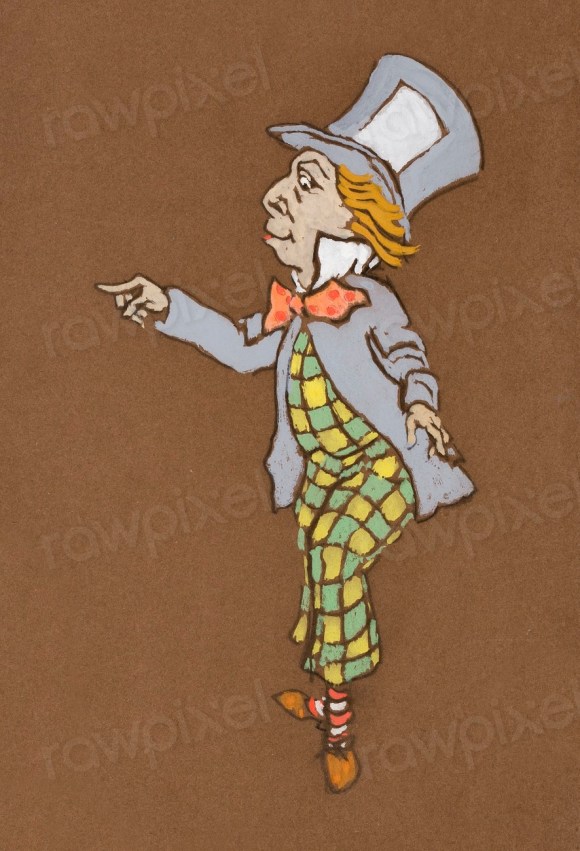
A lot of people relate this simile to the Mad Hatter character in TheAdventures of Alice in Wonderlandby Lewis Carroll. But did you know that despite his fame as the Mad Hatter, the author only ever referred to the Hatter? There is little doubt that the Hatter’s behaviour was crazy, along with a series of other unhinged characters, such as the March Hare – also the owner of a simile – as mad as a March hare. This one came from the antics of hares during their mating season in March.
But back to the madness of hatters. It was well known in 1865 that hatters’ exposure to mercury, a component used in the manufacturing of hats, caused excitability and hallucinations, resulting in crazy behaviour. This type of mercury poisoning is formally known as erithismus mercurialis.
We say that something is cheesyin English to mean that it is inferior, cheap or possibly embarrassing due to its lack of quality. (Obviously, this does not apply to its other definition, i.e. a large amount of cheese on our food, as above!)
Examples:
He bought some cheesy (tacky) souvenirs from the local shop.
We didn’t like the show, the actors were really cheesy. (phoney)
But this was not always the case. In the 1850s, when the word was first used, if something was cheesy it was considered to be of top quality. Cheesy as the idea of something pleasant and important crossed the Atlantic where the concept of cheese meant celebrity or big money and gave us the expression ” the big cheese” to signify a person of importance. Over time, the word cheesy began to be used ironically, and this is the meaning that we have been left with today.
Small Potatoes/Chickenfeed
Small potatoes are the opposite of important, something, not very imposing and insignificant. First recorded in the 19th century, it came from the idea of small potatoes not being worth the bother if they were being picked or sold.
Chickenfeed, another U.S. expression, is along the same lines. Chickens were readily available in the 18th and 19th centuries whereas cattle and horses were more expensive and needed a bigger supply of food.
Chickens, being lower down the pecking order (see what I did just there?) were fed on leftovers and grain, hence chickenfeed coming to mean something trivial, often a small amount of money.
Examples:
I’m not interested in their money – it’s small potatoes/chickenfeed.
Sour grapes
If you suffer from sour grapes, it means you speak badly of something you cannot have. This is an expression from one of Aesop’s Fables.
Aesop was a slave who lived in Greece around 600 B.C.E. He was a storyteller who told fables – short stories with a moral at the end. These fables were not recorded until 300 years after his death, so Aesop’s Fables, the collection of his stories, may or may not be all his own work, as the stories have been recorded, translated and rewritten over hundreds of years.
However, one of the best-known tales is “The Fox and The Grapes”, in which a fox is unable to reach a juicy bunch of grapes. Disappointed by failure, she salvages her pride by saying that they must have been sour.
I’m sure you can all think of someone who disparages something they once wanted. This is a case of sour grapes.
Salad Days
This saying refers to a carefree time with no worries, generally when we are young, and it was first recorded in William Shakespeare’s play Anthony and Cleopatra.
Cleopatra calls her salad days the time when she was “green in judgement“, in other words, she was naive with not much knowledge of the world.
For a time this was also what people meant when they referred to salad days but the meaning has now shifted to mean the prime of youth, a time of happiness and optimism.
Example:
He did lots of crazy things in his salad days, but now he’s turned into a typical family man.
Thanks for reading the post! Can you think of any more foodstuffs used in English expressions? Write them in the comments below!
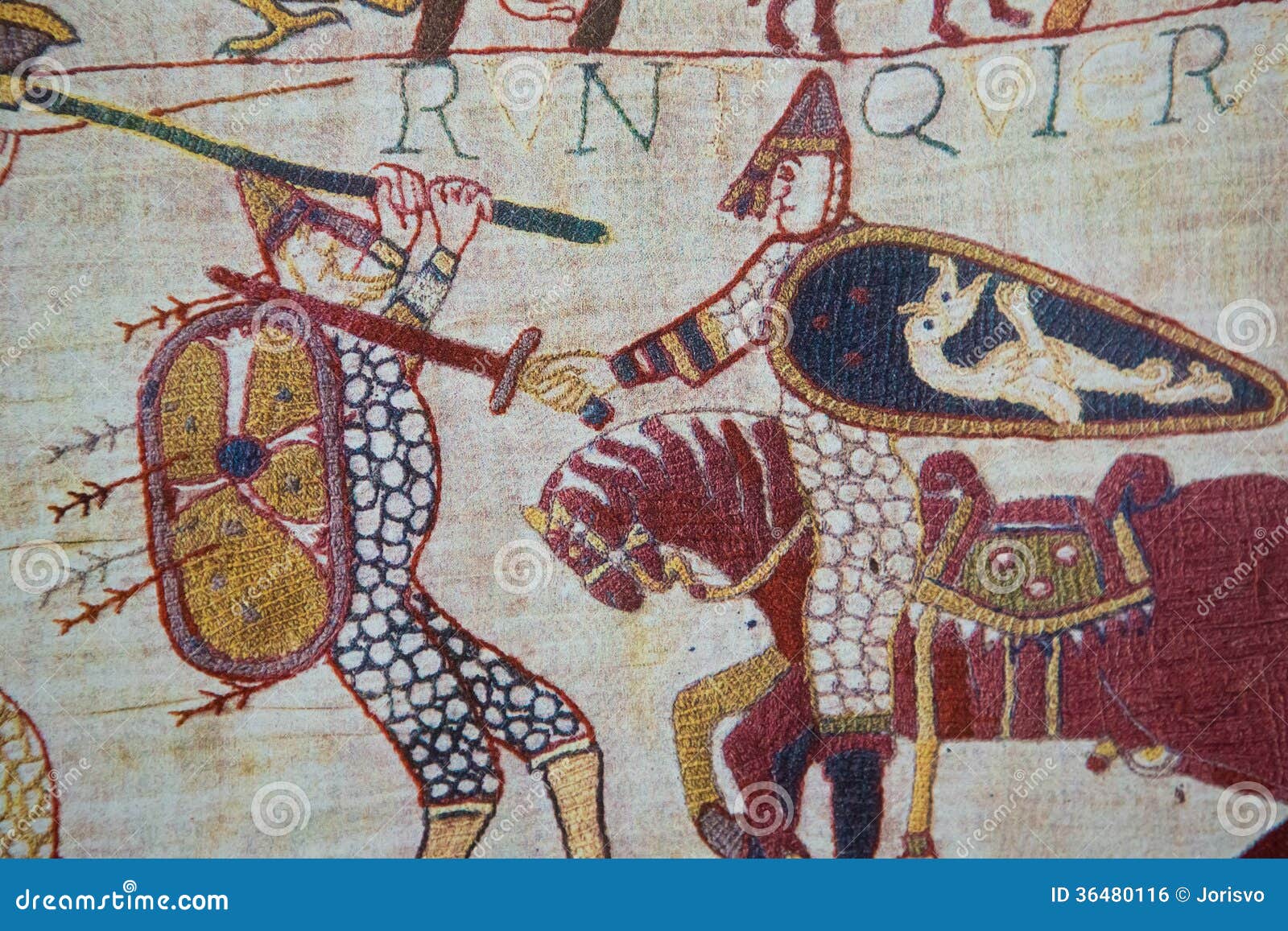
Many different languages have influenced modern English, due to overseas trade and a number of invasions in the British Isles prior to and including the Norman invasion of 1066. The Angles, the Jutes and the Saxons were Germanic tribes who settled in Britain alongside Celtic language speakers and laid the basis for the Anglo-Saxon language. However, the great majority of English speakers would struggle to understand Anglo-Saxon today.
There are also innumerable words we use in the English language which have arrived via a different language. Unlike nations such as France, for example, which does not encourage the borrowing of Anglicisms, (even though this certainly happens and will no doubt continue to do so) the English language seems to have happily stolen or accomodated any word or grammar pattern that took its fancy at the time.
Latin
The Roman conquest of Britain meant that Latin was now fair game for absortion into the English language. Whilst the Celtic and Anglo-Saxon poulation at large still retained their native languages, little by little words used in Roman administration worked their way into our language and some are still used today.
A few examples : agenda, etcetera, interim, item, memorandum, P.S.,(postscript) a.m. p.m., (ante and post meridian)and the symbol &.
In the 1600’s, there was a tendency to reflect the Latin origin of words by introducing silent letters to the common spelling – for instance, anchor, debt, doubt, island, scissors, receipt. Students of the English language take note! (more about silent letters here if you are interested):
Norsemen and Vikings raided England several times during the early Middle Ages. In 866 they captured the city of York and during this period various areas in the the east and the north capitulated to Viking rule. Danelaw overrode Anglo-Saxon administration in these areas and a language now known as Anglo-Norse began to be spoken. Modern English inherited a lot of vocabulary from the Vikings, not only words of war such as ransack, slaughter, berserk, but also a great deal of everyday vocabulary, such as bag, ball, call, cake, crawl, egg, get, give, happy, husband, kid, lad, leg, loan, take, seem, skill, ugly, want, weak ….
Apart from vocabulary, the Vikings also influenced English grammar. The way we construct sentences grammatically in modern English is much more similar to Scandinavian languages than old English. Some experts say that English has more in common with Swedish, Danish and Norwegian than German, even though we have long considered English to have Germanic roots.
German
The Germanic tribes known as the Angles, Jutes and Saxons invaded British shores around the 5th century and their dialects forged the Anglo-Saxon language. But German has also left us left us with these lovely words in modern English : delicatessen, hamster, iceberg, lager, poodle, rucksack and spiel. And let’s not forget hamburger.
Here’s a tiny selection of words we have inherited from French : café, paté, cliché, fiancé(e), bouquet, ballet, brusque, chef, garage, gourmet, souvenir, vintage… there are many, many more. Interestingly, words borrowed from French pre- 17th century have modified pronunciation. Ch- words such as chimney and change begin with a harder -tch sound. But later borrowings conserve the same ch-sound as in French…champagne and chivalrous, for example.
Numerous words which came specifically from the Normans – justice, jury,felon, traitor, damage, sovereign, parliament, government give us an insight of William the Conqueror’s iron fist and the stringent Norman administration of England.
Here are ten random examples, in no particular order.
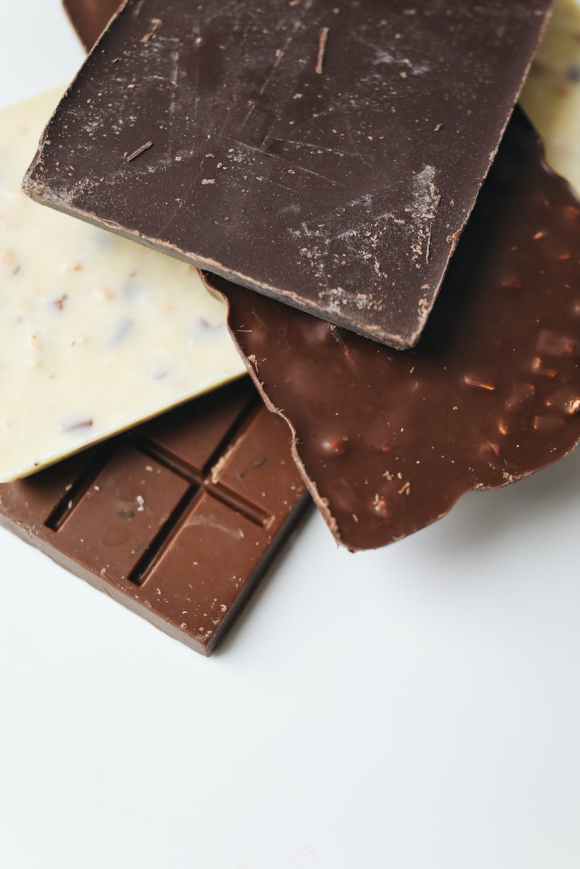
Chocolate – Originally xocolatl, this word was translated from Spanish via Nahuatl, the language spoken in central Mexico at the time of the Spanish conquest. A welcome addition for most people, I would say.
Sofa – from Turkish via Arabic. The Arabic word suffah signified bench.
Glitch – although the jury is still out on this one, some experts believe that this word comes from the Yiddish word glitsh , a slippery place.
Yacht – derived from the Dutch word jacht, which originally signified a hunting ship.
Shampoo – originates from Hindi and Urdu. The word cā̃po means to massage, precisely what we do with shampoo in our hair.
Ketchup – from the Hokkien Chinese word kê-tsiap, a word for a sauce made from fermented fish. Hmm, not what we bargain for with today’s ketchup.
-ology – Anything ending in -ology comes from Greek, where -ology means the branch of study. Physiology, physcology, biology, pharmacology, zoology…. the list goes on.
Sabbatical – from the Hebrew word shabbat , meaning day of rest.
Robot – the word robot as we know it, to describe a humanoid machine, was first used in 1920 in a Czech play called R.U.R ((Rossumovi Univerzální Roboti – Rossum’sUniversal Robots) by Karel Čapek.
Vendetta – concluding the list is vendetta , the Italian word for revenge.
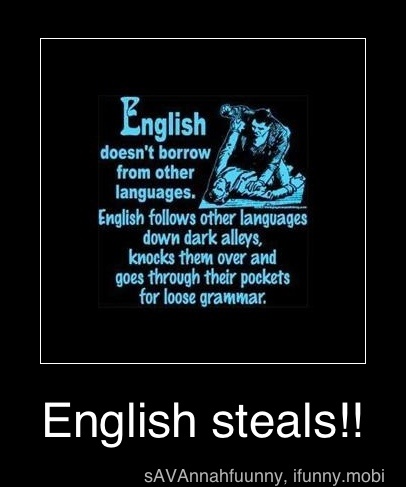
The second image in this blog jokingly depicts the English language as some type of criminal, stealing words from here and there. I prefer to think of the English language as a welcoming home for any words which care to stick around. These not-so-foreign words should be received with joy for enchriching our language.
This is a very brief summary of words we use in English with their roots in foreign languages. You probably know others and can easily find hundreds more. If you know any more, feel free to write them in the comments below.


















 english-stuff.com
You must be logged in to post a comment.