What is a simile?
A simile is a phrase where we compare characteristics of one object to another, usually with the words like or as. For example:
You look as white as a sheet/ghost, what’s the matter?”
“He was so hungry that he ate the sandwich as quick as a flash.“
In these two sentences, the comparison is easy to understand – a sheet or a ghost is usually white, and a flash is swift. But some of these sayings do not always sound logical. Here are a few more that may need further clarification.
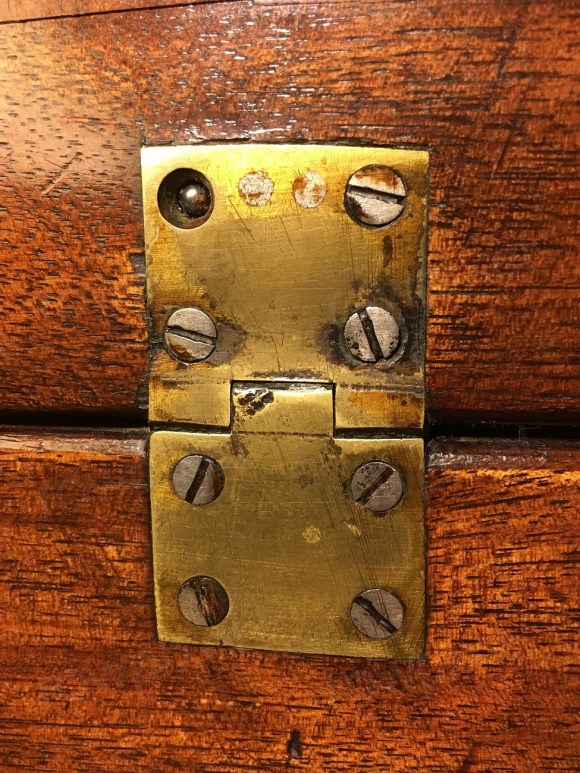
As bold as brass
Why do we use an alloy of copper and zinc, a.k.a brass, to say someone is bold? There’s a theory that attributes this phrase to Brass Crosby, who became the Mayor of London in 1770 and clashed with the establishment who were attempting to ban written reports on what had been said in Parliament. Crosby was unsuccessful in defending a printer who had published a parliamentary session and his bold actions caused him to be summoned before Parliament, and imprisoned for a time in the Tower of London. The public was outraged and Mr Crosby was released 6 weeks later. Since then proceedings in parliament have been reported without restrictions.
Although this is a remarkable story, and with apologies to Mr Crosby, it appears that as bold as brass was used before the 1770s. Brass comes from the same root as the word brazen meaning full of confidence and with little shame. However, the word bold is associated with a positive idea of bravery, while brazen usually transmits the idea of disrespect and shamelessness.

As clean as a whistle
While it is undoubtedly advisable to keep your whistle free of bacteria, the original saying was actually as clear as a whistle. Over time the word clear became clean, and there we have it.

As fit as a fiddle
This simile was first used in the 1600s and that’s where we need to go to find out why we use this strange combination. In the 17th century, the word fit meant convenient or suitable, and it is used in this sense when we say fit for a king.
During the 20th century, we began to use the word fit as a way to describe our state of health and the simile has taken on this new meaning. But why a fiddle? Well, a fiddle (or a violin, the more formal term) was a common musical instrument 400 years ago and appropriate ( i.e. fit )for creating enjoyable music.
Of course, when we use this simile today, it’s to indicate someone is in great physical shape.
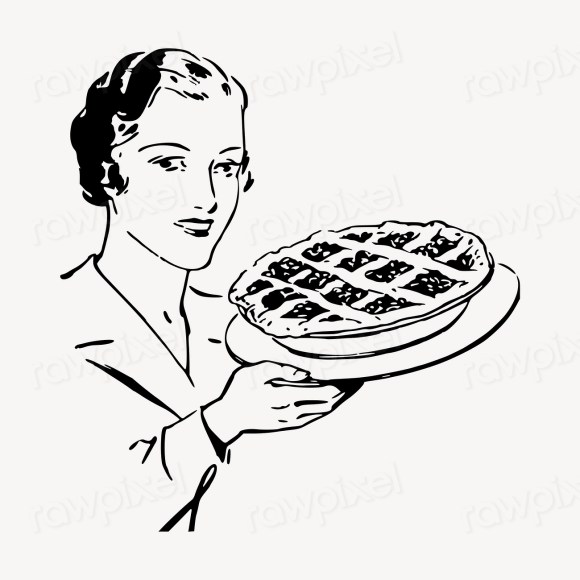
As easy as pie
I’ve made a pie or two, with varying degrees of success, and I wouldn’t say they are the easiest thing to make. However, the simile refers to the eating of pie, not the creation of it. I think we probably all agree that enjoying the pie afterwards is not a difficult task.
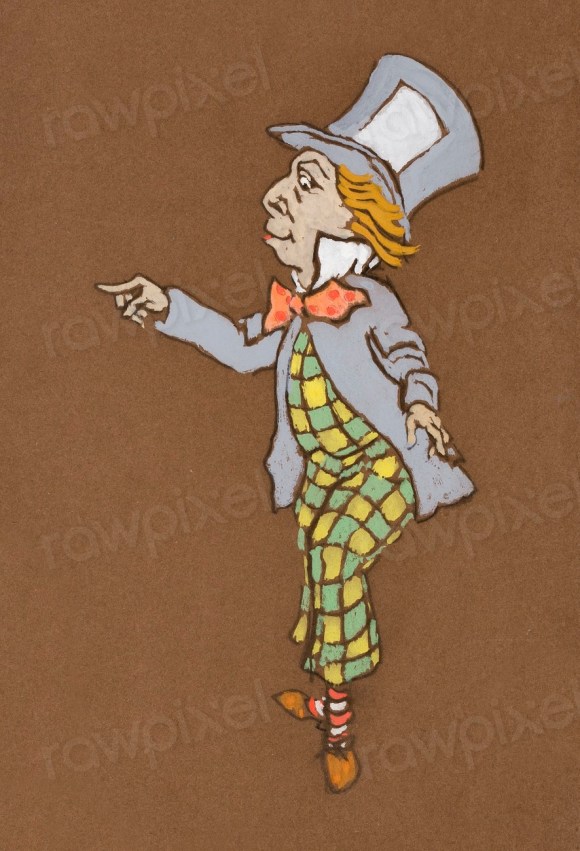
As mad as a hatter
A lot of people relate this simile to the Mad Hatter character in The Adventures of Alice in Wonderland by Lewis Carroll. But did you know that despite his fame as the Mad Hatter, the author only ever referred to the Hatter? There is little doubt that the Hatter’s behaviour was crazy, along with a series of other unhinged characters, such as the March Hare – also the owner of a simile – as mad as a March hare. This one came from the antics of hares during their mating season in March.
But back to the madness of hatters. It was well known in 1865 that hatters’ exposure to mercury, a component used in the manufacturing of hats, caused excitability and hallucinations, resulting in crazy behaviour. This type of mercury poisoning is formally known as erithismus mercurialis.

As deaf as a post
If you spoke to the gateposts, would you get an answer? The poor things are generally stone deaf.
Do you know any more similes that sound strange to you?

 english-stuff.com
8 replies on “Finding the sense in similes”
Thank you so much for explaining what these expressions mean. I love how you always manage to make sense of things! It seems that language is actually very logical even if it isn’t always clear why people began to use certain expressions. Even if something seems random there is probably a rational explanation for it, like why an expression became part of our language. I guess that if someone had come up with a simile that didn’t really make sense it probably wouldn’t have caught on because other people wouldn’t have been able to grasp the intended meaning. Unless maybe people started using it ironically? One simile I’ve never really understood the meaning of is “as keen as mustard”.
LikeLike
Thank you for your comments Charlotte! It’s true that any language reflects the times that we live in, just think of all the technological language that we use these days, as basic technology has become an integral part of our lives. And I agree with you that expressions, and even just simple words, have to gain in popularity in order to be admitted into our everyday language.
“As keen as mustard” is another great example of a somewhat strange simile. We use this to say someone is enthusiastic about doing something. But originally the word “keen” meant sharp, in the sense of a keen blade, for example, Mustard also has a sharp taste and it was used in the past both as a condiment and as a healing remedy to cut off infection. Hope this helps!
LikeLiked by 1 person
Thank you very much for explaining “as keen as mustard”. It would be interesting to know how many similes have survived from, say, Victorian times and how many have died (in the sense that they are no longer used). I guess we could never give a precise answer to a question like this because there is never a definitive list of all the similes in use but I suspect there are similes that were once quite common but are now hardly ever used. Perhaps there are similes from the olden days that most people today wouldn’t even understand!
Are similes always of the form “as … as …” or could we think of an expression like “ice-cold” as a simile? I guess we could say that “ice-cold” is equivalent to “as cold as ice”. So “her heart is ice-cold” is equivalent to “her heart is as cold as ice”. I guess “razor-sharp” is another example: “razor-sharp” means “as sharp as a razor”.
Another thing I was wondering about is whether expressions that contain comparatives (please forgive me if this is the wrong word!) count as similes or whether they have another name? I was thinking that sometimes we might want to say that something is more … than something else. So we are comparing two things but rather than saying that, in some respect, they are the same (for example, “the sheet is as white as snow”) we are saying that one of the things has more of something than the other or is further along a spectrum. For example, we might say that someone’s heart is colder than ice or someone’s skin is smoother than silk. Would an expression like “colder than ice” count as a simile?
LikeLiked by 1 person
Yes, it would be fascinating to find some long-forgotten similes and understand the history behind them. If anyone out there knows of any, please let us know!
Of course the meaning of a simile should be generally be pretty obvious as it uses a striking characteristic to mark the similarity between two things, using the words “like” or “as”. This is why “ice-cold” isn’t a simile, it’s an adjective. Also expressions with the words ‘more’ and/or ‘than’ are, as you quite rightly point out, comparatives and not similies.
But it is often more interesting and effective to use a simile when we are writing. For example:
He turned white when he saw the report.
He turned as white as a sheet when he saw the report.
The second sentence creates a better image and helps the reader to visualise the situation.
LikeLiked by 1 person
Hi
Thank you so much for helping me understand what similes are. I think I was thinking that words like ‘sharper’ and ‘colder’ are comparatives and there would be a different name for expressions containing words like these. So we would say that “colder than ice”, for example, contains a comparative (“colder”) but there would be a different name for the whole expression. I am really sorry I got confused! So would we say that an expression like “as smooth as silk” is a simile and “smoother than silk” is a comparative?
I wonder if some comparatives are more useful than others because it seems that sometimes there is a limit to how much of a quality something can have. For example, it would probably be better to say “she turned as white as snow” than “she turned whiter than snow” because you can’t really get whiter than snow! With temperature, on the other hand, there probably isn’t a limit to how far along the spectrum something can be – however hot or cold something is, we can always imagine something even hotter or colder.
My impression is that similes are maybe easier to understand than idioms. I remember you helped me understand the expression “it’s raining cats and dogs” and I guess that at first someone might find it hard to understand this expression even if they knew what the individual words meant. With similes, though, it would probably be easier for people to understand expressions they hadn’t come across before, as long as they had a basic idea of what the thing that something was being compared with was like. For example, a simile like “she turned as white as snow” would make perfect sense to anyone who knows what snow is like, whereas “it’s raining cats and dogs” may well not make sense even to people who have experienced very heavy rain.
Kind regards,
Charlotte
LikeLike
These are great comments Charlotte, You’re right in thinking that “colder than ice” or ” as cold as ice” are both comparisons/comparative structures, but similes are a special type of comparison, if you like, where we choose a particular characteristic of something to compare it to something else – for example, “her skin was as smooth as silk”. The whole point of similes are that we use a very identifiable characteristic in the comparison, but we might not understand why this characteristic was used if the simile came from, say, a different culture or period of history.
Thanks for commenting and following english-stuff.com!
LikeLiked by 1 person
I feel very fortunate to have the chance to follow your blog. I always find your posts very interesting and helpful and really value being able to reply to what you say. It is incredibly kind of you to share your knowledge and insights!
I just thought I should ask if you have ever written anything on metaphors? I seem to remember that at school we learned about similes and metaphors together.
Are similes quite common in other languages?
LikeLike
Apologies for the delay in replying to you, Charlotte. Yes, many other languages use similes, although they might not use exactly the same words as in English. For example, “as white as snow” is the same word for word in Spanish, but in Spanish you would say “as fresh as a lettuce” (not a daisy) or “as strong as an oak tree” (not a horse).
I’ll bear your comments in mind about metaphors and I might do a blog post on this subject in the New Year!
LikeLiked by 1 person