Categories
Wordpower

Colourful Words for Drunk: A Creative Slang Guide

Introduction – Why We Get So Creative About Booze

Humans are funny creatures. We drink, we tell stories and then we invent dozens of different ways to say we’re drunk. One word is never enough. After all, “tipsy” isn’t the same as “smashed.” Language loves nuance, and apparently, so do we when we’ve had a few.

So, pour yourself something (or just grab a coffee if it’s too early), and let’s go on a tour of all the colourful, ridiculous, and occasionally historical ways we talk about being drunk.

Why So Many Words for “Drunk”?

We don’t have 30 different ways to say “hungry.” But when it comes to alcohol? Whole thesauruses have been filled. Why? Because drinking has always been social and humans get creative when they’re social.

Slang also softens things: “buzzed” sounds way cuter than “intoxicated by alcohol.” At the same time, exaggerations like “hammered” or “legless” help us laugh about what’s essentially a messy state of affairs.

Basically, we’ve been turning drunkenness into a language playground for centuries.

Classic & Common Synonyms

Let’s start with the words almost everyone recognises:

  • Tipsy – Polite, harmless, maybe even a little charming. Tipsy is someone y at a wedding, complimenting everyone’s outfit.
  • Buzzing – Very casual, very safe. Imagine a glass of wine after work.
  • Smashed / Wasted – No ambiguity here. If you’re “smashed,” you’re not going anywhere
  • Plastered – Old-school, but still used. “Plastered” suggests gravity is not on your side.

These are the solid, dependable workhorses of drunk-slang, which most Brits would use and recognise. And remember there are levels of drunkenness – “tipsy “suggesting a much lower level of inebriation than ” smashed”, “wasted” and “plastered” ( all conditions which we are not actually recommending, you understand.)

Colourful & Creative Slang

But there are some expressions which are basically cartoons in themselves:

  • Hammered – Precisely what happens to a nail after the hammer.
  • Sloshed – Conjures the delightful (or horrifying) image of liquid literally sloshing inside you.
  • Three sheets to the wind – A nautical phrase from the 1800’s, meaning the sails were not under control and the ship was lurching unsteadily.
  • Legless – A straightforward favourite in Britain, because in that state, you’ve got no legs left to stand on.

They’re vivid, they’re silly and they make you laugh even when you’re stone-cold sober.

A ship lurching on the sea – Deviant Art image created by Panna10

Creative Modern Additions

Fast forward to the 21st century and slang keeps evolving……..

  • Turnt – Popular in hip-hop culture, meaning hyped and drunk (or otherwise mentally altered).
  • Zooted – A blend of high and drunk, usually from drugs and alcohol.

The word “lit” meaning “drunk” dates back to the early 1900s long before Instagram existed. Nowadays it is used by to describe anything that looks fun and exciting.

And let’s be honest, in a few years we’ll probably have TikTok-inspired slang we can’t even imagine yet.

The Serious Side

Okay, drunk slang is hilarious, but drinking itself isn’t always. There’s a big difference between a glass of wine after work and and being “soused” on a Tuesday night. The fun words work best for silly, social situations, but are not always appropriate for more serious situations, where alcohol may have been the cause of a more serious incident. The words “inebriated”, “intoxicated” or ” impaired by alcohol” are generally used in these cases.

So, enjoy the humour, but know when to swap “sloshed” for something more thoughtful. Remember that depending on both the level of formality and drunkenness these words are not all interchangeable.

Conclusion – Your Turn!

From “squiffy” to “bladdered” to “stewed,” we’ve basically written a whole dictionary of words for “drunk”. And it’s still growing – every generation seems to invent more.

So next time you’re tempted to just say “drunk,” maybe try out something more colourful. Personally, I like “sozzled.”

👉 Pub Trivia: According to slang historians, English has more words for being drunk than for any other condition, even being in love. Make of that what you will.

How about you – what’s your favourite word for drunk?

Categories
Wordpower

Everyday Words from Shakespeare

Think Shakespeare only gave us Romeo & Juliet? Think again! He also coined words we still often use even today. Shakespeare didn’t just transform theatre – he made a huge contribution to the English language. Words like fashionable, lonely, and bedazzled first appeared in his plays.
This latest post is a brief exploration of how the Bard’s creativity still shapes our language today.

Everyday Words Invented by Shakespeare

When people think of Shakespeare, they often imagine lofty poetry, grand tragedies or Elizabethan costumes. But did you know he also shaped the English we speak every day? The Bard had a knack for coining new words and phrases when nothing else quite fitted – and many of them stuck.

Here are a few you might use without even realizing their origin:

  • Eyeball – First appeared in A Midsummer Night’s Dream. Before that, people didn’t have a word for the literal ball of the eye.
  • Lonely – Found in Coriolanus and Twelfth Night, this word helped capture the feeling of isolation that still very much resonates today.
  • Fashionable – Used in Troilus and Cressida to describe someone stylish or in vogue. Clearly, that one never went out of style. (See what I just did there?)
  • Swagger – From A Midsummer Night’s Dream, where Shakespeare used it to describe a presumptuous strut. It’s been walking confidently ever since.
  • Bedazzled – First appearing in The Taming of the Shrew, it described someone overcome with wonder. Today, it’s also what you maybe did to your denim jacket.

Of course, Shakespeare didn’t invent every word he’s credited with – some may have existed in speech before he wrote them down. But as his plays were so widely performed and printed, he often gave words their very first spotlight in print.

So next time you use a word like lonely or swagger, you might have the world’s most famous playwright to thank.

👉 Do you have a favourite Shakespearean word or phrase? Drop it in the comments – it would be fun to see which others still resonate with us today.


Categories
Wordpower

Say You Don’t Care: Unique English Phrases

1967 theatrical re-release poster for the Gone With The Wind. Originally published by Metro-Goldwyn-Mayer (now in public domain).

Do you care or not?

In the English language there are many ways to express that you do not care about someone or something. A line uttered by Clark Gable in the 1939 film Gone with the Wind was crowned the most iconic line ever by the American Film Institute in 2005.

Frankly, my dear, I don’t give a damn” alerts his leading lady, Vivien Leigh, and the audience, to the fact their romance is doomed.

But there are so many more ways to say that we are not interested.

It’s no skin off my nose – this one is a boxing metaphor, as boxers’ noses are generally more damaged than any other body part. It can also have a secondary meaning, namely “I don’t have a problem with this“.

I don’t give a monkey’s – A monkey’s what? You might well ask and it’s a good question. The consensus over Internet is that this expression generally ended in a word not used in polite society to describe a rear end. In time, the phrase was simply shortened to ” not giving a monkey’s.”

I don’t give a tinker’s cuss – A tinker was a word to describe an itinerant craftsman who mended pots and kettles for a living, with a very lowly status in society. Beggars and gypsies were also called tinkers. So the curse or swear word of an uneducated tinker was not seen as anything valuable. This one is pretty old-fashioned, illustrates the snobbery of past times and thankfully, has more or less dropped out of use.

There are several other objects we do not give when we don’t care.

We don’t give a hoot, a fig, a sod or a toss….and the toss maybe isn’t what you think, the saying originated as the toss of a two-pence coin.

If you want to say you don’t care in a way that cannot be misinterpreted you have the option of not giving a sh**, a f*** or even a flying f***. As these are not polite expressions, they are not recommended.

Do you know any more expressions on how to say you aren’t interested?

Disclaimer .. to any English language learners out there, none of these expressions in this post are suitable for any type of English language exam!

Categories
Wordpower

Finding the sense in similes

What is a simile?

A simile is a phrase where we compare characteristics of one object to another, usually with the words like or as. For example:

You look as white as a sheet/ghost, what’s the matter?”

He was so hungry that he ate the sandwich as quick as a flash.

In these two sentences, the comparison is easy to understand – a sheet or a ghost is usually white, and a flash is swift. But some of these sayings do not always sound logical. Here are a few more that may need further clarification.

As bold as brass

Why do we use an alloy of copper and zinc, a.k.a brass, to say someone is bold? There’s a theory that attributes this phrase to Brass Crosby, who became the Mayor of London in 1770 and clashed with the establishment who were attempting to ban written reports on what had been said in Parliament. Crosby was unsuccessful in defending a printer who had published a parliamentary session and his bold actions caused him to be summoned before Parliament, and imprisoned for a time in the Tower of London. The public was outraged and Mr Crosby was released 6 weeks later. Since then proceedings in parliament have been reported without restrictions.

Although this is a remarkable story, and with apologies to Mr Crosby, it appears that as bold as brass was used before the 1770s. Brass comes from the same root as the word brazen meaning full of confidence and with little shame. However, the word bold is associated with a positive idea of bravery, while brazen usually transmits the idea of disrespect and shamelessness.

As clean as a whistle

While it is undoubtedly advisable to keep your whistle free of bacteria, the original saying was actually as clear as a whistle. Over time the word clear became clean, and there we have it.

As fit as a fiddle

This simile was first used in the 1600s and that’s where we need to go to find out why we use this strange combination. In the 17th century, the word fit meant convenient or suitable, and it is used in this sense when we say fit for a king.

During the 20th century, we began to use the word fit as a way to describe our state of health and the simile has taken on this new meaning. But why a fiddle? Well, a fiddle (or a violin, the more formal term) was a common musical instrument 400 years ago and appropriate ( i.e. fit )for creating enjoyable music.

Of course, when we use this simile today, it’s to indicate someone is in great physical shape.

As easy as pie

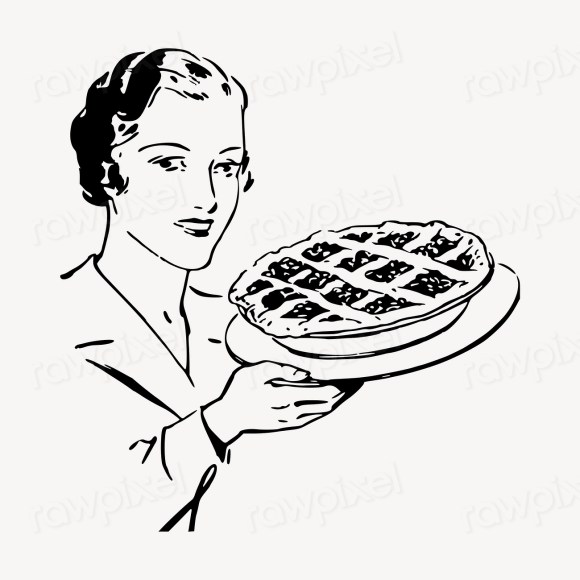
I’ve made a pie or two, with varying degrees of success, and I wouldn’t say they are the easiest thing to make. However, the simile refers to the eating of pie, not the creation of it. I think we probably all agree that enjoying the pie afterwards is not a difficult task.

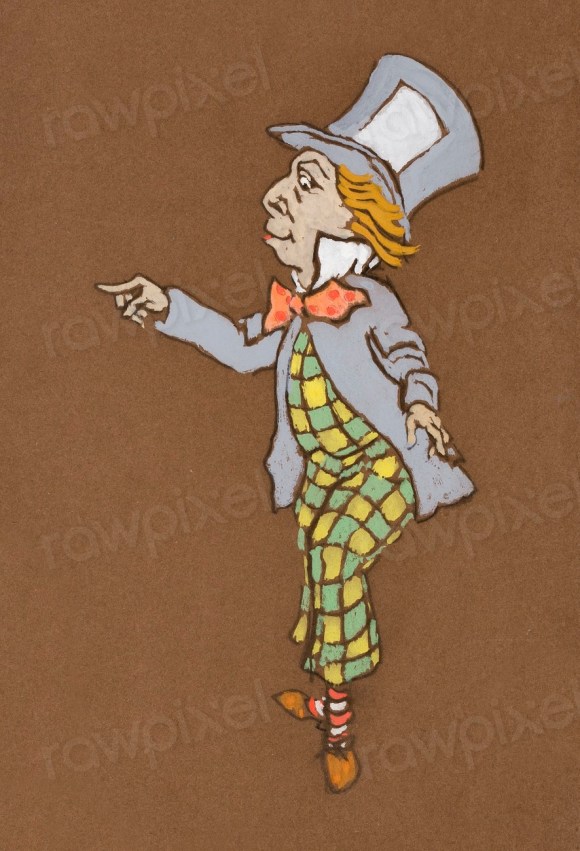
As mad as a hatter

A lot of people relate this simile to the Mad Hatter character in The Adventures of Alice in Wonderland by Lewis Carroll. But did you know that despite his fame as the Mad Hatter, the author only ever referred to the Hatter? There is little doubt that the Hatter’s behaviour was crazy, along with a series of other unhinged characters, such as the March Hare – also the owner of a simile – as mad as a March hare. This one came from the antics of hares during their mating season in March.

But back to the madness of hatters. It was well known in 1865 that hatters’ exposure to mercury, a component used in the manufacturing of hats, caused excitability and hallucinations, resulting in crazy behaviour. This type of mercury poisoning is formally known as erithismus mercurialis.

Stone gateposts at exit from Midmar Kirk carpark by Stanley Howe is licensed under CC-BY-SA 2.0

As deaf as a post

If you spoke to the gateposts, would you get an answer? The poor things are generally stone deaf.

Do you know any more similes that sound strange to you?