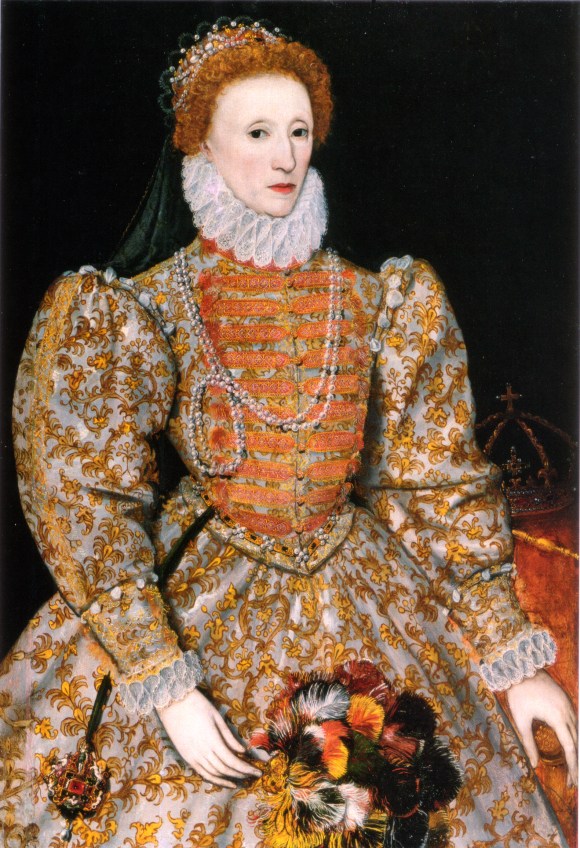
Elizabeth I of England
Elizabeth I was a woman who truly understood the meaning of “leader.” She strolled through the 16th century with a steely resolve that would make even the most seasoned politician quake in their velvet boots.
She was born into a family drama that could easily have been a twenty- first century reality TV show. Her father, the notorious Henry VIII of the six wives, was not known for his stable relationships. Elizabeth started life as a royal Tudor princess but only a few years later found herself in a precarious position. Her mother, Anne Boleyn, was executed, and young Elizabeth was promptly declared illegitimate. Talk about a rough start. Most people would throw in the towel, maybe become a nun or just spend their days complaining about their dad. But not Elizabeth.
Her childhood
She survived treacherous plots, imprisonment in the Tower of London as a child and constant questioning of her legitimacy. Imagine having to constantly prove you’re worthy, not just of a job, but of an entire realm. And just in case you’ve forgotten, she was a female – in a world where women were expected to defer to men without question. Only her royal bloodline made her an exception to this rule.
But Elizabeth was astute. She dedicated herself to her education, honed her diplomatic skills and watched with a keen eye as her half-siblings, Edward VI and Mary I, preceded her turns on the throne through religious wars and tumultuous times. It is difficult to imagine the importance of religion in daily life from our secular viewpoint today. Nonetheless, England faced social unrest during the reign of a Protestant King Edward VI, followed by the devout Catholic Mary I.

Her predecessors on the throne
Edward VI, Henry’s much-desired son, was the first English sovereign raised as a Protestant. Edward was just 9 years old when he came to throne and governed with the help (some would say manipulation) of a regency council. It does, however, appear to be true that Edward was a fervent supporter of the English Reformation and the spread of Protestantism.
But Edward died at the age of 15. The new queen, Mary I, daughter of Catherine of Aragon, was imbued with the desire to overthrow the English Reformation, no doubt spurred on by Henry VIII’s shoddy treatment of her mother. She was then forced by her father to swear an oath of allegiance to him and repudiate her Catholic religion. When Mary became queen, her religious persecution of Protestants saw riots and rebellion and earned her the undesirable name of Bloody Mary.
When it was finally Elizabeth’s time to reign in 1558, many doubted that another woman would be able to rule effectively. “She’ll be weak! She’ll be easily manipulated!” Oh, how wrong they were. Elizabeth handled it well when she finally came to the throne and would prove her doubters wrong.
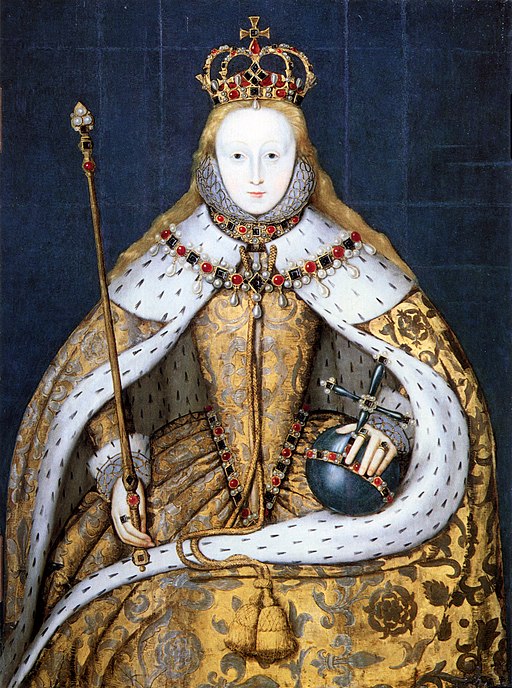
Smart and strong
Elizabeth was sharp. She had paid attention to the religious see-sawing under the past two sovereigns. Religion was the most dangerous political issue of Elizabeth’s time. Her sister, Mary I, had burned hundreds of Protestants at the stake, while their father had broken with the Catholic Church entirely. But there were still a significant proportion of English man and women who declared themselves as Catholic. Elizabeth knew she couldn’t afford to alienate either side too much. Her solution was a brilliant, pragmatic compromise known as the Elizabethan Religious Settlement of 1559.
- The Act of Supremacy: This act re-established the monarch as the head of the church, but Elizabeth chose the title “Supreme Governor” instead of “Supreme Head.” This was a clever move. It satisfied Protestants while allowing Catholics to believe that the Pope was still the “Head” of the universal Church, a distinction that made it easier for some to accept her rule.
- The Act of Uniformity: This act set out what the English Church would look like. It introduced a new Book of Common Prayer that combined elements of Catholic and Protestant services. Churches could still have some decorations and priests wore traditional vestments, which appeased many Catholics. But the services were in English and the doctrine was Protestant. Elizabeth famously said she wouldn’t “make windows into men’s souls,” meaning she was less concerned with what people believed in private, as long as they outwardly conformed to the Church of England. This “middle way” was a masterpiece of political manoeuvring that prevented the kind of religious civil war that was tearing apart other European nations.
For more details on Elizabeth I’s religious settlement, there is this video on YouTube : The Religious Settlement 1559.
The Thorn in Her Side: Mary, Queen of Scots 👸🗡️
While Elizabeth was busy masterfully running the show, she had one major rival who presented an existential threat to her reign: her Catholic cousin, Mary, Queen of Scots. Mary had a claim to the English throne through her grandmother, Henry VIII’s sister, and many English Catholics considered her the rightful queen. Mary was a constant focal point for plots and conspiracies to overthrow Elizabeth.
- The Ridolfi Plot (1571): A plan hatched by an Italian banker to have the Duke of Norfolk marry Mary, assassinate Elizabeth, and invade England with Spanish troops. It was, of course, foiled by Elizabeth’s brilliant spy network, led by her spymaster, Francis Walsingham.
- The Babington Plot (1586): This was the final nail in the coffin for Mary. Conspirators planned to assassinate Elizabeth, and Mary was caught red-handed when her coded letters approving the plot were intercepted and decoded by Walsingham’s team.
The discovery of this plot gave Elizabeth and her court the irrefutable evidence they needed. After decades of hesitation, Elizabeth was finally persuaded to sign the death warrant. The execution of Mary in 1587 was a monumental moment. While deeply controversial, it eliminated the most significant internal threat to her rule and removed a rallying point for Catholic rebels both at home and abroad.
The threat from Spain and the Spanish Armada
Following Mary’s execution, Philip II of Spain decided to launch a massive invasion to depose Elizabeth and restore Catholicism to England. He assembled a gigantic fleet of 130 ships, known as the “Invincible Armada,” and set sail in 1588. The victory for England was due to a mix of English naval skill (they had faster, more manoeuvrable ships) plus a dose of sheer luck. English fire ships were sent into the Spanish fleet, causing chaos, and a strong gale known as the “Protestant Wind” scattered the remaining Spanish ships.

The defeat of the Armada was a colossal victory for England and for Elizabeth personally. It wasn’t just a military win; it was a massive propaganda triumph. It was seen as a sign of God’s favour for Elizabeth and the Protestant cause, solidifying her power and cementing her image as a truly legendary queen.
She delivered one of her most famous speeches to her troops at Tilbury, declaring, “I know I have the body of a weak and feeble woman; but I have the heart and stomach of a king.” It’s a perfect encapsulation of her entire reign – a powerful woman in a man’s world, who not only survived but thrived.
Elizabeth’s reign was a masterclass in political pragmatism, especially when it came to the deeply divisive issue of religion. But she was also clued up on the economy.
A New Deal for England: Economic Control 💰
Elizabeth I inherited an economy in somewhat of a mess. Her predecessors, particularly her father Henry VIII, had “debased” the coinage by secretly reducing the gold and silver content to pay for wars. This caused high inflation and a lack of trust in the currency. One of Elizabeth’s first acts was to launch a major recoinage. She recalled all the old, dodgy coins and replaced them with new, high-quality currency. This was a massive win and helped stabilise the economy and restore public confidence.
She was also incredibly fiscally responsible. Unlike her father, she hated costly wars and tried to keep England out of foreign conflicts. This allowed her to reduce the national debt and even build up a surplus. When money was needed, she relied on loans from wealthy subjects and more efficient tax collection rather than burdening the general populace.
She also laid the groundwork for England’s future as a global economic power. She encouraged overseas trade and granted charters to new trading companies, like the famous East India Company in 1600. These companies had a monopoly on trade in certain regions, which was a brilliant way to bring wealth back to England and challenge Spain’s dominance.
She also implemented the Poor Laws, which, while harsh by modern standards, created a standardised system of poor relief for the first time, funded by local taxes.
The Original Independent Woman 👑
The new queen was a true master of the long game, especially when it came to her personal life. Her refusal to marry wasn’t just a quirky personality trait; it was a calculated political strategy.
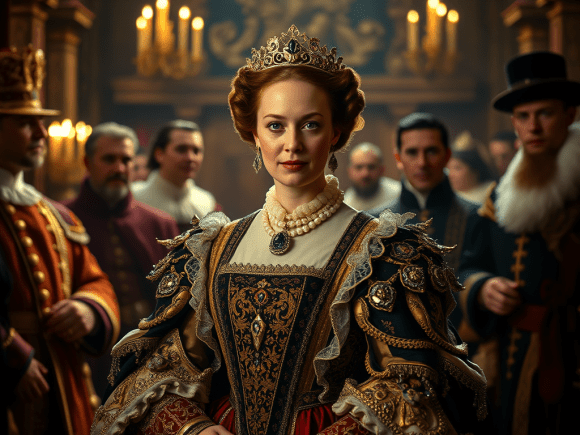
It was a brilliant, decades-long negotiation. She could play different European powers against each other without ever having to submit to a husband, who by law would have been the head of the household and, by extension, the kingdom. She famously declared she was “already bound unto a husband which is the Kingdom of England,” cementing her image as the “Virgin Queen” who sacrificed her personal life for her country. This powerful piece of propaganda made her seem selfless and untouchable.
Elizabeth had made a wise choice in William Cecil, who was her chief advisor and who accompanied her for most of her 45-year reign. She was neither perfect nor a saint, but they she put England on a path to stability and prosperity. This post is only a very brief journey through some of her main achievements.
She was a woman who kept her power and independence at a time when women were regarded as little more than men’s property or playthings. Certainly not their equals. She was renowned for her political acumen, sharp intelligence and strong will. Her intelligence and determination not only secured her place in history but also set a standard for strong, independent leadership that still resonates today.
What do you think made Elizabeth I such a successful ruler – her political skill, her intelligence or her sheer willpower?
Would you say that that our longest serving female queens – Elizabeth I, Victoria, Elizabeth II, are generally perceived in a positive light?
Let me know your thoughts in the comments below.
 english-stuff.com


You must be logged in to post a comment.