Categories
English life

Changing Christmas Celebrations: What Lies Ahead?

Christmas Card Depicting Botanical Ornamentation by newyorkpubliclibrary is licensed under CC-CC0 1.0

English-stuff has various posts on Christmas traditions, mainly relating back to the Victorians (see https://english-stuff.com/2024/12/07/the-history-of-christmas-pudding-a-timeless-tradition/https://english-stuff.com/2021/12/22/a-victorian-christmas-dinner/https://english-stuff.com/2020/12/19/a-victorian-christmas/ )

But what about Christmas today?

Which elements of a 21st century Christmas celebration in the UK could change in the future?

The early start

I promise you that I have actually seen Christmas paraphernalia on sale in August … and I wouldn’t be surprised in the least if anyone has spotted Christmas merchandise even earlier than that. It was not always this way. The commercialisation of Christmas makes it come round more quickly every year.

Once we get to the end of October and Halloween is over, on 1st November the gloves are off. It’s an absolute free-for-all with Christmas publicity, offers, gifts, decorations, and foodstuffs in your shops. These things are on your TV and in your face till the day itself arrives.

A tongue-in -cheek question ….will the day arrive when we end one Christmas and immediately start preparing for the next?

Christmas cards

Christmas cards are greeting cards that people give or send to each other to send a message which can convey love, or a religious or humourous message. In the UK it is a way of celebrating the Yuletide season.
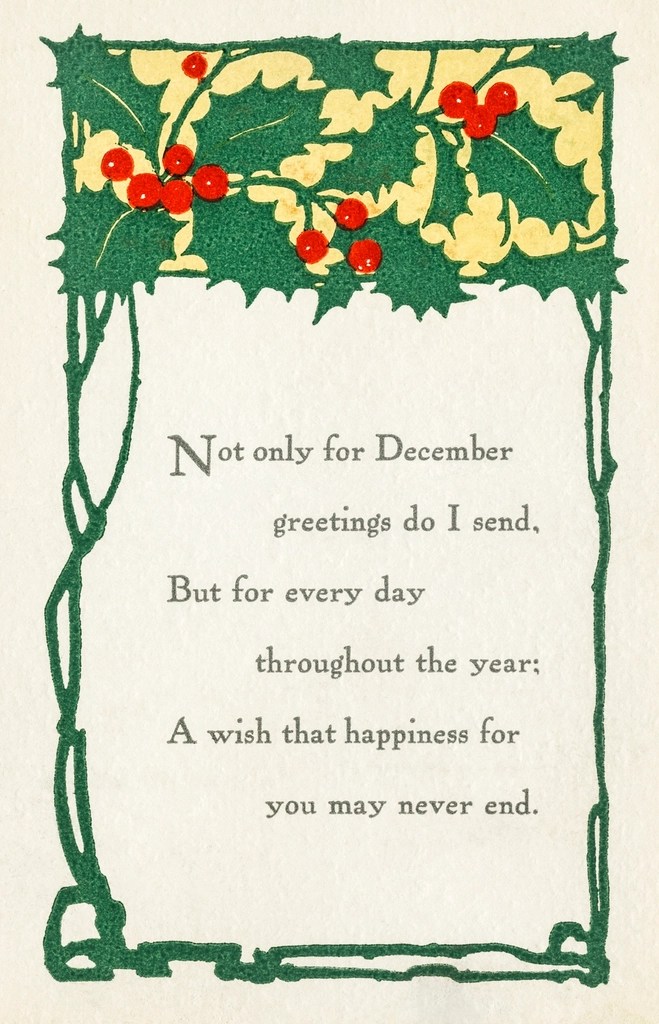
Christmas Greeting Card (ca. 1922) by newyorkpubliclibrary is licensed under CC-CC0 1.0

Christmas cards became popular during the reign of Queen Victoria, like several of our other festive customs. (see https://english-stuff.com/2020/12/19/a-victorian-christmas/ ) The Christmas card industry is now worth approximately a whopping £1.4 billion.

But with the advent of digital messages, WhatsApp, AI and who knows what else, will this tradition be affected? There is still a huge quantity of Christmas cards in the 2025 post but there has been a slight decline in volume in recent years due to different consumer habits such as online messaging, plus the rise in postage costs. The Guardian published this article today: https://www.theguardian.com/business/2025/dec/12/card-factory-issues-shock-profit-warning-during-peak-christmas-period

But it’s not all down to AI taking over. We are also probably more aware of the environmental costs — the carbon footprint and the paper involved.

Do you think Christmas cards will become extinct as time goes by?

Christmas stamps

https://png.pngtree.com/png-vector/20220926/ourmid/pngtree-sets-of-winter-christmas-stamp-postage-collection-snowman-christmas-vector-png-image_4105806.jpg

The first set of Christmas stamps were produced in 1966. But should we stop sending Christmas cards, will we lose our Christmas stamps too? Answers on a postcard with a Christmas stamp please.

Christmas crackers

Christmas cracker image from Openverse

If you are reading this from outside the UK, you may have no idea what this is – although the Commonwealth countries also have this tradition. Basically it’s a paper wrapper that generally contains a trinket, a joke and a paper crown. You pull the cracker with another person at each end at the Christmas dinner table. It makes an explosive sound. The contents then tumble out, hence the name cracker.

Invented in the mid-nineteenth century, crackers slowly became popular items on the Christmas table. Millions of Christmas crackers will be pulled apart this year. Yet revenue from sales has dipped slightly in recent years. This is mainly due to the tough economic climate and the fact that crackers are considered an option rather than an essential.

But it’s not all bad news, there’s evidence of innovation in the Christmas cracker business – for example, luxury crackers or joke-focused editions.

Christmas dinner
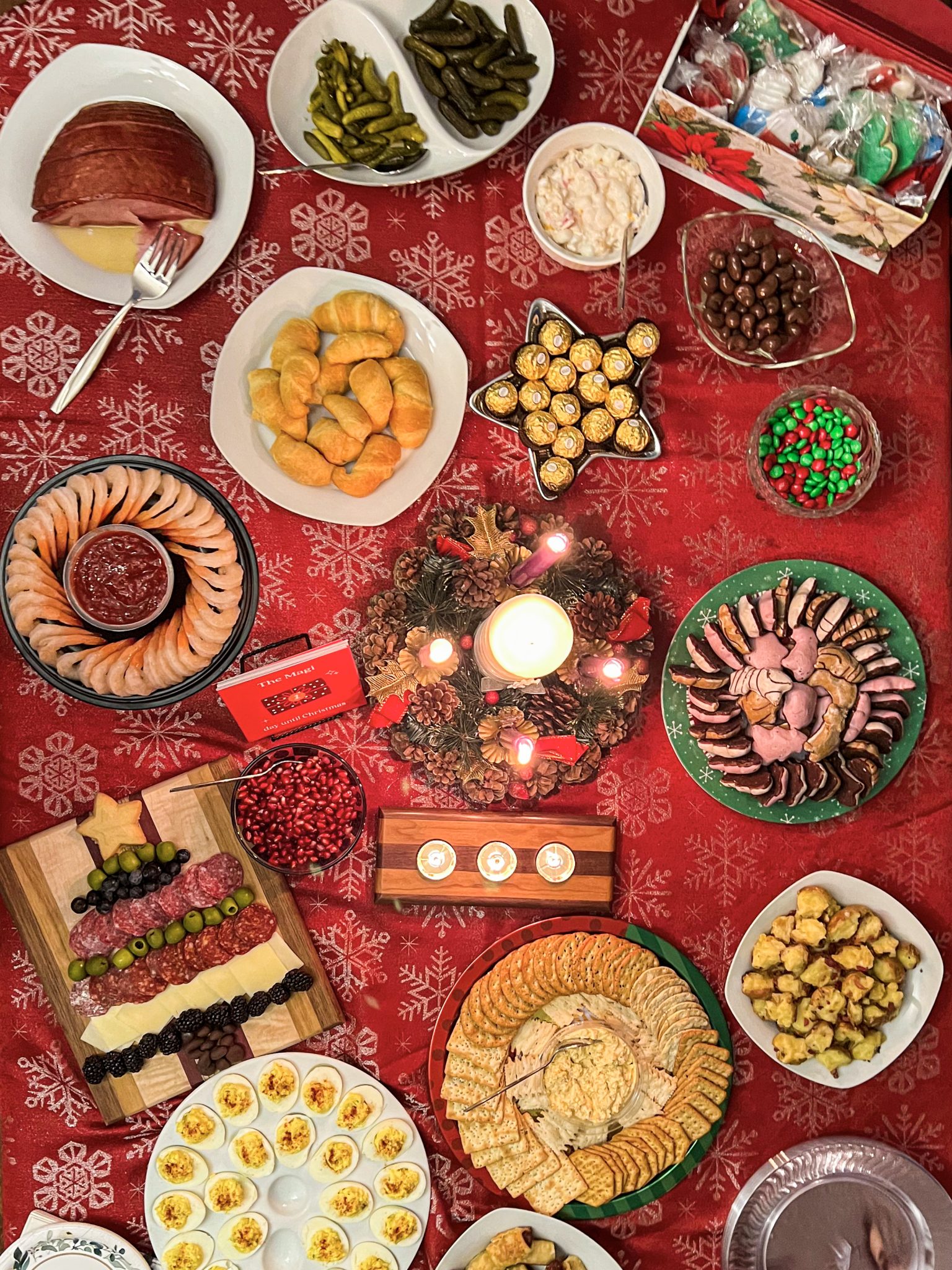
Christmas dinner spread by mdburnette is licensed under CC-CC0 1.0

What to say about Christmas dinner? A traditional Christmas dinner includes roast turkey or a roasted joint of meat. It comes with crispy roast potatoes, seasonal vegetables (which must include Brussels sprouts even if you don’t like them), stuffing, and gravy. People also like to add their favourite accompaniments – for example, Yorkshire puddings, pigs in blankets, cauliflower cheese. And why not?

Industry data shows a decline in turkey consumption at Christmas over recent years. Fewer households are choosing turkey. Instead, they are opting for lamb, gammon or chicken.

Many members of the younger generation go one step further and ignore the traditional fare altogether – they might choose curry or pizza or Mexican food or whatever preference they have. And let’s not forget vegans and vegetarians.

Roast turkey remains part of British Christmas tradition, but its role is evolving. Fewer households are sticking exclusively with turkey, and a growing number of people are choosing alternatives or multiple mains for their festive meal. This reflects broader shifts in eating habits, costs and cultural preferences in the UK.

What do you think about these changes? Are they positive or negative?

Have you seen any other changes that could happen in the future?

Categories
The Victorians

A Victorian Christmas

A Merry Christmas (1903) from The Miriam And Ira D. Wallach Division Of Art, Prints and Photographs: Digitally enhanced by rawpixel. (Image in public domain).

Christmas past

Christmas has been celebrated in many guises during history, melded from a pagan rite and a liturgical feast to celebrate the birth of Jesus Christ. So how did it morph into the activities and festivities that we associate with a contemporary Christmas?

In short, we owe a lot of our modern day secular Yuletide traditions to the Victorians. At the start of the Victorian period, Christmas was not a recognised event as such, but by the end of the nineteenth century, it had evolved into a significant occasion with a strong resemblance to the way we celebrate it today.

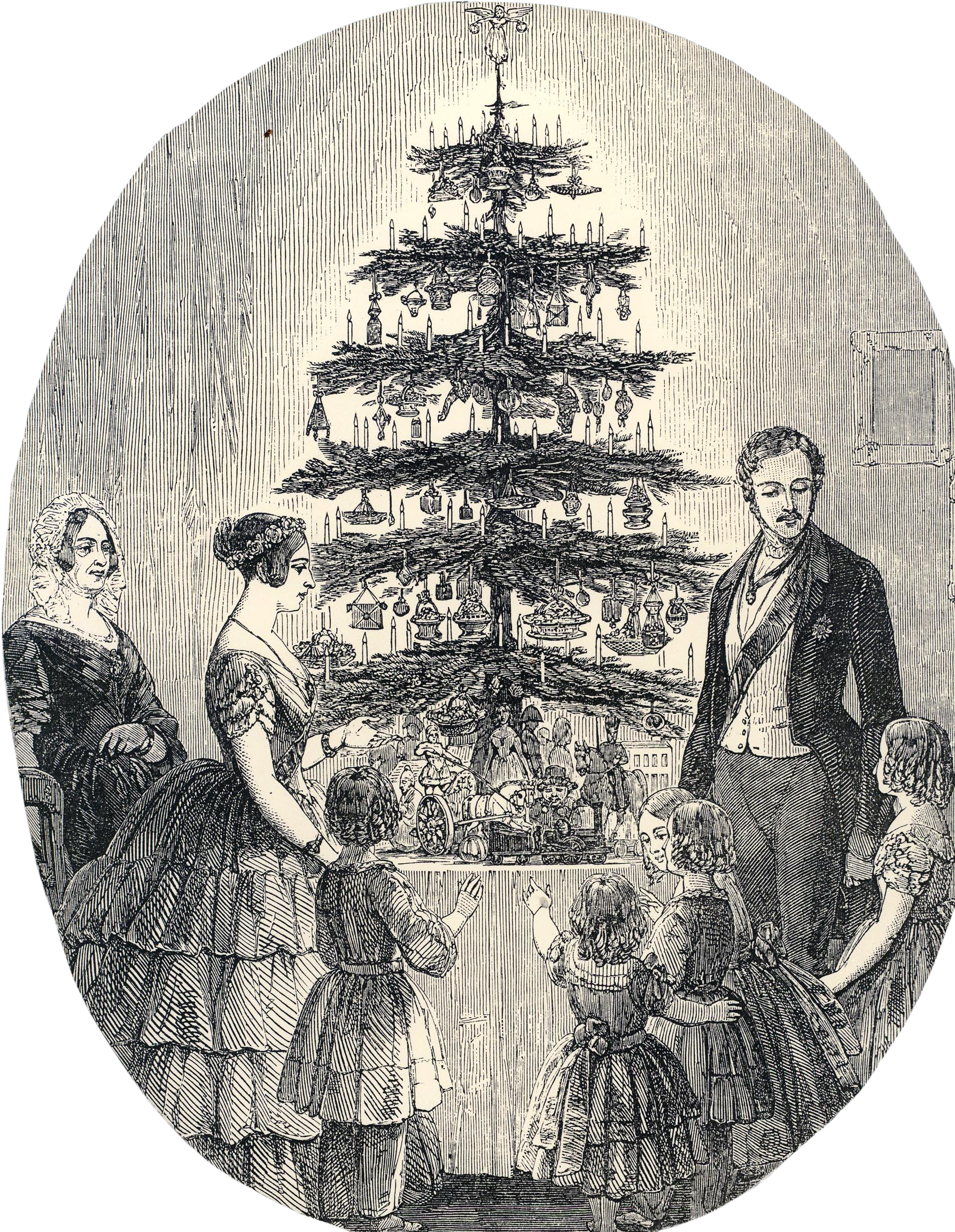
Illustrated London News, Public domain, via Wikimedia

Christmas trees

Tree worship goes as far back as the pagan era, and bringing greenery into the house for decoration seems logical when faced with a long, dark winter. But it was Queen Victoria’s husband, Prince Albert, who made Christmas trees popular when he installed one in Windsor Castle for the royal family’s festivities in the 1841. Once the royal household were pictured in the press with a decorated Christmas tree, the tradition quickly spread throughout Britain.

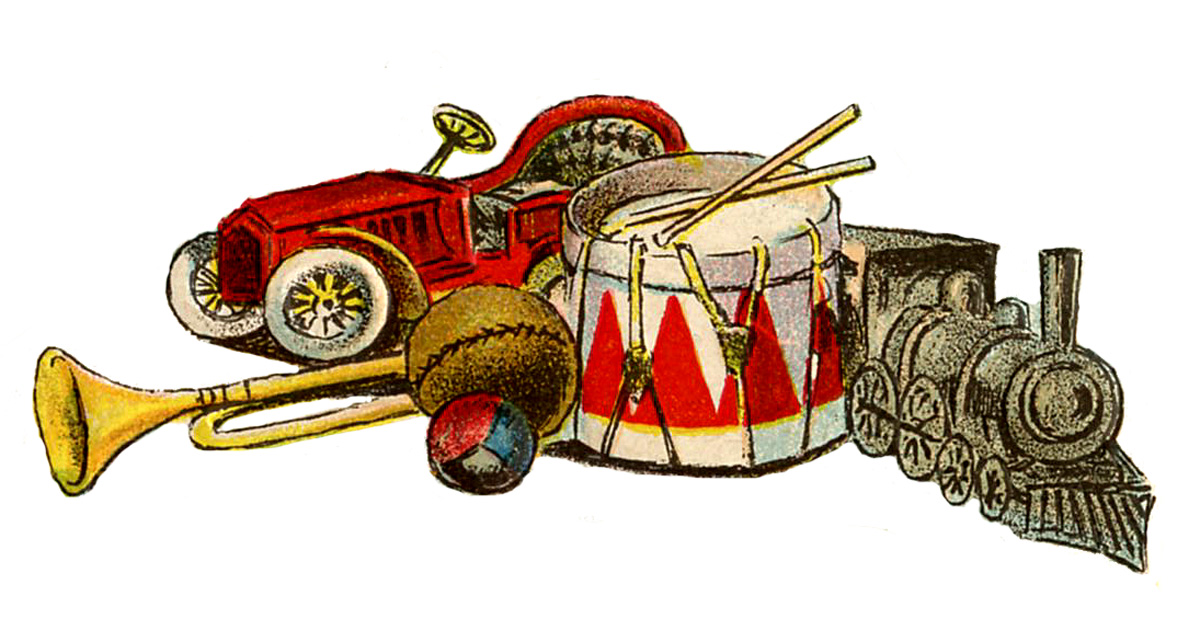
Victorian Christmas toys. https://pixy.org/src/105/1054784.jpg (creativecommons.org)

Christmas presents

The old custom of giving gifts on New Year’s Day gradually moved to 25th December as Christmas grew in importance during the Victorian age. Due to the industrial revolution, the wealth of the middle classes increased and they were allowed time off work to make the most of Christmas and Boxing Day holidays. Gifts which were originally small items hung from the branches of the Christmas tree – nuts, fruit or handicrafts- became bigger, more costly presents, which had to be left under the Christmas tree, due to their size. Needless to say, children from poorer families would still receive a stocking with fruit and/or nuts, whilst rich families could afford expensive handmade toys for their offspring.

Boxing Day was the day when the working class would open their boxes of donations or presents from their employers and for servants in large houses in particular, it would be their chance to relax a little from their household duties.

Image courtesy of zazzle.com

Father Christmas

The Father Chrismas we know these days is very much an invention of the Victorian age. The concept of Christmas personified has been around since the Middle Ages, in various incarnations as Old Christmas, Captain Christmas or Prince Christmas. But Captain Christmas et al were more concerned with feasting, drinking and partying than sliding down chimneys with toys for the kids. As the Victorian Christmas gradually became more child focused, and with the arrival of the Santa Claus story from the United States in the 1880’s, the idea of Father Christmas morphed with Santa and they became synonymous with each other, benevolent bringers of gifts for well-behaved children.

And this new Father Christmas was not always portrayed in his typically red outfit at first. His outfit could be green -see illustration above – blue, white or brown. In 1931 a Coca-Cola marketing campaign firmly established the tradition that Father Christmas/Santa Claus unequivocally dresses in red. The oldest letter that exists from a child writing to Father Christmas with requests for presents dates back to 1895.

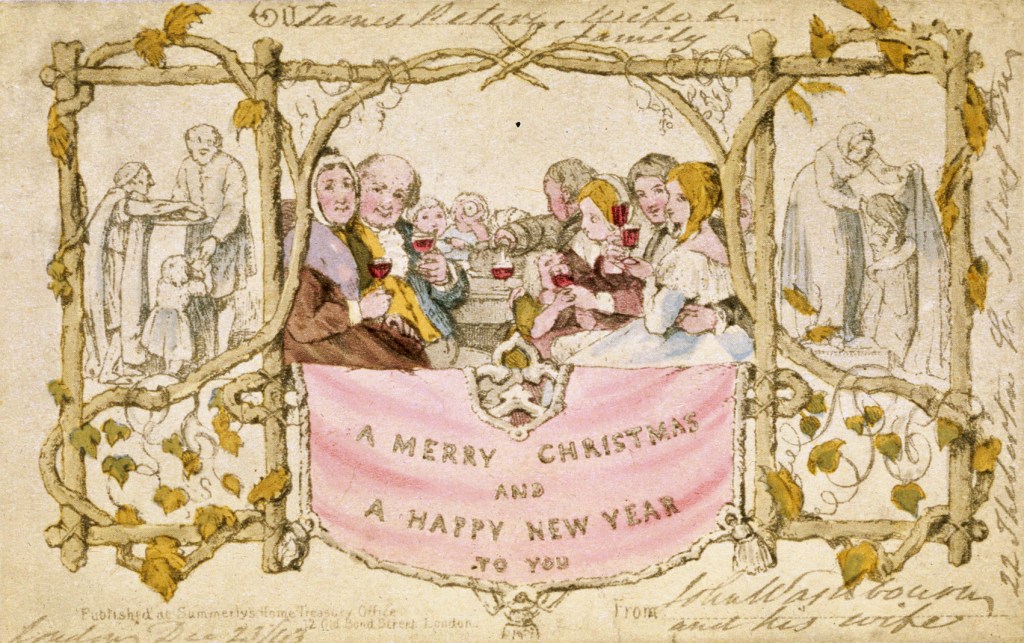
The world’s first commercially produced Christmas card, designed by John Callcott Horsley for Henry Cole in 1843. https://commons.wikimedia.org (Image in public domain).

Christmas cards

The very first English Christmas card was actually a decorated manuscript sent to James I of England in 1611. Ornate scripts being beyond the reach of most people, the tradition of sending Christmas cards did not resurface until 1843. Henry Cole was a savvy guy who was involved in the creation of the Penny Post, the newly reformed postal service in 1840. Together with John Callcott Horsley, he invented the first series of commercially produced Christmas cards. This first Christmas card, pictured above, caused some controversy as the youngest member of the family is shown drinking wine, but the seeds of a new industry had been planted and Christmas cards became a profitable business.

https://victorianchristmasparty.com/wp-content/uploads/2016/12/Charles_Green01.jpg

Christmas dinner

My last post centred around what Victorians ate, and the huge difference between the financially stable and the less well off. Find it here:

Christmas, of course, was no different. Monied families could look forward to a lavish meal of several courses, the main course consisting generally of roasted meat, maybe beef, goose or turkey. Other delights included quail, oysters and truffles, Those who were not so lucky either ate something more humble, such as rabbit, or simply did not partipate in Christmas festivities. Many families lived in poverty, and Charles Dickens’s tale of Scrooge, “A Christmas Carol”, encouraged the wealthy to give gifts or donations to the poor at Christmas – a tradition which already existed but was made popular to a certain extent during Victorian times. Newspapers printed appeals for the poor and charitable organisations arranged Christmas dinners for some of those in need.

Christmas 2020

So what we can see is that a typical twenty- first century Christmas is basically a product of the Victorian era, brought about by industrialisation and greater buying power for the middle classes. Yet in 2020, the year of COVID-19, many of us are going to have a different Chistmas experience.

Will it change the way we live Christmas in the future, I wonder ?

Feel free to add your comments and let me know.