Categories
English history

The dark side of nursery rhymes

Photo by Anna Shvets on Pexels.com

Not so innocent songs

You might think that English nursery rhymes are just childish songs which have survived from generation to generation. You would be right on the last count – most of our nursery rhymes are hundreds of years old, but not only do they refer to long-forgotten historical facts, they can also hold satire or political messages of the times. Here are a few examples.

Photo by Daniel Reche on Pexels.com

Humpty Dumpty

Humpty Dumpty sat on the wall,
Humpty Dumpty had a great fall;
All the king’s horses and all the king’s men
Couldn’t put Humpty together again

The Humpty Dumpy rhyme is old. So old that in its earlier versions, it could have been a reference to Richard III who was both allegedly humpbacked, and humiliatingly defeated at Bosworth Field in 1485. It also was once a riddle about an egg and nowadays HD is generally characterised as a type of personified egg in children’s books.

In the fifteenth century, the expression “Humpty Dumpty” referred to a heavy, corpulent person. But maybe HD was not a person at all. The rhyme also appears to have been used in the story of an enormous cannon that was used by the Royalist forces against the Roundheads at the Siege of Colchester during the English Civil War of 1642-1651. During the siege, when the wall beneath the cannon was damaged, the cannon fell to to the ground and could not be repaired by the Royalists a.k.a the King’s men. The rhyme may have existed previously, but this adaptation is the one we are familiar with today.

Photo by Pixabay on Pexels.com

Mary, Mary, Quite Contrary

Mary, Mary, quite contrary
How does your garden grow?
With silver bells and cockleshells
And pretty maids all in a row.

The elder daughter of Henry VIII is known as “Bloody Mary” due to the severe religious persecution practiced under her reign from 1553-1558. The only surviving child of Henry’s marriage to Catherine of Aragon, Mary was a devout Catholic who rejected the annulment of her father’s marriage to Catherine, and on becoming queen, she attempted to reverse the English Reformation and restore Catholicism, burning over 280 religious dissenters at the stake.

The opening line does not need much explanation, as obviously the author held opposing views to Mary. How does your garden grow? is allegedly a reference to Mary’s infertility, although it is also said to refer to Stephen Gardiner, a bishop who was also Mary’s Lord Chancellor. There is a chilling consensus that silver bells and cockle shells could be nicknames for instruments of torture used to make Protestants recant their faith. There are a couple of nterpretations of pretty maids all in a row. It could allude to lines of Protestant matryrs, or refer to yet another type of torture device. Wow.

Photo by pexels.com

Baa Baa Black Sheep

Baa, baa, black sheep,
Have you any wool?
Yes, sir, yes, sir,
Three bags full.
One for the master,
And one for the dame,
And one for the little boy
Who lives down the lane.

This one is about money. To be more specific, tax on wool, which was an important commodity in the Middle Ages. Although the song was not published until the 1700s, it refers back to wool tax, first imposed in 1275, by Edward I, a tax which lasted until the fifteenth century. Tellingly, the original last two lines were But none for the little boy who cries down the lane. In other words, the authorities took their cut, leaving the farmer with next to nothing. Presumably when it was published as a children’s song, the ending was altered to make it more suitable.

Nursery rhymes – not quite as sweet as they sound.

Categories
English history

Christmas crackers

Christmas crackers
Photo by Shutterstock

A decoration …. and more

Christmas crackers are a must at any Christmas dinner in the U.K., Ireland and other English speaking countries. These festive decorations are placed on the table, one for each person, and resemble oversized sweets, made from a cardboard tube overlaid with coloured paper.

Origin

Photo by Ella Olsson on Pexels.com
Old fashioned sweets

It is no coincidence that a cracker resembles a giant sweet wrapper. Crackers were invented in London in 1847 by Tom Smith, as a promotion to sell his bon-bon sweets. He added the novelty of a tiny explosive sound when the cracker was broken apart, and eventually the sweet came to be replaced by a trinket.

Today

Photo by picjumbo.com on Pexels.com
Waiting for the cracker ……

No self-respecting Christmas dinner in the U.K can be without crackers. One is placed next to each table setting, and two people pull them apart from either end. When the cracker breaks, there is a small bang produced by the snapping of the friction slip inside. Inside contemporary crackers, there is a paper crown to be worn throughout the meal, a slip of paper with a riddle or joke to make everyone groan, and a small (usually plastic) gift – typical objects are rings and puzzles, for example. However, the British Royal Family have their Christmas crackers specially made, and luxury versions of crackers also exist, with jewellery and more expensive paraphernalia in their interior.

From humble beginnings as a marketing gimmick, Christmas crackers are now part and parcel of the Yuletide festivities.

Categories
English history

“Nothing is certain except death and taxes”

A brief history of tax troubles for monarchs and the people

Photo by Pixabay on Pexels.com
Calculating taxes

The title of this article is a quotation that has become part of our culture, and is generally used to convey the idea that paying taxes is unavoidable. The quote is generally attributed to Benjamin Franklin in 1789 , although in 1716 Christopher Bullock, an English actor, is on record as having said” “Tis impossible to be sure of anything but Death and Taxes.”

Anglo-Saxon England

Photo by Pixabay on Pexels.com
A medieval sword and helmet

Not much is known about the financial systems in place in Roman Britain. But a document from 7th or 8th century Anglo-Saxon England, The Tribal Hidage, shows the government used land taxes in order to raise money for their expenses. Land was divided into hides, and this measurement was used in order to evaluate tax payments from the populace. It is unclear exactly how this method was calculated, but we do know that the tax obligations were already in force, and the revenue obtained was officially destined to military service, fortress work and bridge repair. By 1202, a customs tax payment, amounting to 15 % of the the total value, had been introduced to be paid on all imports and exports.

In 1381 the imposition of a third poll tax in the space of 5 years brought years of economic discontent to a head, resulting in the Peasant’s Revolt led by Wat Tyler. Despite its name, this uprising was a widespread revolution throughout England involving not only rural workers, but the urban working class and wealthier artisans. The rebels stormed the Tower of London and beheaded the Lord Chancellor and other instigators of the poll tax. The revolt was eventually neutralised and some 1,500 rebels were killed. Nonetheless, this event did serve as a deterrent for Parliament against further taxes on the people.

Tudor taxation

Photo by Pixabay on Pexels.com
Tudor England

Henry VII, the first Tudor monarch, stablised the economy and increased the revenue received by the Crown. He did not, however, collect heavy land taxes in times of peace, and concentrated his efforts on obtaining funds from the nobility. Henry VII also encouraged trade as this meant an increase in revenue from customs tax. During the reign of Henry VIII, Cardinal Thomas Wolsey, the Lord Chancellor, raised heavy taxes through Parliament to fund the English troops fighting against France, which contributed to his unpopularity and caused widespread discontent. Nevertheless, on the whole, Henry VIII was astute enough to suspend or abandon extra tax collection if it seemed likely to be troublesome. His daughter, Elizabeth I, followed this example during her reign and was loathe to tax the public harshly as she feared this would cause public resentment and alienate supporters.

The Petition of Right

Photo by Pixabay on Pexels.com
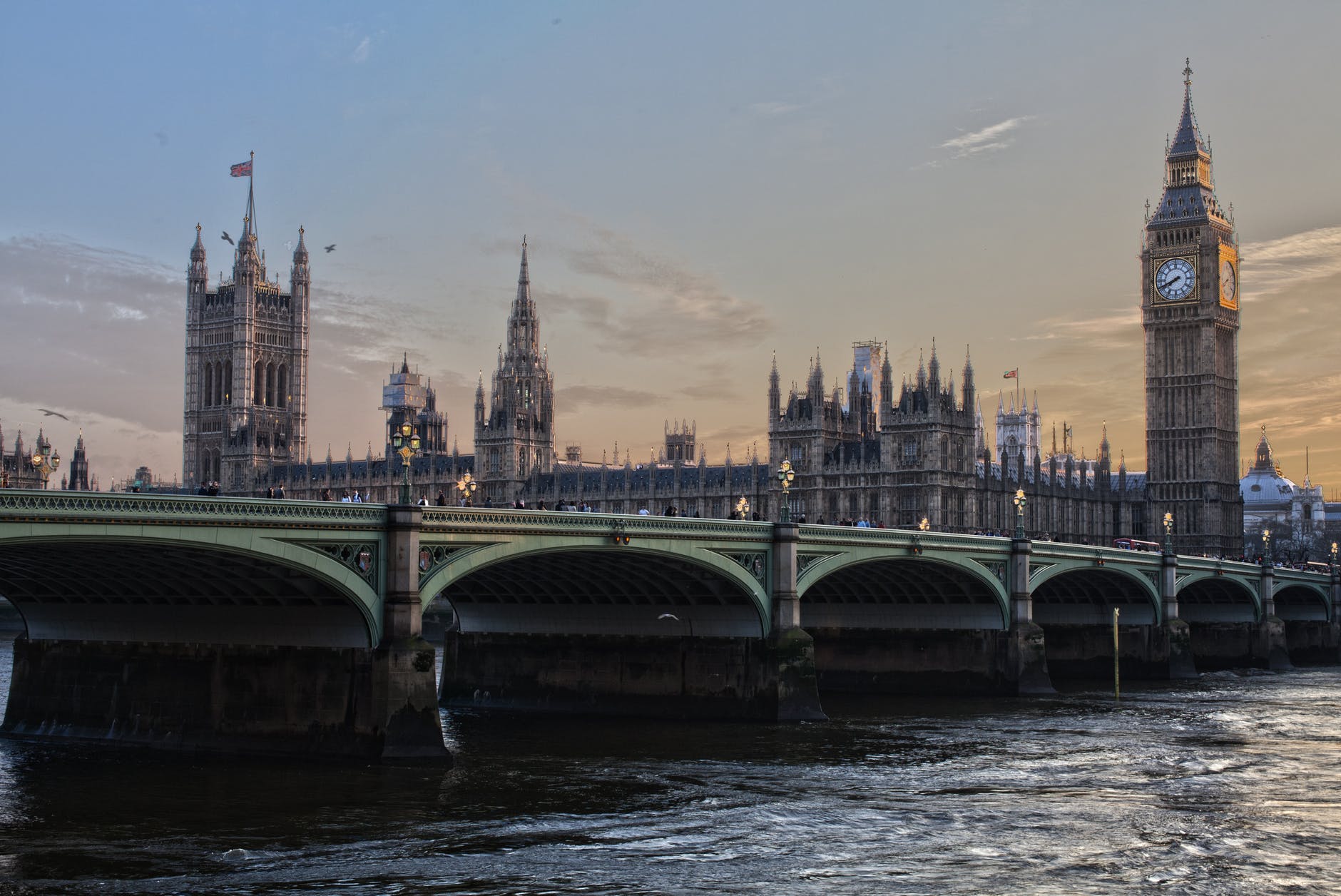
The Houses of Parliament

Fast forwarding to the Stuart period, in 1628, one of England’s most important constitutional bills was passed through Parliament, the Petition of Right. Charles I was demanding huge sums of money to continue with what became known as the Thirty Years War in Europe. The Petition of Right placed limitations on non-parliamentary taxes, amonst other restrictions aimed at the king, and this parliamentary bill played a significant role in the constitutional events leading up to the English Civil War and the subsequent beheading of Charles I. Once England was under Oliver Cromwell’s rule, public taxes were gradually decreased, although if he deemed it necessary, Cromwell saw fit to raise taxes without consent, overriding the Petition of Right which he had helped to create. In 1655 he also introduced Decimation Tax . This tax payment was aimed at his enemies, Royalists or suspected Royalists, and the income received from these charges, although not in force for a long period of time, was used to fund divisions of reserve armies, tasked with keeping order.

Introduction of income tax

At the end of 1798, the incumbent Prime Minister, William Pitt the Younger introduced a progressive income tax, whereby an individual’s wealth was assessed to pay the necessary proportion,the proceeds of which were destined for expenditure on the French Revolutionary War. This is commonly regarded as the beginning of the British income tax system today. Although it was abolished and restored more than once, the Income Tax Act of 1842 firmly re-established the model and it has remained part of British fiscal procedures ever since.

Anglo-Saxon economy

Photo by Skitterphoto on Pexels.com
A piggy bank

An Anglo-Saxon economy is so-called as it is generally practised in English speaking countries, where governments use low level taxation and few restrictions in order to stimulate economic growth, following a free market model with its orgins in the 1700s. There are supporters and critics of this financial system but, to come full circle, in the words of Benjamin Franklin, “in this world nothing can be said to be certain, except death and taxes.”

Categories
English history Uncategorized

Remember, remember the 5th of November

Photo by Peter Spencer on Pexels.com
Fireworks on Guy Fawkes Night

Gunpowder, Treason and Plot

Guy Fawkes was born in Yorkshire in 1570, during a time of great sectarian turbulence between Protestants and Catholics both in England and in Europe. Fawkes became infamous when he was arrested as part of a conspiracy to blow up the Houses of Parliament and assassinate the Protestant King James 1 on 5th November, 1605. The failure of the plot is still celebrated on 5th November and known as Bonfire Night or Guy Fawkes Night.

Who was Guy Fawkes ?

Although Guy Fawkes was born as a Protestant, at the age of eight, his mother remarried a recusant Catholic after Fawkes’ father had died.  Recusant Catholics were religious dissenters, who refused to attend Anglican Church services, remaining loyal to their religion and the pope.  Protestant England feared that the pope was looking for secular power over England in alliance with France and Spain, and consequently, anyone who was suspected of supporting the Catholic religion was penalised with fines, confiscation of property and even imprisonment. Guy Fawkes converted to Catholicism after his mothers’ remarriage and as an adult, his Catholic beliefs led him to enlist in the Spanish army in 1593 to fight in Flanders against the Dutch Protestant Army. Also known as Guido Fawkes by now, he fought for Spain again in Calais, northern France, in 1595, and these military assignments taught him how to use explosives.

Photo by Pixabay on Pexels.com
Houses of Parliament, London

The Gunpowder Plot

On Fawkes’ return to England, he became involved in a plot with Robert Catesby and a small group of fellow Catholics. They planned to overturn the Protestant monarchy by blowing up the Houses of Parliament and placing Princess Elizabeth, James’ daughter, as a Catholic monarch on the throne.  The group of conspirators rented an undercroft, a type of cellar, under the House of Lords and began to store barrels of gunpowder there. Their plot was dashed when, in the early hours of 5th November 1605, Guy Fawkes was discovered with the stockpiled explosives in the cellar. There were actually thirteen conspirators in all who were charged with the conspiracy, but Guy Fawkes is the only one whose name is instantly recognizable in regard to the Gunpowder plot. Persecution of religious dissension was already the norm during this period but along with high treason, the plotters could only expect the worst punishment from the state. Guy Fawkes was sentenced to be hung, drawn and quartered, a horrific death.  At the last minute he jumped from the gallows, effectively breaking his neck, and as a result, avoided the excruciating agony of the rest of the process.

Photo by Pixabay on Pexels.com
Bonfires are lit on Guy Fawkes Night

Celebration of Guy Fawkes Night

On the night of November 5th, 1605, the people of London held bonfires to celebrate the failure of the plot and the King’s escape. Within a context of religious persecution, these celebrations also promoted anti- Catholic feeling.  From 1650 fireworks were added to the festivities. In the 1670’s an effigy, usually of the pope, was placed on the bonfire to burn, but in time other unpopular figures were also used.  By the end of the 18th century, Guy Fawkes Day or Bonfire Night had finally lost most of its anti-Catholic overtones and children would make effigies of Guy Fawkes and beg for money, typically with the phrase  “ a penny for the guy”.  During the Victorian period, the festivities began to be held away from small communities and bonfires were lit on their outskirts, resembling the modern day events held today in parks. Victorians were familiar with much older songs that usually started with the words:  “Remember, remember, the fifth of November, Gunpowder, Treason and Plot”. The celebration of Guy Fawkes Day, sometimes known as Gunpowder Treason Day, also extended to parts of the British Commonwealth.  Early settlers to North America took the tradition with them, where it was sometimes called Pope Day. As the American Revolution drew near and anti-British sentiment increased, the commemoration of the failure of the Gunpowder Plot went into decline.

Photo by Ashutosh Sonwani on Pexels.com
A comtemporary Guy Fawkes mask worn by a protestor

Guy Fawkes’ legacy

Bonfire Night in England in the twenty-first century has long been a non-sectarian occasion, generally held in a park or suitably large venue with bonfires and a firework display. Effigies of Guy Fawkes can still be spotted although other unpopular celebrities of the moment are sometimes placed on the bonfire instead. Today there are concerns about public safely and the environmental risk posed by the toxins in the air from the bonfires.  From the 1980’s onwards, when an Americanised version of Halloween began to increase in popularity, the story of Guy Fawkes and the Gunpowder Plot has been somewhat overshadowed. Even so, in 2005, when the film V for Vendetta was released, its main character was an anarchist who wore a Guy Fawkes mask. This mask has been adopted by anti-establishment groups, is commonly seen during their protests and is to date the best-selling mask on Amazon. And did you know the Yeoman of the Guard, the famous Beefeaters, still perform a ceremony to this day, when they check the cellars under Westminster before the Opening of Parliament every year?

Categories
English history

The history of Halloween

Photo by Pixabay on Pexels.com
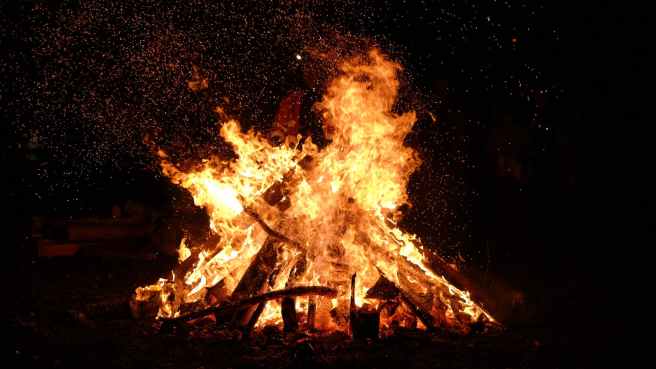
Flames and fire were once an integral part of Halloween

The beginnings

Hallowe’en or Halloween is a contraction of the Scottish expression All Saints’ Eve, which falls on 31st October before All Saints’ Day on November 1st.  Our modern Halloween celebrations stem from a variety of much older customs, from Celtic rituals and medieval traditions.

Photo by Jens Mahnke on Pexels.com
Bonfires were lit during Samhain

Samhain

Celtic occupation of the British Isles can be traced back to the 13th century B.C. In Celtic Ireland, Scotland and the Isle of Man, an important festival called Samhain was celebrated on 31st October/1st November, which was the beginning of a new year in the Celtic calendar. It was believed that on this first day of winter, the dead returned to Earth.  The Celts in England, Wales and Brittany had a similar tradition, known as Calan Gaeaf in Welsh, also involving the belief that the ghosts of the dead were roaming amongst the living. On this day, sacred bonfires were lit, crops were burnt and animals were sacrificed. The Celts wore costumes, generally animal skins and heads, in order to ward off evil spirits, and they also told fortunes and made predictions for the coming year. Bowls of food were left out to gain goodwill from malevolent ghosts. These festivals not only marked the beginning of winter when it was thought it would be easier for spirits to enter the world, they also were a means of asking for protection from the evils of a long, dark winter period. 

Photo by Mareefe on Pexels.com
Apples are a longstanding element of Halloween

Some historians believe that with the advent of the Roman Empire, a Roman festival was added to the Halloween mix. Pomona was the goddess of fruit trees and orchards and was associated with the blossoming of fruit.  Her symbol was an apple and as a result, this fruit became incorporated into Halloween activities, still around today in the guise of toffee apples and games such as apple bobbing. However, as Samhain and Calan Gaeaf marked the end of harvest time, it is likely that apples were already used in these festivities during the Celtic period.

Photo by Pixabay on Pexels.com
The Church created Holy Days to take precedence over pagan rites

Church intervention

During his reign from 731-741, Pope Gregory III dedicated a chapel in Rome to all saints on November 1st.  In Medieval England this day became known as All Hallows and the previous day became Hallowe’en.   Around the year 1000, the Church created All Souls’ Day on Nov 2nd and the period from 31st Oct to Nov 2nd was called Allhallowtide or Hallowmass.   It is generally thought nowadays that the Church was trying to impose holy days over the pagan Celtic festival which was still being celebrated, but in fact, these designated holy days would begin to include some of the elements of Samhain and Calan Gaeaf.

Photo by Pixabay on Pexels.com
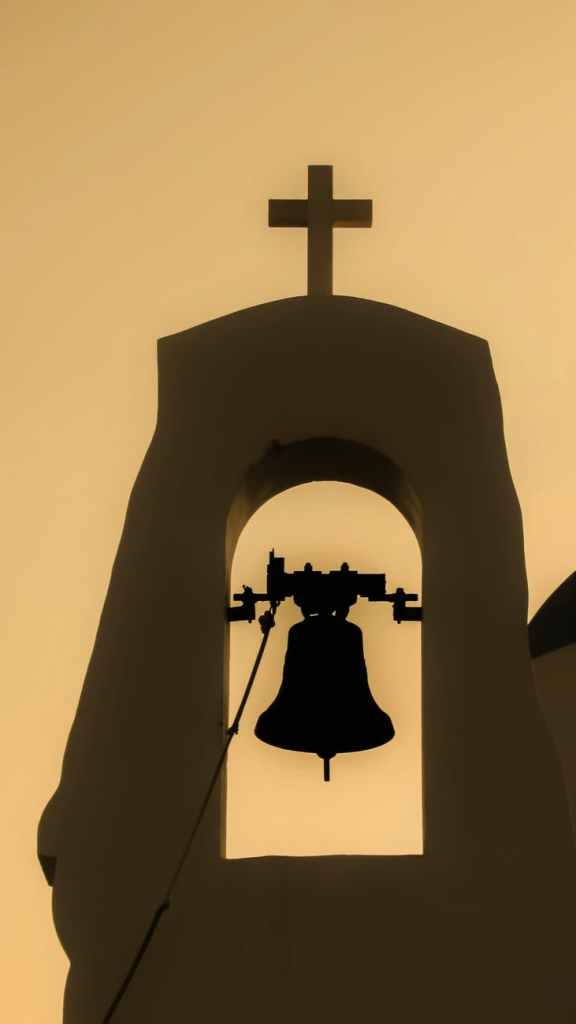
Church bells were tolled for the dead

The Middle Ages

Early traditions from Allhallowtide included the ringing of church bells for the souls in purgatory along with town criers dressed in black. By the 15th century the tradition of souling had begun, which appears to be the starting point for our modern custom of trick or treating.  Families with the economic means would provide soul cakes to poor people, who in turn would pray for the souls of the dearly departed from the family. Soul cakes were small fruit-filled pastries, and, similar to the hot cross buns we eat at Easter, they were marked with a cross to show that they were given in alms, that is, with a charitable purpose. This practice was encouraged by the Church in order to replace the pagan habit of leaving food and drink to appease the evil spirits afoot at Halloween.

Photo by Pixabay on Pexels.com
A souler

Souling

From the 16th century onwards souling had evolved into a practice whereby people dressed up to personify the dead spirits and received food and offerings on their behalf in return for protection. These people were guisers, or at Allhallowtide they were also known as soulers. It was also believed that by impersonating a dead soul, the soulers themselves were safe from evil spirits in the same way that the Celts had used animal skin disguises at Samhain to ward off unearthly enemies. However as time went on, in England Halloween waned in popularity, although there is evidence that it was still celebrated in Ireland, Scotland and rural areas. The emigrants from these areas to the United States, particularly the Irish, implanted their Halloween traditions in their new country. From the areas mainly inhabited by immigrants, Halloween festivities began to spread into mainstream culture.

Photo by Kevin Bidwell on Pexels.com
Today Halloween is vey much about children

Halloween in the 20th century

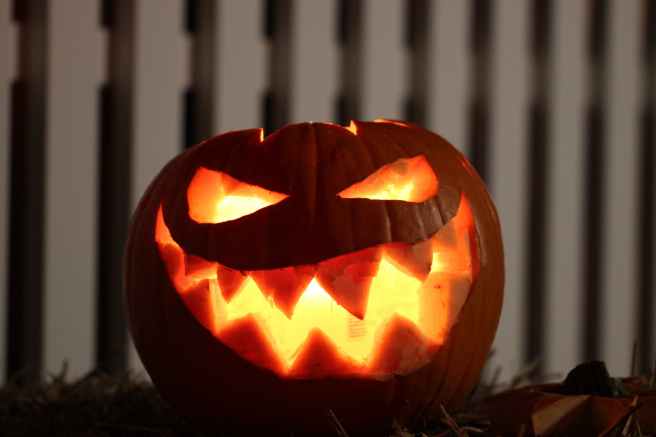
At the turn of the 20th century, Halloween games for young women included using apple peel to predict the name of their future husbands – just like the Celts had told fortunes many centuries ago. People dressed up in Halloween costumes, and went from house to house asking for food or money, a latter day version of soulers.  For a time, vandalism and Halloween pranks  threatened to become the main part of the festivities, but in the 1920’s and 30’s there was a concerted effort in America to make Halloween more community-centred and remove references to its more grisly and/or uneasy aspects.  By the 1950’s, this aim had generally been achieved and Halloween was both a secular and family–based celebration. Particularly after the baby boom of the 1950’s, Halloween became a mainstream event for children and trick or treating at Halloween was a perfectly normal activity for younger members of the family.

To date

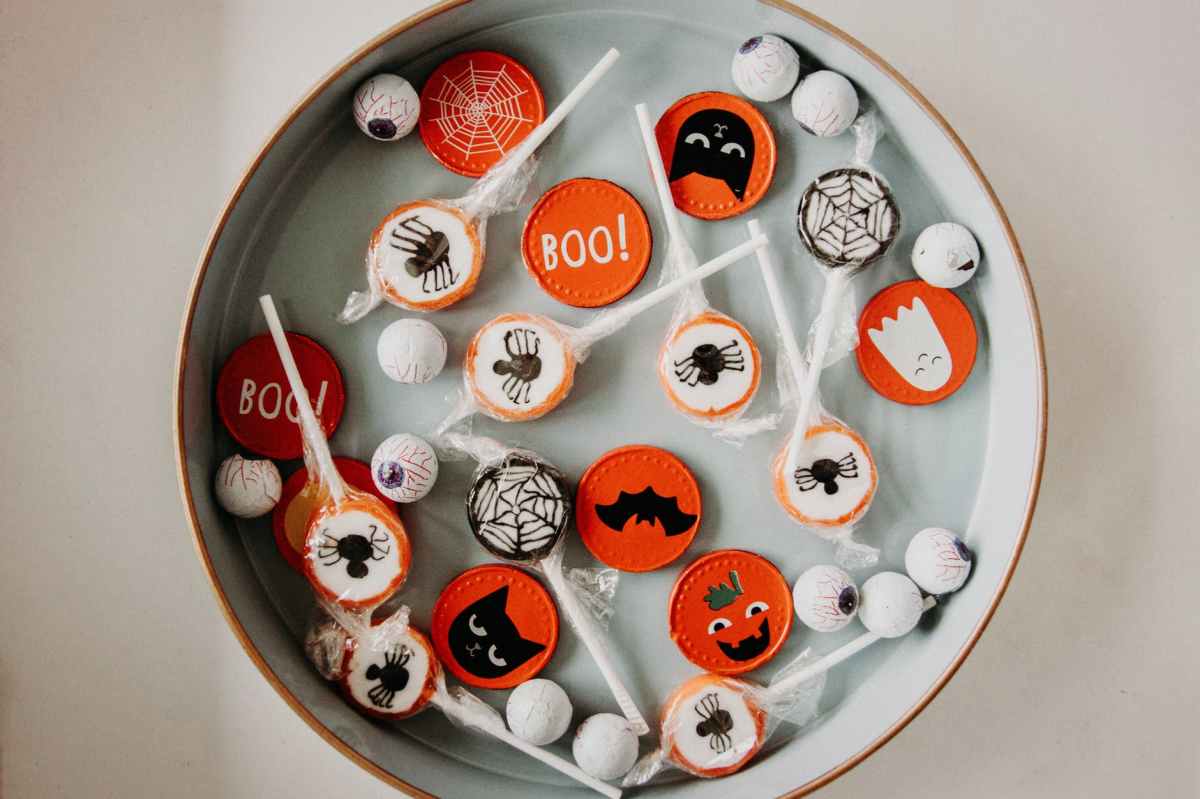
Nowadays, Halloween is a hugely commercial event in the United States, generating billions of dollars from sales of costumes and sweets, along with parades and other activities. Although some people dismiss this new version of Halloween as an American import, it has, in fact, also increased in popularity in recent years in the United Kingdom and Ireland. What would our Celtic ancestors make of it, I wonder?

Categories
English history

British icons – the red phone box

Photo by Pixabay on Pexels.com
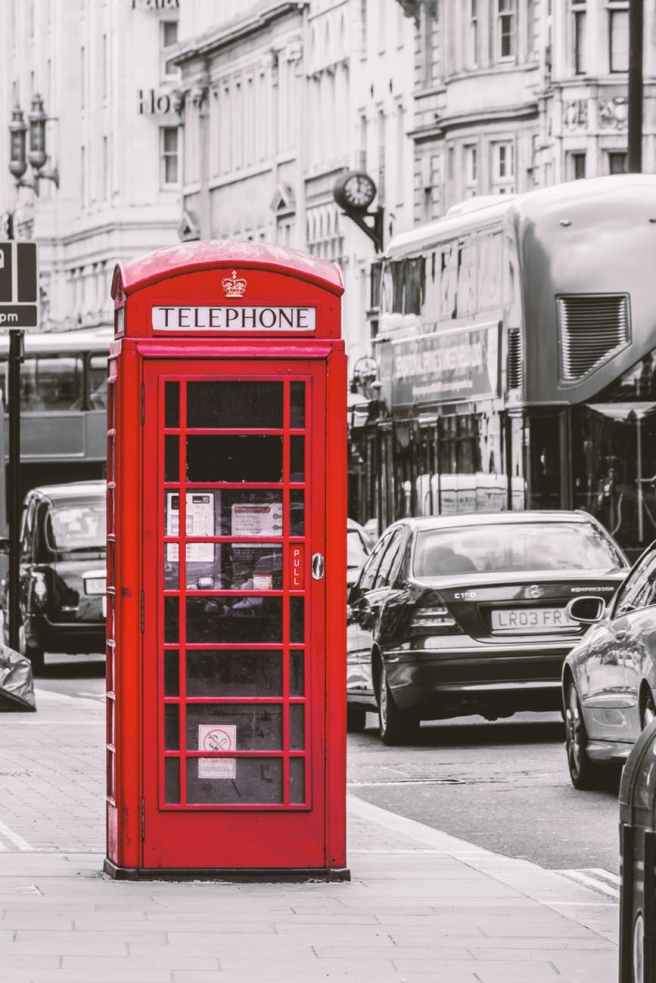
The great British phone box

A famous icon

Practically everyone in the Western world can probably identify a red British phone box which is undoubtedly a cultural icon. Despite the fact that mobile phones are now commonplace, the instantly recognisable red phone cabins can still be found in the U.K. and in former or present colonies.

The beginning

The very first British phone kiosk, now known as K1, was made in 1921, using concrete. In 1924 a competition was held to design a new phone box, and the winner was Sir Giles Gilbert Scott. He suggested that the exterior be painted silver with a green/blue interior. The Post Office used his prototype but decided to paint the cast iron phone boxes in red so they could easily be identified in case of an emergency.. This K2 model is generally what people have in mind when they imagine a British phone kiosk, although in fact there have been several later versions.  As the K2’s were also relatively expensive to manufacture and transport, this particular model was mainly installed in London, and of course, is where you will find most of the remaining K2’s today. The K3 was also the work of Sir Giles Gilbert Scott, due to the need for a cheaper alternative to its predecessor. The next model in the series, K4, was produced by the Post Office Engineering Department in 1927 and comprised a post box and a machine for buying stamps in addition to the phone, although only 50 of these kiosks were manufactured.

Yellow phone boxes

Some 50 years later, there was a public outcry in 1980 when British Telecom announced they were going to paint public phone boxes yellow. In the end, only a tiny percentage of the boxes were painted a different colour “as an experiment”, but the plan to repaint all phone boxes yellow never came to fruition. In 1982 British Telecom introduced the KX100, an open-sided booth that was easier to maintain and could be used by people in wheelchairs. At this point, B.T. also eliminated many of the older red phone boxes, although the British people were in uproar again over the loss of their beloved British symbol.

Reinvention

In spite of the digital era in which we now live, the old-fashioned red phone box is far from obsolete. Apart from the booths which still operate with their original intention, you can find red phone boxes being used in a variety of imaginative ways. They are used to house libraries, defibrillators, and art galleries. One is a colour therapy box and another provides hot dogs, ice-cream, tea and coffee. In the Virgin Isles, a red phone kiosk acts as a beach shower. The red phone box is a British icon which intends to remain as part of our lansdcape and lives.

Categories
English history

Great British traditions – a cup of tea

Photo by Kate Amos on Pexels.com
A short history of the British love for tea

How did the British fall in love with tea?

According to historians, tea first came to Europe in the 16th century, via Dutch and Portuguese traders. The habit of tea drinking gradually spread throughout Europe and the first person to sell tea in Britain was Thomas Garway in London in 1657. Around fifty years later, in 1701, Thomas Twining opened London’s first teashop.

At first tea drinking was an expensive habit that only the rich could afford. Tea was classed as a luxury item with high taxes, and at one point tea tax was at the ridiculous amount of 119%. This gave rise to tea smuggling, which often involved tea adulterated with herbs, other leaves and even previously used tea leaves. Tea smuggling was generally halted in 1784 when the tax on tea dropped to 12.5%.

The East India Company was given a monopoly for selling tea in Britain in 1832. They soon began to use “clippers” – sailing ships prized for their speed. The tea market was highly competitive and the faster the ship, the more the owner could charge for the mission. The Cutty Sark is a British tea clipper built in those times, and can still be visited today in the Greenwich Maritime Museum.

Tea in Britain was originally drunk on its own, but the additions of milk and sugar increased its popularity. Sugar was becoming widely available to due to the boom in sugar plantations in the Caribbean. Originally considered as a drink only for the rich and the aristocracy, during the 19th century tea gradually became more available to the middle classes and tea shops soared in popularity. Drinking tea became the norm in middle class households.

By the 19th century, the working classes were also fans of tea drinking. It was seen as a warm, energy giving drink which was extremely useful in Britain’s cold and damp climate. The working classes probably began drinking tea as a source of energy at work before it became a ritual at home.

Although there has been a slight decline in “normal” tea drinkers in recent years, and fruit and herbal teas are becoming more widespread, tea is still very much a longstanding and essential part of British culture. Twinings is thought to be the world’s oldest commercial logo which is still in use today. Not only is tea still incredibly popular in Britain, it is estimated that the Brits drink around 60 billion cups of tea per year.

Anyone for a cuppa?